Event submissions
Published
This submission belongs to the session S8. Sustainable Farming Systems and Soil Management of the event The 5th International Electronic Conference on Agronomy
Published date
11 Dec, 2025
Academic Editor
'%3e%3cpath%20d='M12.6657%2010.9104C12.4185%2010.325%2012.0599%209.79327%2011.6097%209.34482C11.1609%208.89508%2010.6293%208.5365%2010.0442%208.28888C10.0389%208.28626%2010.0337%208.28495%2010.0285%208.28233C10.8446%207.69279%2011.3752%206.73249%2011.3752%205.64904C11.3752%203.8542%209.92103%202.39999%208.1262%202.39999C6.33136%202.39999%204.87715%203.8542%204.87715%205.64904C4.87715%206.73249%205.40774%207.69279%206.22393%208.28364C6.21869%208.28626%206.21345%208.28757%206.20821%208.29019C5.62129%208.5378%205.09463%208.89284%204.64265%209.34613C4.1929%209.79493%203.83432%2010.3266%203.58671%2010.9117C3.34345%2011.4845%203.21226%2012.0987%203.20023%2012.7209C3.19988%2012.7349%203.20233%2012.7488%203.20744%2012.7619C3.21255%2012.7749%203.22022%2012.7867%203.22998%2012.7968C3.23975%2012.8068%203.25142%2012.8147%203.26431%2012.8202C3.2772%2012.8256%203.29105%2012.8284%203.30504%2012.8284H4.09109C4.14874%2012.8284%204.19459%2012.7825%204.1959%2012.7262C4.2221%2011.7148%204.62823%2010.7676%205.34617%2010.0497C6.08899%209.30683%207.0755%208.89808%208.1262%208.89808C9.17689%208.89808%2010.1634%209.30683%2010.9062%2010.0497C11.6242%2010.7676%2012.0303%2011.7148%2012.0565%2012.7262C12.0578%2012.7838%2012.1037%2012.8284%2012.1613%2012.8284H12.9474C12.9613%2012.8284%2012.9752%2012.8256%2012.9881%2012.8202C13.001%2012.8147%2013.0126%2012.8068%2013.0224%2012.7968C13.0322%2012.7867%2013.0398%2012.7749%2013.0449%2012.7619C13.0501%2012.7488%2013.0525%2012.7349%2013.0522%2012.7209C13.0391%2012.0947%2012.9094%2011.4855%2012.6657%2010.9104ZM8.1262%207.9024C7.52486%207.9024%206.9589%207.6679%206.53312%207.24211C6.10733%206.81633%205.87283%206.25037%205.87283%205.64904C5.87283%205.0477%206.10733%204.48174%206.53312%204.05596C6.9589%203.63018%207.52486%203.39567%208.1262%203.39567C8.72753%203.39567%209.29349%203.63018%209.71927%204.05596C10.1451%204.48174%2010.3796%205.0477%2010.3796%205.64904C10.3796%206.25037%2010.1451%206.81633%209.71927%207.24211C9.29349%207.6679%208.72753%207.9024%208.1262%207.9024Z'%20fill='%235D1EE1'/%3e%3c/g%3e%3c/svg%3e) Peter Gregory
Peter GregoryCitation
Martha Elena Domínguez-Hernández, Arnulfo Domínguez-Hernández, Elisa Domínguez-Hernández, Rosalba Zepeda-Bautista, Soil Quality Enhancement through Integrated Farming Systems, in Proceedings of The 5th International Electronic Conference on Agronomy, 15 December–18 December 2025, MDPI: Basel, Switzerland
Share
Email
Facebook
Twitter
LinkedIn
Soil Quality Enhancement through Integrated Farming Systems
'%3e%3cpath%20d='M12.6647%2010.9104C12.4176%2010.325%2012.0589%209.7933%2011.6088%209.34485C11.16%208.89511%2010.6283%208.53653%2010.0432%208.28891C10.038%208.28629%2010.0327%208.28498%2010.0275%208.28236C10.8437%207.69282%2011.3743%206.73252%2011.3743%205.64907C11.3743%203.85423%209.92005%202.40002%208.12522%202.40002C6.33038%202.40002%204.87618%203.85423%204.87618%205.64907C4.87618%206.73252%205.40677%207.69282%206.22296%208.28367C6.21772%208.28629%206.21248%208.2876%206.20724%208.29022C5.62031%208.53783%205.09365%208.89287%204.64167%209.34616C4.19192%209.79496%203.83334%2010.3266%203.58573%2010.9117C3.34247%2011.4846%203.21128%2012.0987%203.19925%2012.721C3.1989%2012.735%203.20135%2012.7489%203.20646%2012.7619C3.21157%2012.7749%203.21924%2012.7868%203.22901%2012.7968C3.23877%2012.8068%203.25045%2012.8148%203.26334%2012.8202C3.27623%2012.8256%203.29007%2012.8284%203.30406%2012.8284H4.09012C4.14776%2012.8284%204.19362%2012.7825%204.19493%2012.7262C4.22113%2011.7148%204.62726%2010.7676%205.34519%2010.0497C6.08802%209.30686%207.07452%208.89811%208.12522%208.89811C9.17592%208.89811%2010.1624%209.30686%2010.9052%2010.0497C11.6232%2010.7676%2012.0293%2011.7148%2012.0555%2012.7262C12.0568%2012.7839%2012.1027%2012.8284%2012.1603%2012.8284H12.9464C12.9604%2012.8284%2012.9742%2012.8256%2012.9871%2012.8202C13%2012.8148%2013.0117%2012.8068%2013.0214%2012.7968C13.0312%2012.7868%2013.0389%2012.7749%2013.044%2012.7619C13.0491%2012.7489%2013.0515%2012.735%2013.0512%2012.721C13.0381%2012.0947%2012.9084%2011.4856%2012.6647%2010.9104ZM8.12522%207.90243C7.52388%207.90243%206.95792%207.66793%206.53214%207.24215C6.10636%206.81636%205.87185%206.2504%205.87185%205.64907C5.87185%205.04773%206.10636%204.48177%206.53214%204.05599C6.95792%203.63021%207.52388%203.3957%208.12522%203.3957C8.72655%203.3957%209.29252%203.63021%209.7183%204.05599C10.1441%204.48177%2010.3786%205.04773%2010.3786%205.64907C10.3786%206.2504%2010.1441%206.81636%209.7183%207.24215C9.29252%207.66793%208.72655%207.90243%208.12522%207.90243Z'%20fill='%235D1EE1'/%3e%3c/g%3e%3c/svg%3e)
Martha Elena Domínguez-Hernández 1
Arnulfo Domínguez-Hernández 2
Elisa Domínguez-Hernández 2,3
Rosalba Zepeda-Bautista 2
1. Department of Agricultural Sciences, Faculty of Higher Education Cuautitlán. National Autonomous University of Mexico. Cuautitlán Izcalli, State of Mexico 54714, Mexico
2. Higher School of Mechanical and Electrical Engineering, National Polytechnic Institute, Gustavo A. Madero 07738, Mexico
3. Department of Mathematics, Faculty of Higher Education Cuautitlán, National Autonomous University of Mexico, Cuautitlán Izcalli, State of Mexico, 54714, México
Abstract
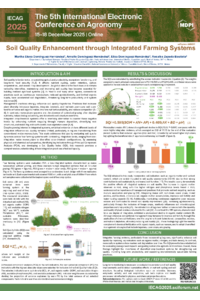
Sustainable agricultural productivity depends on soil quality and management practices. Integrated crop–livestock systems offer a promising pathway to enhance agri-food system resilience through soil quality improvement. This study evaluates soil quality dynamics under varying integration levels in a Mexican agricultural region characterized by conventional monoculture maize production, addressing critical gaps in sustainable transition strategies. Four farming systems were compared, FS1 (low-integration system: maize monoculture, no grazing) and three medium–high-integrated systems, all of them including grazing: FS2 (grass + legume), FS3 (grass + maize + cover crop), and FS4 (grass + maize + legume). Soil samples were collected at the beginning and end of two crop cycles, with physical and chemical properties analyzed. Key soil quality indicators were identified via Principal Component Analysis (PCA) and aggregated into a Soil Quality Index (SQI) for each farming system. Monoculture maize (FS1) exhibited a significant decline (P=0.001) in SQI (13.8) compared to higher-integrated systems (average SQI=17.7) by the end of the evaluation period. Legume integration (FS2 and FS4) consistently improved SQI, underscoring its role in soil health. PCA identified organic matter, nitrogen, and bulk density as primary drivers of soil quality differentiation. Higher-integrated farming systems significantly mitigate soil degradation compared to monocultures, with legume inclusion offering additional benefits. SQI provides a robust tool for monitoring management practices and guiding sustainable transitions. These findings advocate policy and practitioner prioritization of diversified systems to reconcile productivity with environmental sustainability in farming systems. Acknowledgements: The authors wish to thank the UNAM (Project: CI 2454) for providing financial and institutional support for this study.
Keywords
Soil
Integration Level
Crop-livestock systems
Sustainable Agriculture
Maize
Grassland.
Poster
sciforum-145097.pdf
Influence of Municipal Refuse Waste used as Fertilizer Material on Soil Physical and Chemical Properties
Interactions between Far-Red Light and Blue–Red Spectra on Growth, Pigment Content, and Mineral Composition of Hydroponic Lettuce Cultivated in a Vertical Farming System