Event submissions
Events3rd Conference on Future Challenges in Sustainable Urban Planning & Territorial Management
Published
This submission belongs to the session CP. City planning of the event 3rd Conference on Future Challenges in Sustainable Urban Planning & Territorial Management
Published date
17 Jan, 2026
Academic Editor
'%3e%3cpath%20d='M12.6657%2010.9104C12.4185%2010.325%2012.0599%209.79327%2011.6097%209.34482C11.1609%208.89508%2010.6293%208.5365%2010.0442%208.28888C10.0389%208.28626%2010.0337%208.28495%2010.0285%208.28233C10.8446%207.69279%2011.3752%206.73249%2011.3752%205.64904C11.3752%203.8542%209.92103%202.39999%208.1262%202.39999C6.33136%202.39999%204.87715%203.8542%204.87715%205.64904C4.87715%206.73249%205.40774%207.69279%206.22393%208.28364C6.21869%208.28626%206.21345%208.28757%206.20821%208.29019C5.62129%208.5378%205.09463%208.89284%204.64265%209.34613C4.1929%209.79493%203.83432%2010.3266%203.58671%2010.9117C3.34345%2011.4845%203.21226%2012.0987%203.20023%2012.7209C3.19988%2012.7349%203.20233%2012.7488%203.20744%2012.7619C3.21255%2012.7749%203.22022%2012.7867%203.22998%2012.7968C3.23975%2012.8068%203.25142%2012.8147%203.26431%2012.8202C3.2772%2012.8256%203.29105%2012.8284%203.30504%2012.8284H4.09109C4.14874%2012.8284%204.19459%2012.7825%204.1959%2012.7262C4.2221%2011.7148%204.62823%2010.7676%205.34617%2010.0497C6.08899%209.30683%207.0755%208.89808%208.1262%208.89808C9.17689%208.89808%2010.1634%209.30683%2010.9062%2010.0497C11.6242%2010.7676%2012.0303%2011.7148%2012.0565%2012.7262C12.0578%2012.7838%2012.1037%2012.8284%2012.1613%2012.8284H12.9474C12.9613%2012.8284%2012.9752%2012.8256%2012.9881%2012.8202C13.001%2012.8147%2013.0126%2012.8068%2013.0224%2012.7968C13.0322%2012.7867%2013.0398%2012.7749%2013.0449%2012.7619C13.0501%2012.7488%2013.0525%2012.7349%2013.0522%2012.7209C13.0391%2012.0947%2012.9094%2011.4855%2012.6657%2010.9104ZM8.1262%207.9024C7.52486%207.9024%206.9589%207.6679%206.53312%207.24211C6.10733%206.81633%205.87283%206.25037%205.87283%205.64904C5.87283%205.0477%206.10733%204.48174%206.53312%204.05596C6.9589%203.63018%207.52486%203.39567%208.1262%203.39567C8.72753%203.39567%209.29349%203.63018%209.71927%204.05596C10.1451%204.48174%2010.3796%205.0477%2010.3796%205.64904C10.3796%206.25037%2010.1451%206.81633%209.71927%207.24211C9.29349%207.6679%208.72753%207.9024%208.1262%207.9024Z'%20fill='%235D1EE1'/%3e%3c/g%3e%3c/svg%3e) Salvador Garcia-Ayllon
Salvador Garcia-AyllonCitation
WAN-JU WU, CHIA-YING LU, YUNG-CHUNG CHUANG, The Impact of Advertising Signage and Street Configurations on Traffic Safety, in Proceedings of 3rd Conference on Future Challenges in Sustainable Urban Planning & Territorial Management, 20 January–22 January 2026, MDPI: Basel, Switzerland
Share
Email
Facebook
Twitter
LinkedIn
The Impact of Advertising Signage and Street Configurations on Traffic Safety
'%3e%3cpath%20d='M12.6647%2010.9104C12.4176%2010.325%2012.0589%209.7933%2011.6088%209.34485C11.16%208.89511%2010.6283%208.53653%2010.0432%208.28891C10.038%208.28629%2010.0327%208.28498%2010.0275%208.28236C10.8437%207.69282%2011.3743%206.73252%2011.3743%205.64907C11.3743%203.85423%209.92005%202.40002%208.12522%202.40002C6.33038%202.40002%204.87618%203.85423%204.87618%205.64907C4.87618%206.73252%205.40677%207.69282%206.22296%208.28367C6.21772%208.28629%206.21248%208.2876%206.20724%208.29022C5.62031%208.53783%205.09365%208.89287%204.64167%209.34616C4.19192%209.79496%203.83334%2010.3266%203.58573%2010.9117C3.34247%2011.4846%203.21128%2012.0987%203.19925%2012.721C3.1989%2012.735%203.20135%2012.7489%203.20646%2012.7619C3.21157%2012.7749%203.21924%2012.7868%203.22901%2012.7968C3.23877%2012.8068%203.25045%2012.8148%203.26334%2012.8202C3.27623%2012.8256%203.29007%2012.8284%203.30406%2012.8284H4.09012C4.14776%2012.8284%204.19362%2012.7825%204.19493%2012.7262C4.22113%2011.7148%204.62726%2010.7676%205.34519%2010.0497C6.08802%209.30686%207.07452%208.89811%208.12522%208.89811C9.17592%208.89811%2010.1624%209.30686%2010.9052%2010.0497C11.6232%2010.7676%2012.0293%2011.7148%2012.0555%2012.7262C12.0568%2012.7839%2012.1027%2012.8284%2012.1603%2012.8284H12.9464C12.9604%2012.8284%2012.9742%2012.8256%2012.9871%2012.8202C13%2012.8148%2013.0117%2012.8068%2013.0214%2012.7968C13.0312%2012.7868%2013.0389%2012.7749%2013.044%2012.7619C13.0491%2012.7489%2013.0515%2012.735%2013.0512%2012.721C13.0381%2012.0947%2012.9084%2011.4856%2012.6647%2010.9104ZM8.12522%207.90243C7.52388%207.90243%206.95792%207.66793%206.53214%207.24215C6.10636%206.81636%205.87185%206.2504%205.87185%205.64907C5.87185%205.04773%206.10636%204.48177%206.53214%204.05599C6.95792%203.63021%207.52388%203.3957%208.12522%203.3957C8.72655%203.3957%209.29252%203.63021%209.7183%204.05599C10.1441%204.48177%2010.3786%205.04773%2010.3786%205.64907C10.3786%206.2504%2010.1441%206.81636%209.7183%207.24215C9.29252%207.66793%208.72655%207.90243%208.12522%207.90243Z'%20fill='%235D1EE1'/%3e%3c/g%3e%3c/svg%3e)
WAN-JU WU 1
CHIA-YING LU 1

YUNG-CHUNG CHUANG 2
1. Department of Urban Planning and Spatial Information,Feng Chia University,Taiwan
2. Department of Urban Planning and Spatial Information, Feng Chia University, Taiwan
Abstract
With the rapid pace of urbanization, the streetscapes of commercial districts have become increasingly complex. The dense presence of advertising signage, combined with diverse street network patterns, can potentially affect traffic safety and the overall visual quality of urban spaces. In Tainan’s Central West District, where blocks are compact and intersections are frequent, the high density of commercial signage may distract drivers and increase the risk of accidents. This study aims to investigate the interplay between advertising signage and street configurations on traffic safety, with the goal of developing measurable indicators to inform future streetscape design and traffic planning.
The research adopts a three-dimensional analytical framework. First, the street network is assessed through intersection density, connectivity, and average road width to evaluate its influence on traffic flow and safety. Second, selected intersections are analyzed in terms of signalization and historical accident occurrence to identify potential safety hazards. Finally, field photography combined with computer vision techniques is applied to quantify signage density and visual obstruction ratios, assessing their impact on driver attention and spatial perception.
The expected outcome is an integrated risk assessment across network, intersection, and streetscape dimensions, leading to the identification of high-risk road segments and intersections. Based on these findings, the study will propose practical strategies for optimizing signage regulation and street design, aiming to reduce accident risk, enhance visual order, and create safer, more pleasant urban environments.
Keywords
Advertising Signage,Street Morphology,Traffic Safety
Manuscript
SUPTM 2026 Proceedings Template(The Impact of Advertising Signage and Street Configurations on Traffic Safety).pdf
Poster
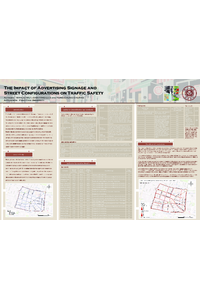
Poster(The Impact of Advertising Signage and Street Configurations on Traffic Safety).pdf
Land Use Change and Runoff Modelling in Emilia-Romagna: Assessing Hydraulic Risk for Spatial Planning