Event submissions
Events3rd Conference on Future Challenges in Sustainable Urban Planning & Territorial Management
Published
This submission belongs to the session CP. City planning of the event 3rd Conference on Future Challenges in Sustainable Urban Planning & Territorial Management
Published date
19 Jan, 2026
Academic Editor
'%3e%3cpath%20d='M12.6657%2010.9104C12.4185%2010.325%2012.0599%209.79327%2011.6097%209.34482C11.1609%208.89508%2010.6293%208.5365%2010.0442%208.28888C10.0389%208.28626%2010.0337%208.28495%2010.0285%208.28233C10.8446%207.69279%2011.3752%206.73249%2011.3752%205.64904C11.3752%203.8542%209.92103%202.39999%208.1262%202.39999C6.33136%202.39999%204.87715%203.8542%204.87715%205.64904C4.87715%206.73249%205.40774%207.69279%206.22393%208.28364C6.21869%208.28626%206.21345%208.28757%206.20821%208.29019C5.62129%208.5378%205.09463%208.89284%204.64265%209.34613C4.1929%209.79493%203.83432%2010.3266%203.58671%2010.9117C3.34345%2011.4845%203.21226%2012.0987%203.20023%2012.7209C3.19988%2012.7349%203.20233%2012.7488%203.20744%2012.7619C3.21255%2012.7749%203.22022%2012.7867%203.22998%2012.7968C3.23975%2012.8068%203.25142%2012.8147%203.26431%2012.8202C3.2772%2012.8256%203.29105%2012.8284%203.30504%2012.8284H4.09109C4.14874%2012.8284%204.19459%2012.7825%204.1959%2012.7262C4.2221%2011.7148%204.62823%2010.7676%205.34617%2010.0497C6.08899%209.30683%207.0755%208.89808%208.1262%208.89808C9.17689%208.89808%2010.1634%209.30683%2010.9062%2010.0497C11.6242%2010.7676%2012.0303%2011.7148%2012.0565%2012.7262C12.0578%2012.7838%2012.1037%2012.8284%2012.1613%2012.8284H12.9474C12.9613%2012.8284%2012.9752%2012.8256%2012.9881%2012.8202C13.001%2012.8147%2013.0126%2012.8068%2013.0224%2012.7968C13.0322%2012.7867%2013.0398%2012.7749%2013.0449%2012.7619C13.0501%2012.7488%2013.0525%2012.7349%2013.0522%2012.7209C13.0391%2012.0947%2012.9094%2011.4855%2012.6657%2010.9104ZM8.1262%207.9024C7.52486%207.9024%206.9589%207.6679%206.53312%207.24211C6.10733%206.81633%205.87283%206.25037%205.87283%205.64904C5.87283%205.0477%206.10733%204.48174%206.53312%204.05596C6.9589%203.63018%207.52486%203.39567%208.1262%203.39567C8.72753%203.39567%209.29349%203.63018%209.71927%204.05596C10.1451%204.48174%2010.3796%205.0477%2010.3796%205.64904C10.3796%206.25037%2010.1451%206.81633%209.71927%207.24211C9.29349%207.6679%208.72753%207.9024%208.1262%207.9024Z'%20fill='%235D1EE1'/%3e%3c/g%3e%3c/svg%3e) Salvador Garcia-Ayllon
Salvador Garcia-AyllonCitation
Soledad Nogués, Dominic Stead, Esther González-González, Urban planning and design guidelines for integrating autonomous mobility into cities, in Proceedings of 3rd Conference on Future Challenges in Sustainable Urban Planning & Territorial Management, 20 January–22 January 2026, MDPI: Basel, Switzerland
Share
Email
Facebook
Twitter
LinkedIn
Urban planning and design guidelines for integrating autonomous mobility into cities
'%3e%3cpath%20d='M12.6647%2010.9104C12.4176%2010.325%2012.0589%209.7933%2011.6088%209.34485C11.16%208.89511%2010.6283%208.53653%2010.0432%208.28891C10.038%208.28629%2010.0327%208.28498%2010.0275%208.28236C10.8437%207.69282%2011.3743%206.73252%2011.3743%205.64907C11.3743%203.85423%209.92005%202.40002%208.12522%202.40002C6.33038%202.40002%204.87618%203.85423%204.87618%205.64907C4.87618%206.73252%205.40677%207.69282%206.22296%208.28367C6.21772%208.28629%206.21248%208.2876%206.20724%208.29022C5.62031%208.53783%205.09365%208.89287%204.64167%209.34616C4.19192%209.79496%203.83334%2010.3266%203.58573%2010.9117C3.34247%2011.4846%203.21128%2012.0987%203.19925%2012.721C3.1989%2012.735%203.20135%2012.7489%203.20646%2012.7619C3.21157%2012.7749%203.21924%2012.7868%203.22901%2012.7968C3.23877%2012.8068%203.25045%2012.8148%203.26334%2012.8202C3.27623%2012.8256%203.29007%2012.8284%203.30406%2012.8284H4.09012C4.14776%2012.8284%204.19362%2012.7825%204.19493%2012.7262C4.22113%2011.7148%204.62726%2010.7676%205.34519%2010.0497C6.08802%209.30686%207.07452%208.89811%208.12522%208.89811C9.17592%208.89811%2010.1624%209.30686%2010.9052%2010.0497C11.6232%2010.7676%2012.0293%2011.7148%2012.0555%2012.7262C12.0568%2012.7839%2012.1027%2012.8284%2012.1603%2012.8284H12.9464C12.9604%2012.8284%2012.9742%2012.8256%2012.9871%2012.8202C13%2012.8148%2013.0117%2012.8068%2013.0214%2012.7968C13.0312%2012.7868%2013.0389%2012.7749%2013.044%2012.7619C13.0491%2012.7489%2013.0515%2012.735%2013.0512%2012.721C13.0381%2012.0947%2012.9084%2011.4856%2012.6647%2010.9104ZM8.12522%207.90243C7.52388%207.90243%206.95792%207.66793%206.53214%207.24215C6.10636%206.81636%205.87185%206.2504%205.87185%205.64907C5.87185%205.04773%206.10636%204.48177%206.53214%204.05599C6.95792%203.63021%207.52388%203.3957%208.12522%203.3957C8.72655%203.3957%209.29252%203.63021%209.7183%204.05599C10.1441%204.48177%2010.3786%205.04773%2010.3786%205.64907C10.3786%206.2504%2010.1441%206.81636%209.7183%207.24215C9.29252%207.66793%208.72655%207.90243%208.12522%207.90243Z'%20fill='%235D1EE1'/%3e%3c/g%3e%3c/svg%3e)
Soledad Nogués 1
Dominic Stead 2

Esther González-González 1
1. Department of Transport and PPT,
School of Civil Engineering.
Avda Los Castros 44,
39005 Santander.
Universidad de Cantabria (Spain)
2. Department of Built Environment,
School of Engineering.
Otakaari 4,
02150 Espoo.
Aalto University (Finland)
Abstract
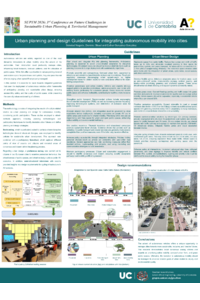
The deployment of autonomous vehicles (AVs) presents major challenges and opportunities for urban transformations, which are heavily dependent on robust planning and design decisions. Private or shared use, free circulation or the definition of restricted areas, shared or segregated streets, repurposing freed-up spaces, among others, are key issues that can help or hinder progress toward more sustainable, inclusive, and citizen-centred cities. The main objective of this research is to provide practical guidelines for urban planning and design that consider the deployment of autonomous vehicles, while promoting core city values endorsed by all citizens.
Based on research using participatory methodologies and qualitative and quantitative approaches, the study analyses the preferences of both citizens and experts regarding autonomous mobility and urban space allocation, identifying consensus and divergence between stakeholders. The comparison between the two groups reveals a clear preference for compact, green, and accessible cities focused on proximity, where the space released by AVs is prioritised to support active mobility. Regarding street space, the importance of designing safe and attractive streets is strongly emphasised.
Specific urban planning and design recommendations are developed and proposed based on these findings. In terms of urban planning, it is recommended to anticipate clear regulations governing AV circulation, integrate AVs into urban planning documents, avoid urban sprawl through policies that reinforce centrality and density, prioritise active and shared mobility, and implement positive incentive policies to reduce private car use.
Regarding urban design, the space freed by AVs should be allocated to pedestrians, cyclists, and green areas, thereby contributing to urban quality and a better environment. Specifically for streets, the design recommendations are to widen pedestrian walkways, create protected cycle lanes, and develop flexible multifunctional zones that integrate greenery, urban furniture, and public spaces. Safety at intersections is a priority, with proposals for physical interventions, improved visibility, and enhanced signage. Designs need to be tailored to street typologies, promoting specific solutions according to the type of street.
These guidelines offer a roadmap for local authorities and urban planning professionals seeking to guide the transition toward a more liveable, resilient, and equitable city shaped by autonomous mobility.
Keywords
autonomous vehicles
urban planning
urban design
street design
active mobility
guidelines
Manuscript
20251223_SUPTM 2026.pdf
Poster
UNICAN_Poster_Final.pdf
In Search of Equity: Advances and Gaps in Transport Planning for Diversity
Modeling Farmland Conversion Dynamics with a Discrete-Time Hazard Approach and Spatial Autocorrelation Adjustment