Event submissions
Published
This submission belongs to the session S2. Ecology of the event The 1st International Online Conference on Biology
Published date
05 Feb, 2026
Academic Editor
'%3e%3cpath%20d='M12.6657%2010.9104C12.4185%2010.325%2012.0599%209.79327%2011.6097%209.34482C11.1609%208.89508%2010.6293%208.5365%2010.0442%208.28888C10.0389%208.28626%2010.0337%208.28495%2010.0285%208.28233C10.8446%207.69279%2011.3752%206.73249%2011.3752%205.64904C11.3752%203.8542%209.92103%202.39999%208.1262%202.39999C6.33136%202.39999%204.87715%203.8542%204.87715%205.64904C4.87715%206.73249%205.40774%207.69279%206.22393%208.28364C6.21869%208.28626%206.21345%208.28757%206.20821%208.29019C5.62129%208.5378%205.09463%208.89284%204.64265%209.34613C4.1929%209.79493%203.83432%2010.3266%203.58671%2010.9117C3.34345%2011.4845%203.21226%2012.0987%203.20023%2012.7209C3.19988%2012.7349%203.20233%2012.7488%203.20744%2012.7619C3.21255%2012.7749%203.22022%2012.7867%203.22998%2012.7968C3.23975%2012.8068%203.25142%2012.8147%203.26431%2012.8202C3.2772%2012.8256%203.29105%2012.8284%203.30504%2012.8284H4.09109C4.14874%2012.8284%204.19459%2012.7825%204.1959%2012.7262C4.2221%2011.7148%204.62823%2010.7676%205.34617%2010.0497C6.08899%209.30683%207.0755%208.89808%208.1262%208.89808C9.17689%208.89808%2010.1634%209.30683%2010.9062%2010.0497C11.6242%2010.7676%2012.0303%2011.7148%2012.0565%2012.7262C12.0578%2012.7838%2012.1037%2012.8284%2012.1613%2012.8284H12.9474C12.9613%2012.8284%2012.9752%2012.8256%2012.9881%2012.8202C13.001%2012.8147%2013.0126%2012.8068%2013.0224%2012.7968C13.0322%2012.7867%2013.0398%2012.7749%2013.0449%2012.7619C13.0501%2012.7488%2013.0525%2012.7349%2013.0522%2012.7209C13.0391%2012.0947%2012.9094%2011.4855%2012.6657%2010.9104ZM8.1262%207.9024C7.52486%207.9024%206.9589%207.6679%206.53312%207.24211C6.10733%206.81633%205.87283%206.25037%205.87283%205.64904C5.87283%205.0477%206.10733%204.48174%206.53312%204.05596C6.9589%203.63018%207.52486%203.39567%208.1262%203.39567C8.72753%203.39567%209.29349%203.63018%209.71927%204.05596C10.1451%204.48174%2010.3796%205.0477%2010.3796%205.64904C10.3796%206.25037%2010.1451%206.81633%209.71927%207.24211C9.29349%207.6679%208.72753%207.9024%208.1262%207.9024Z'%20fill='%235D1EE1'/%3e%3c/g%3e%3c/svg%3e) Andrés Moya
Andrés MoyaCitation
Fabrício de Lima Freitas, Natan Silva Pereira, Patrícia Barros Pinheiro, Rafael Schroeder, Alberto Teodorico Correia,
Insights into the population structure of Plagioscion squamosissimus from northeastern Brazil using morphological and otolith traits
, in Proceedings of The 1st International Online Conference on Biology, 10 February–12 February 2026, MDPI: Basel, Switzerland
Share
Email
Facebook
Twitter
LinkedIn
- Insights into the population structure of Plagioscion squamosissimus from northeastern Brazil using morphological and otolith traits
- Insights into the population structure of Plagioscion squamosissimus from northeastern Brazil using morphological and otolith traits

Fabrício de Lima Freitas 1
'%3e%3cpath%20d='M12.6647%2010.9104C12.4176%2010.325%2012.0589%209.7933%2011.6088%209.34485C11.16%208.89511%2010.6283%208.53653%2010.0432%208.28891C10.038%208.28629%2010.0327%208.28498%2010.0275%208.28236C10.8437%207.69282%2011.3743%206.73252%2011.3743%205.64907C11.3743%203.85423%209.92005%202.40002%208.12522%202.40002C6.33038%202.40002%204.87618%203.85423%204.87618%205.64907C4.87618%206.73252%205.40677%207.69282%206.22296%208.28367C6.21772%208.28629%206.21248%208.2876%206.20724%208.29022C5.62031%208.53783%205.09365%208.89287%204.64167%209.34616C4.19192%209.79496%203.83334%2010.3266%203.58573%2010.9117C3.34247%2011.4846%203.21128%2012.0987%203.19925%2012.721C3.1989%2012.735%203.20135%2012.7489%203.20646%2012.7619C3.21157%2012.7749%203.21924%2012.7868%203.22901%2012.7968C3.23877%2012.8068%203.25045%2012.8148%203.26334%2012.8202C3.27623%2012.8256%203.29007%2012.8284%203.30406%2012.8284H4.09012C4.14776%2012.8284%204.19362%2012.7825%204.19493%2012.7262C4.22113%2011.7148%204.62726%2010.7676%205.34519%2010.0497C6.08802%209.30686%207.07452%208.89811%208.12522%208.89811C9.17592%208.89811%2010.1624%209.30686%2010.9052%2010.0497C11.6232%2010.7676%2012.0293%2011.7148%2012.0555%2012.7262C12.0568%2012.7839%2012.1027%2012.8284%2012.1603%2012.8284H12.9464C12.9604%2012.8284%2012.9742%2012.8256%2012.9871%2012.8202C13%2012.8148%2013.0117%2012.8068%2013.0214%2012.7968C13.0312%2012.7868%2013.0389%2012.7749%2013.044%2012.7619C13.0491%2012.7489%2013.0515%2012.735%2013.0512%2012.721C13.0381%2012.0947%2012.9084%2011.4856%2012.6647%2010.9104ZM8.12522%207.90243C7.52388%207.90243%206.95792%207.66793%206.53214%207.24215C6.10636%206.81636%205.87185%206.2504%205.87185%205.64907C5.87185%205.04773%206.10636%204.48177%206.53214%204.05599C6.95792%203.63021%207.52388%203.3957%208.12522%203.3957C8.72655%203.3957%209.29252%203.63021%209.7183%204.05599C10.1441%204.48177%2010.3786%205.04773%2010.3786%205.64907C10.3786%206.2504%2010.1441%206.81636%209.7183%207.24215C9.29252%207.66793%208.72655%207.90243%208.12522%207.90243Z'%20fill='%235D1EE1'/%3e%3c/g%3e%3c/svg%3e)
Natan Silva Pereira 2
Patrícia Barros Pinheiro 3
Rafael Schroeder 4

Alberto Teodorico Correia 5,6
1. Department of Technology and Social Science, State University of Bahia, Juazeiro, Brazil
2. Department of Exact and Earth Science, State University of Bahia, Salvador, Brazil
3. Department of Education, State University of Bahia, Paulo Afonso, Brazil
4. Laboratory of Marine Applied Studies, Polytechnic School, University of Vale do Itajaí, Itajaí, Brazil
5. Interdisciplinary Centre of Marine and Environmental Research, Terminal de Cruzeiros do Porto de Leixões, Matosinhos, Portugal
6. Department of Aquatic Production (DPA), School of Medicine and Biomedical Sciences (ICBAS), University of Porto (UP), Porto, Portugal
Abstract
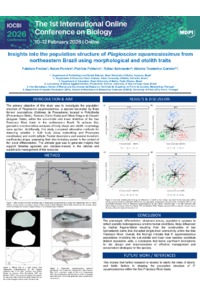
The South American silver croaker, Plagioscion squamosissimus, represents a species of substantial relevance to artisanal fisheries operating within the sub-middle and lower stretches of the São Francisco River in northeastern Brazil. To elucidate the population structure of this species across its longitudinal gradient, 150 specimens (50 per locality), with standard lengths ranging from 35 to 45 cm, were collected between September 2023 and March 2024 from three fishing associations (Olho D’Água do Casado, Petrolândia, and Rodelas) using gillnets. Body morphometry was examined through two geometric morphometric frameworks based on discrete landmarks: Procrustes coordinates (PCs) and truss network distances (TDs). Otolith morphology was further characterized using two contour-based analytical methods: wavelet transform coefficients (WTCs) and elliptic Fourier descriptors (EFDs). Statistical assessments involved both univariate and multivariate techniques to evaluate morphological variation across sites and sexes. The analyses revealed pronounced secondary sexual dimorphism in otolith morphology, which was absent in overall body shape. Such dimorphism is potentially attributable to sex-specific auditory adaptations related to ecological roles or reproductive behaviors, although this hypothesis warrants further experimental verification. Despite the detected sexual dimorphism, the classification accuracy of individuals to their sampling origin remained remarkably high, ranging from 91% to 94% based on body morphometry (TD and PCs, respectively), and achieving complete (100%) discrimination through otolith contour analyses (EFDs and WTCs). The phenotypic differentiation observed among populations appears to reflect spatially heterogeneous environmental conditions, likely influenced by habitat fragmentation resulting from the construction of two hydroelectric dams that disrupted longitudinal connectivity within the São Francisco River. Overall, the findings indicate that P. squamosissimus populations inhabiting the sub-middle and lower river reaches constitute distinct population units, a conclusion that bears significant implications for the design and implementation of effective management and conservation strategies for the species.
Keywords
elliptic Fourier descriptors
fish stocks
natural tags
Procrustes coordinates
Sciaenidae
trussnetworking
wavelet transform coefficients
Poster
156708.pdf
Long-term monitoring efficiency and identification success in the reintroduction of the vinaceous-breasted amazon (Amazona vinacea)
Ecological feasibility of reintroducing small wild cats (Leopardus guttulus and L. wiedii) on Santa Catarina Island, southern Brazil