Event submissions
Published
This submission belongs to the session S5. Zoology of the event The 1st International Online Conference on Biology
Published date
05 Feb, 2026
Academic Editor
'%3e%3cpath%20d='M12.6657%2010.9104C12.4185%2010.325%2012.0599%209.79327%2011.6097%209.34482C11.1609%208.89508%2010.6293%208.5365%2010.0442%208.28888C10.0389%208.28626%2010.0337%208.28495%2010.0285%208.28233C10.8446%207.69279%2011.3752%206.73249%2011.3752%205.64904C11.3752%203.8542%209.92103%202.39999%208.1262%202.39999C6.33136%202.39999%204.87715%203.8542%204.87715%205.64904C4.87715%206.73249%205.40774%207.69279%206.22393%208.28364C6.21869%208.28626%206.21345%208.28757%206.20821%208.29019C5.62129%208.5378%205.09463%208.89284%204.64265%209.34613C4.1929%209.79493%203.83432%2010.3266%203.58671%2010.9117C3.34345%2011.4845%203.21226%2012.0987%203.20023%2012.7209C3.19988%2012.7349%203.20233%2012.7488%203.20744%2012.7619C3.21255%2012.7749%203.22022%2012.7867%203.22998%2012.7968C3.23975%2012.8068%203.25142%2012.8147%203.26431%2012.8202C3.2772%2012.8256%203.29105%2012.8284%203.30504%2012.8284H4.09109C4.14874%2012.8284%204.19459%2012.7825%204.1959%2012.7262C4.2221%2011.7148%204.62823%2010.7676%205.34617%2010.0497C6.08899%209.30683%207.0755%208.89808%208.1262%208.89808C9.17689%208.89808%2010.1634%209.30683%2010.9062%2010.0497C11.6242%2010.7676%2012.0303%2011.7148%2012.0565%2012.7262C12.0578%2012.7838%2012.1037%2012.8284%2012.1613%2012.8284H12.9474C12.9613%2012.8284%2012.9752%2012.8256%2012.9881%2012.8202C13.001%2012.8147%2013.0126%2012.8068%2013.0224%2012.7968C13.0322%2012.7867%2013.0398%2012.7749%2013.0449%2012.7619C13.0501%2012.7488%2013.0525%2012.7349%2013.0522%2012.7209C13.0391%2012.0947%2012.9094%2011.4855%2012.6657%2010.9104ZM8.1262%207.9024C7.52486%207.9024%206.9589%207.6679%206.53312%207.24211C6.10733%206.81633%205.87283%206.25037%205.87283%205.64904C5.87283%205.0477%206.10733%204.48174%206.53312%204.05596C6.9589%203.63018%207.52486%203.39567%208.1262%203.39567C8.72753%203.39567%209.29349%203.63018%209.71927%204.05596C10.1451%204.48174%2010.3796%205.0477%2010.3796%205.64904C10.3796%206.25037%2010.1451%206.81633%209.71927%207.24211C9.29349%207.6679%208.72753%207.9024%208.1262%207.9024Z'%20fill='%235D1EE1'/%3e%3c/g%3e%3c/svg%3e) Vincent BELS
Vincent BELSCitation
Harij Uddin, Md. Habib Ullah, Najmul Hasan, Md. Towfiq Hasan, Aniruddha Ghose, Mohammad Abdul Wahed Chowdhury, Ibrahim Khalil Al Haidar, Microdermetoglyphic morphometry of shed-off skin: a novel approach to solving snake identification complexity, in Proceedings of The 1st International Online Conference on Biology, 10 February–12 February 2026, MDPI: Basel, Switzerland
Share
Email
Facebook
Twitter
LinkedIn
Microdermetoglyphic morphometry of shed-off skin: a novel approach to solving snake identification complexity
'%3e%3cpath%20d='M12.6647%2010.9104C12.4176%2010.325%2012.0589%209.7933%2011.6088%209.34485C11.16%208.89511%2010.6283%208.53653%2010.0432%208.28891C10.038%208.28629%2010.0327%208.28498%2010.0275%208.28236C10.8437%207.69282%2011.3743%206.73252%2011.3743%205.64907C11.3743%203.85423%209.92005%202.40002%208.12522%202.40002C6.33038%202.40002%204.87618%203.85423%204.87618%205.64907C4.87618%206.73252%205.40677%207.69282%206.22296%208.28367C6.21772%208.28629%206.21248%208.2876%206.20724%208.29022C5.62031%208.53783%205.09365%208.89287%204.64167%209.34616C4.19192%209.79496%203.83334%2010.3266%203.58573%2010.9117C3.34247%2011.4846%203.21128%2012.0987%203.19925%2012.721C3.1989%2012.735%203.20135%2012.7489%203.20646%2012.7619C3.21157%2012.7749%203.21924%2012.7868%203.22901%2012.7968C3.23877%2012.8068%203.25045%2012.8148%203.26334%2012.8202C3.27623%2012.8256%203.29007%2012.8284%203.30406%2012.8284H4.09012C4.14776%2012.8284%204.19362%2012.7825%204.19493%2012.7262C4.22113%2011.7148%204.62726%2010.7676%205.34519%2010.0497C6.08802%209.30686%207.07452%208.89811%208.12522%208.89811C9.17592%208.89811%2010.1624%209.30686%2010.9052%2010.0497C11.6232%2010.7676%2012.0293%2011.7148%2012.0555%2012.7262C12.0568%2012.7839%2012.1027%2012.8284%2012.1603%2012.8284H12.9464C12.9604%2012.8284%2012.9742%2012.8256%2012.9871%2012.8202C13%2012.8148%2013.0117%2012.8068%2013.0214%2012.7968C13.0312%2012.7868%2013.0389%2012.7749%2013.044%2012.7619C13.0491%2012.7489%2013.0515%2012.735%2013.0512%2012.721C13.0381%2012.0947%2012.9084%2011.4856%2012.6647%2010.9104ZM8.12522%207.90243C7.52388%207.90243%206.95792%207.66793%206.53214%207.24215C6.10636%206.81636%205.87185%206.2504%205.87185%205.64907C5.87185%205.04773%206.10636%204.48177%206.53214%204.05599C6.95792%203.63021%207.52388%203.3957%208.12522%203.3957C8.72655%203.3957%209.29252%203.63021%209.7183%204.05599C10.1441%204.48177%2010.3786%205.04773%2010.3786%205.64907C10.3786%206.2504%2010.1441%206.81636%209.7183%207.24215C9.29252%207.66793%208.72655%207.90243%208.12522%207.90243Z'%20fill='%235D1EE1'/%3e%3c/g%3e%3c/svg%3e)
Harij Uddin 1

Md. Habib Ullah 2

Najmul Hasan 1
Md. Towfiq Hasan 1
Aniruddha Ghose 3

Mohammad Abdul Wahed Chowdhury 4
Ibrahim Khalil Al Haidar 4
1. Animal Immunization Lab, University of Chittagong, Chattogram 4331, Bangladesh
2. Department of Science, Graduate School of Integrated Science and Technology, Shizuoka University, 836
Ohya, Suruga-ku, Shizuoka-Shi, 422-8529, Japan
3. Department of Medicine, Chittagong Medical College, Chattogram 4203, Bangladesh.
4. Department of Zoology, University of Chittagong, Chattogram 4331, Bangladesh
Abstract
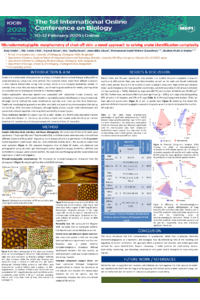
Accurate snake identification is fundamental for ecological research, biodiversity conservation, and snakebite management, particularly when dealing with medically important venomous species. Traditional morphological methods, however, are often unreliable and pose serious envenomation risks during live handling, while molecular approaches—though precise—require costly infrastructure and technical expertise, limiting their accessibility in many regions. These challenges highlight the urgent need for a safer, reliable, and field-friendly alternative. In this study, we present a novel, non-invasive identification method based on the micro-dermatoglyphic features of shed snake skin. Shed skins, commonly deposited in safe habitats during ecdysis, are readily detectable in the field and can retain microscopic structural traits for extended periods. We quantified six micro-dermatoglyphic features (edge perimeter, edge area, edge widest part distance, follicle perimeter, follicle area, and number of follicles per 20,000 µm²) from three head, nine trunk, and three tail scales in seven individuals each of Naja kaouthia and Naja naja. Statistical analyses demonstrated that these features not only reliably distinguish between the two species but also differentiate between sexes. Among the traits, edge widest part distance emerged as the most powerful discriminator, correctly separating 93.3% of scales between species (p < 0.001), followed by edge area (86.7%) and number of follicles per 20,000 µm² (46.7%). Furthermore, sex-based differences were significant (p < 0.001), with edge area distinguishing 60% of scales in N. kaouthia and 20% in N. naja. This study introduces the first demonstration of quantitative, rather than qualitative, shed-skin microdermatoglyphics as a taxonomic and ecological tool. By eliminating the risks of live handling and bypassing molecular constraints, this approach offers a practical, non-invasive, and widely applicable method for snake identification. Beyond taxonomy, it holds promise for evolutionary studies, biodiversity monitoring, and informing conservation and public health strategies in snakebite-prone regions.
Keywords
Snake
ecdysis
microdermatoglyphics
species differentiation
non-invasive method
snake taxonomy
novel method.
Poster
Microdermatoglyphic morphometry.pdf
Does floral resource utilization shape the dynamics of the pierid butterfly community across the Eastern Himalayan landscape of West Bengal, India?
Breeding Biology of the Long-tailed Shrike (Lanius schach) and Its Response to Brood Parasitism by the Asian Koel (Eudynamys scolopaceus)