Event submissions
Published
This submission belongs to the session S5. Zoology of the event The 1st International Online Conference on Biology
Published date
05 Feb, 2026
Academic Editor
'%3e%3cpath%20d='M12.6657%2010.9104C12.4185%2010.325%2012.0599%209.79327%2011.6097%209.34482C11.1609%208.89508%2010.6293%208.5365%2010.0442%208.28888C10.0389%208.28626%2010.0337%208.28495%2010.0285%208.28233C10.8446%207.69279%2011.3752%206.73249%2011.3752%205.64904C11.3752%203.8542%209.92103%202.39999%208.1262%202.39999C6.33136%202.39999%204.87715%203.8542%204.87715%205.64904C4.87715%206.73249%205.40774%207.69279%206.22393%208.28364C6.21869%208.28626%206.21345%208.28757%206.20821%208.29019C5.62129%208.5378%205.09463%208.89284%204.64265%209.34613C4.1929%209.79493%203.83432%2010.3266%203.58671%2010.9117C3.34345%2011.4845%203.21226%2012.0987%203.20023%2012.7209C3.19988%2012.7349%203.20233%2012.7488%203.20744%2012.7619C3.21255%2012.7749%203.22022%2012.7867%203.22998%2012.7968C3.23975%2012.8068%203.25142%2012.8147%203.26431%2012.8202C3.2772%2012.8256%203.29105%2012.8284%203.30504%2012.8284H4.09109C4.14874%2012.8284%204.19459%2012.7825%204.1959%2012.7262C4.2221%2011.7148%204.62823%2010.7676%205.34617%2010.0497C6.08899%209.30683%207.0755%208.89808%208.1262%208.89808C9.17689%208.89808%2010.1634%209.30683%2010.9062%2010.0497C11.6242%2010.7676%2012.0303%2011.7148%2012.0565%2012.7262C12.0578%2012.7838%2012.1037%2012.8284%2012.1613%2012.8284H12.9474C12.9613%2012.8284%2012.9752%2012.8256%2012.9881%2012.8202C13.001%2012.8147%2013.0126%2012.8068%2013.0224%2012.7968C13.0322%2012.7867%2013.0398%2012.7749%2013.0449%2012.7619C13.0501%2012.7488%2013.0525%2012.7349%2013.0522%2012.7209C13.0391%2012.0947%2012.9094%2011.4855%2012.6657%2010.9104ZM8.1262%207.9024C7.52486%207.9024%206.9589%207.6679%206.53312%207.24211C6.10733%206.81633%205.87283%206.25037%205.87283%205.64904C5.87283%205.0477%206.10733%204.48174%206.53312%204.05596C6.9589%203.63018%207.52486%203.39567%208.1262%203.39567C8.72753%203.39567%209.29349%203.63018%209.71927%204.05596C10.1451%204.48174%2010.3796%205.0477%2010.3796%205.64904C10.3796%206.25037%2010.1451%206.81633%209.71927%207.24211C9.29349%207.6679%208.72753%207.9024%208.1262%207.9024Z'%20fill='%235D1EE1'/%3e%3c/g%3e%3c/svg%3e) Vincent BELS
Vincent BELSCitation
Bouthaina SMIDA, Aicha DJABOURABI, Hamou BENMAATOUK, Abdallah AOUADI, Chahinez BOUALLEG, Effect of some physicochemical parameters on the zooplankton community of Lake Oubeira - a Ramsar wetland in the extreme east of Algeria-, in Proceedings of The 1st International Online Conference on Biology, 10 February–12 February 2026, MDPI: Basel, Switzerland
Share
Email
Facebook
Twitter
LinkedIn
Effect of some physicochemical parameters on the zooplankton community of Lake Oubeira - a Ramsar wetland in the extreme east of Algeria-
'%3e%3cpath%20d='M12.6647%2010.9104C12.4176%2010.325%2012.0589%209.7933%2011.6088%209.34485C11.16%208.89511%2010.6283%208.53653%2010.0432%208.28891C10.038%208.28629%2010.0327%208.28498%2010.0275%208.28236C10.8437%207.69282%2011.3743%206.73252%2011.3743%205.64907C11.3743%203.85423%209.92005%202.40002%208.12522%202.40002C6.33038%202.40002%204.87618%203.85423%204.87618%205.64907C4.87618%206.73252%205.40677%207.69282%206.22296%208.28367C6.21772%208.28629%206.21248%208.2876%206.20724%208.29022C5.62031%208.53783%205.09365%208.89287%204.64167%209.34616C4.19192%209.79496%203.83334%2010.3266%203.58573%2010.9117C3.34247%2011.4846%203.21128%2012.0987%203.19925%2012.721C3.1989%2012.735%203.20135%2012.7489%203.20646%2012.7619C3.21157%2012.7749%203.21924%2012.7868%203.22901%2012.7968C3.23877%2012.8068%203.25045%2012.8148%203.26334%2012.8202C3.27623%2012.8256%203.29007%2012.8284%203.30406%2012.8284H4.09012C4.14776%2012.8284%204.19362%2012.7825%204.19493%2012.7262C4.22113%2011.7148%204.62726%2010.7676%205.34519%2010.0497C6.08802%209.30686%207.07452%208.89811%208.12522%208.89811C9.17592%208.89811%2010.1624%209.30686%2010.9052%2010.0497C11.6232%2010.7676%2012.0293%2011.7148%2012.0555%2012.7262C12.0568%2012.7839%2012.1027%2012.8284%2012.1603%2012.8284H12.9464C12.9604%2012.8284%2012.9742%2012.8256%2012.9871%2012.8202C13%2012.8148%2013.0117%2012.8068%2013.0214%2012.7968C13.0312%2012.7868%2013.0389%2012.7749%2013.044%2012.7619C13.0491%2012.7489%2013.0515%2012.735%2013.0512%2012.721C13.0381%2012.0947%2012.9084%2011.4856%2012.6647%2010.9104ZM8.12522%207.90243C7.52388%207.90243%206.95792%207.66793%206.53214%207.24215C6.10636%206.81636%205.87185%206.2504%205.87185%205.64907C5.87185%205.04773%206.10636%204.48177%206.53214%204.05599C6.95792%203.63021%207.52388%203.3957%208.12522%203.3957C8.72655%203.3957%209.29252%203.63021%209.7183%204.05599C10.1441%204.48177%2010.3786%205.04773%2010.3786%205.64907C10.3786%206.2504%2010.1441%206.81636%209.7183%207.24215C9.29252%207.66793%208.72655%207.90243%208.12522%207.90243Z'%20fill='%235D1EE1'/%3e%3c/g%3e%3c/svg%3e)
Bouthaina SMIDA 1
Aicha DJABOURABI 2
Hamou BENMAATOUK 1
Abdallah AOUADI 3
Chahinez BOUALLEG 4
1. Biodiversity and Ecosystem Pollution Laboratory, Department of Marine Sciences, Faculty of Nature and Life Sciences, University Chadli Bendjedid -El Tarf-, EI Tarf, Algeria
2. Functional and Evolutionary Ecology Laboratory, Faculty of Nature and Life Sciences, Chadli Bendjedid University -El Tarf-, EI Tarf, Algeria
3. Biology Department, Faculty of Nature and Life Sciences, Chadli Benjdid University –El Tarf- , EI Tarf, Algeria
4. Aquatic and Terrestrial Ecosystems Laboratory, Biology Department, Faculty of Nature and Life Sciences, Mohamed Cherif Messaadia University, Souk Ahras, Algeria
Abstract
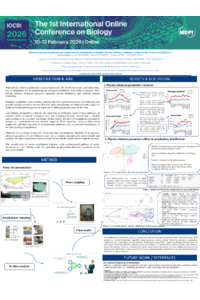
This study aims to evaluate the variability of physico-chemical parameters and their influence on zooplankton communities in Lake Oubeira. The issue that arises in this context is how does the seasonal variability of physico-chemical parameters structure the spatiotemporal distribution of zooplankton communities in Lake Oubeira?
Two sampling stations were selected: station 1: Demnet Errihane north of the lake; station 2: Oued Messida south of Lake Oubeira. The physico-chemical parameters of the environment are measured in situ using a multiparameter, monthly from January 2021 to January 2022. The zooplankton sampling was carried out using a zooplankton net (mesh size = 50 μm), 50 liters of lake water were filtered per sample to obtain a concentrated volume of 50 to 120 ml, 3 ml of the concentrate were subsequently observed under an optical microscope.
After taxonomic identification and the enumeration of zooplankton individuals, statistical data analysis -software R- revealed that: the temperature reaches its maximum in summer and decreases in winter, while the dissolved oxygen concentration is higher in spring. As for the autumn, it is distinguished by high values of electrical conductivity and pH.
PERMANOVA test revealed a very highly significant effect of seasons on species distribution (P-value < 0.001), while "stations" factor showed no significant effect.
The results of NMDS (Non-Metric Multidimensional Scaling) analysis indicated a marked seasonal structuring of communities. Copepods are predominantly abundant during the warm seasons, while rotifers and cladocerans predominate in colder seasons. Moreover, some species have a broader distribution, being observed over several seasons. At the end of this research work, we can confirm that physico-chemical parameters such as temperature, pH, dissolved oxygen, electrical conductivity strongly structure the zooplankton communities of Lake Oubeira. These results highlight the role of zooplankton as a valuable bioindicator of ecosystem health through its sensitivity to environmental change.
Keywords
Lake Oubeira
Freshwater physicochemistry
zooplankton.
Poster
sciforum poster SMIDA Bouthaina.pdf
The Effects of Nymphaea lotus on Apoptosis and Inflammation in Diabetes-Induced Heart Injury
Fasciola worm-based antigen and its potentials in the diagnosis of urogenital schistosomiasis in resource-limited endemic areas