Event submissions
Published
This submission belongs to the session S1. Evolutionary Biology of the event The 1st International Online Conference on Biology
Published date
05 Feb, 2026
Academic Editor
'%3e%3cpath%20d='M12.6657%2010.9104C12.4185%2010.325%2012.0599%209.79327%2011.6097%209.34482C11.1609%208.89508%2010.6293%208.5365%2010.0442%208.28888C10.0389%208.28626%2010.0337%208.28495%2010.0285%208.28233C10.8446%207.69279%2011.3752%206.73249%2011.3752%205.64904C11.3752%203.8542%209.92103%202.39999%208.1262%202.39999C6.33136%202.39999%204.87715%203.8542%204.87715%205.64904C4.87715%206.73249%205.40774%207.69279%206.22393%208.28364C6.21869%208.28626%206.21345%208.28757%206.20821%208.29019C5.62129%208.5378%205.09463%208.89284%204.64265%209.34613C4.1929%209.79493%203.83432%2010.3266%203.58671%2010.9117C3.34345%2011.4845%203.21226%2012.0987%203.20023%2012.7209C3.19988%2012.7349%203.20233%2012.7488%203.20744%2012.7619C3.21255%2012.7749%203.22022%2012.7867%203.22998%2012.7968C3.23975%2012.8068%203.25142%2012.8147%203.26431%2012.8202C3.2772%2012.8256%203.29105%2012.8284%203.30504%2012.8284H4.09109C4.14874%2012.8284%204.19459%2012.7825%204.1959%2012.7262C4.2221%2011.7148%204.62823%2010.7676%205.34617%2010.0497C6.08899%209.30683%207.0755%208.89808%208.1262%208.89808C9.17689%208.89808%2010.1634%209.30683%2010.9062%2010.0497C11.6242%2010.7676%2012.0303%2011.7148%2012.0565%2012.7262C12.0578%2012.7838%2012.1037%2012.8284%2012.1613%2012.8284H12.9474C12.9613%2012.8284%2012.9752%2012.8256%2012.9881%2012.8202C13.001%2012.8147%2013.0126%2012.8068%2013.0224%2012.7968C13.0322%2012.7867%2013.0398%2012.7749%2013.0449%2012.7619C13.0501%2012.7488%2013.0525%2012.7349%2013.0522%2012.7209C13.0391%2012.0947%2012.9094%2011.4855%2012.6657%2010.9104ZM8.1262%207.9024C7.52486%207.9024%206.9589%207.6679%206.53312%207.24211C6.10733%206.81633%205.87283%206.25037%205.87283%205.64904C5.87283%205.0477%206.10733%204.48174%206.53312%204.05596C6.9589%203.63018%207.52486%203.39567%208.1262%203.39567C8.72753%203.39567%209.29349%203.63018%209.71927%204.05596C10.1451%204.48174%2010.3796%205.0477%2010.3796%205.64904C10.3796%206.25037%2010.1451%206.81633%209.71927%207.24211C9.29349%207.6679%208.72753%207.9024%208.1262%207.9024Z'%20fill='%235D1EE1'/%3e%3c/g%3e%3c/svg%3e) Andrés Moya
Andrés MoyaCitation
María Florencia Fourastié, Renzo Adilardi, Marcela Silvina Rodriguero, Analía Alicia Lanteri, Viviana Confalonieri, Chromosome Number Determination and Karyotype Evolution in Different Species of the Tribe Naupactini (Coleoptera, Curculionidae), in Proceedings of The 1st International Online Conference on Biology, 10 February–12 February 2026, MDPI: Basel, Switzerland
Share
Email
Facebook
Twitter
LinkedIn
Chromosome Number Determination and Karyotype Evolution in Different Species of the Tribe Naupactini (Coleoptera, Curculionidae)
'%3e%3cpath%20d='M12.6647%2010.9104C12.4176%2010.325%2012.0589%209.7933%2011.6088%209.34485C11.16%208.89511%2010.6283%208.53653%2010.0432%208.28891C10.038%208.28629%2010.0327%208.28498%2010.0275%208.28236C10.8437%207.69282%2011.3743%206.73252%2011.3743%205.64907C11.3743%203.85423%209.92005%202.40002%208.12522%202.40002C6.33038%202.40002%204.87618%203.85423%204.87618%205.64907C4.87618%206.73252%205.40677%207.69282%206.22296%208.28367C6.21772%208.28629%206.21248%208.2876%206.20724%208.29022C5.62031%208.53783%205.09365%208.89287%204.64167%209.34616C4.19192%209.79496%203.83334%2010.3266%203.58573%2010.9117C3.34247%2011.4846%203.21128%2012.0987%203.19925%2012.721C3.1989%2012.735%203.20135%2012.7489%203.20646%2012.7619C3.21157%2012.7749%203.21924%2012.7868%203.22901%2012.7968C3.23877%2012.8068%203.25045%2012.8148%203.26334%2012.8202C3.27623%2012.8256%203.29007%2012.8284%203.30406%2012.8284H4.09012C4.14776%2012.8284%204.19362%2012.7825%204.19493%2012.7262C4.22113%2011.7148%204.62726%2010.7676%205.34519%2010.0497C6.08802%209.30686%207.07452%208.89811%208.12522%208.89811C9.17592%208.89811%2010.1624%209.30686%2010.9052%2010.0497C11.6232%2010.7676%2012.0293%2011.7148%2012.0555%2012.7262C12.0568%2012.7839%2012.1027%2012.8284%2012.1603%2012.8284H12.9464C12.9604%2012.8284%2012.9742%2012.8256%2012.9871%2012.8202C13%2012.8148%2013.0117%2012.8068%2013.0214%2012.7968C13.0312%2012.7868%2013.0389%2012.7749%2013.044%2012.7619C13.0491%2012.7489%2013.0515%2012.735%2013.0512%2012.721C13.0381%2012.0947%2012.9084%2011.4856%2012.6647%2010.9104ZM8.12522%207.90243C7.52388%207.90243%206.95792%207.66793%206.53214%207.24215C6.10636%206.81636%205.87185%206.2504%205.87185%205.64907C5.87185%205.04773%206.10636%204.48177%206.53214%204.05599C6.95792%203.63021%207.52388%203.3957%208.12522%203.3957C8.72655%203.3957%209.29252%203.63021%209.7183%204.05599C10.1441%204.48177%2010.3786%205.04773%2010.3786%205.64907C10.3786%206.2504%2010.1441%206.81636%209.7183%207.24215C9.29252%207.66793%208.72655%207.90243%208.12522%207.90243Z'%20fill='%235D1EE1'/%3e%3c/g%3e%3c/svg%3e)
María Florencia Fourastié 1
Renzo Adilardi 2
Marcela Silvina Rodriguero 3
Analía Alicia Lanteri 4
Viviana Confalonieri 3
1. IEGEBA-CONICET, Facultad de Ciencias Exactas y Naturales (DEGE), Universidad de Buenos Aires, Buenos Aires, Argentina
2. R&D Systems | A Bio-Techne Brand, Buenos Aires, Argentina
3. Instituto de Ecología, Genética y Evolución (IEGEBA), CONICET - Universidad de Buenos Aires, Ciudad Autónoma de Buenos Aires, Buenos Aires, Argentina
4. División Entomología, Museo de la Plata, Facultad de Ciencias Naturales y Museo, Universidad Nacional deLa Plata, Paseo del Bosque s/n, La Plata B1900FWA, Argentina
Abstract
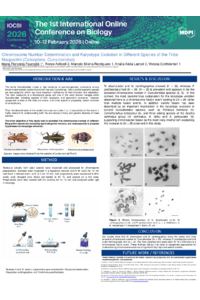
The family Curculionidae shows a high incidence of parthenogenesis, particularly among broad-nosed weevils (subfamilies Entiminae and Cyclominae). Many parthenogenetic species are also polyploid, which may have important implications for their evolution and adaptation. The tribe Naupactini is a Neotropical group and one of the most diverse lineages within Curculionidae, including species of both ecological and agronomic relevance. However, cytogenetic studies of this tribe are scarce, and some reports of polyploidy remain uncertain or contradictory. Thus, the determination of the modal chromosome number (i.e., characteristic of this taxon) is highly relevant for understanding both the evolutionary history and genetic diversity of these species. The main objective of this study was to establish the chromosome number of different Naupactini species by analyzing spermatogonial meiosis, and subsequently to propose hypotheses on karyotype evolution. Between 5 and 10 meiotic preparations were examined for Naupactus dissimulator, Naupactus xanthographus, and Pantomorus postfasciatus, using 5% Giemsa staining. The modal chromosome number was determined: the first two species presented 2n = 22, while the latter showed 2n = 26. At least two possible evolutionary mechanisms were proposed to explain the observed karyotype variation: chromosome fission or fusion. Overall, these cytogenetic studies provide valuable insights into genetic diversity, the evolution of polyploidy, and the chromosomal evolutionary history of these agronomically important species, contributing to a better understanding of their biology and potential management strategies.
Keywords
Curculionidae – Naupactini – Número cromosómico – Poliploidía – Evolución cromosómica
Poster
Poster - Fourastié.pdf
In Vivo Assessment of Rosmarinus officinalis and Olea europaea Leaf Extracts Enriched in Rosmarinic Acid and Oleuropein as Modulators of Metabolic Inflammation
Rapid evolutionary adaptations to parasitology: Insights from basal metazoans belonging to the Myxozoa (Cnidaria)