Event submissions
Published
This submission belongs to the session S2. Smart Grids and AI-Enabled Energy Management Systems of the event The 1st International Online Conference on Designs
Published date
06 Feb, 2026
Academic Editor
'%3e%3cpath%20d='M12.6657%2010.9104C12.4185%2010.325%2012.0599%209.79327%2011.6097%209.34482C11.1609%208.89508%2010.6293%208.5365%2010.0442%208.28888C10.0389%208.28626%2010.0337%208.28495%2010.0285%208.28233C10.8446%207.69279%2011.3752%206.73249%2011.3752%205.64904C11.3752%203.8542%209.92103%202.39999%208.1262%202.39999C6.33136%202.39999%204.87715%203.8542%204.87715%205.64904C4.87715%206.73249%205.40774%207.69279%206.22393%208.28364C6.21869%208.28626%206.21345%208.28757%206.20821%208.29019C5.62129%208.5378%205.09463%208.89284%204.64265%209.34613C4.1929%209.79493%203.83432%2010.3266%203.58671%2010.9117C3.34345%2011.4845%203.21226%2012.0987%203.20023%2012.7209C3.19988%2012.7349%203.20233%2012.7488%203.20744%2012.7619C3.21255%2012.7749%203.22022%2012.7867%203.22998%2012.7968C3.23975%2012.8068%203.25142%2012.8147%203.26431%2012.8202C3.2772%2012.8256%203.29105%2012.8284%203.30504%2012.8284H4.09109C4.14874%2012.8284%204.19459%2012.7825%204.1959%2012.7262C4.2221%2011.7148%204.62823%2010.7676%205.34617%2010.0497C6.08899%209.30683%207.0755%208.89808%208.1262%208.89808C9.17689%208.89808%2010.1634%209.30683%2010.9062%2010.0497C11.6242%2010.7676%2012.0303%2011.7148%2012.0565%2012.7262C12.0578%2012.7838%2012.1037%2012.8284%2012.1613%2012.8284H12.9474C12.9613%2012.8284%2012.9752%2012.8256%2012.9881%2012.8202C13.001%2012.8147%2013.0126%2012.8068%2013.0224%2012.7968C13.0322%2012.7867%2013.0398%2012.7749%2013.0449%2012.7619C13.0501%2012.7488%2013.0525%2012.7349%2013.0522%2012.7209C13.0391%2012.0947%2012.9094%2011.4855%2012.6657%2010.9104ZM8.1262%207.9024C7.52486%207.9024%206.9589%207.6679%206.53312%207.24211C6.10733%206.81633%205.87283%206.25037%205.87283%205.64904C5.87283%205.0477%206.10733%204.48174%206.53312%204.05596C6.9589%203.63018%207.52486%203.39567%208.1262%203.39567C8.72753%203.39567%209.29349%203.63018%209.71927%204.05596C10.1451%204.48174%2010.3796%205.0477%2010.3796%205.64904C10.3796%206.25037%2010.1451%206.81633%209.71927%207.24211C9.29349%207.6679%208.72753%207.9024%208.1262%207.9024Z'%20fill='%235D1EE1'/%3e%3c/g%3e%3c/svg%3e) Wenbin Yu
Wenbin YuCitation
Jader Rodriguez Cortina, John Javier Espitia, Andres Sarmiento, Edwin Villagran, Smart Design and Intelligent Control of Cacao Fermentation Systems: A Technical and Bibliometric Review., in Proceedings of The 1st International Online Conference on Designs, 9 February–10 February 2026, MDPI: Basel, Switzerland
Share
Email
Facebook
Twitter
LinkedIn
Smart Design and Intelligent Control of Cacao Fermentation Systems: A Technical and Bibliometric Review.

Jader Rodriguez Cortina 1
'%3e%3cpath%20d='M12.6647%2010.9104C12.4176%2010.325%2012.0589%209.7933%2011.6088%209.34485C11.16%208.89511%2010.6283%208.53653%2010.0432%208.28891C10.038%208.28629%2010.0327%208.28498%2010.0275%208.28236C10.8437%207.69282%2011.3743%206.73252%2011.3743%205.64907C11.3743%203.85423%209.92005%202.40002%208.12522%202.40002C6.33038%202.40002%204.87618%203.85423%204.87618%205.64907C4.87618%206.73252%205.40677%207.69282%206.22296%208.28367C6.21772%208.28629%206.21248%208.2876%206.20724%208.29022C5.62031%208.53783%205.09365%208.89287%204.64167%209.34616C4.19192%209.79496%203.83334%2010.3266%203.58573%2010.9117C3.34247%2011.4846%203.21128%2012.0987%203.19925%2012.721C3.1989%2012.735%203.20135%2012.7489%203.20646%2012.7619C3.21157%2012.7749%203.21924%2012.7868%203.22901%2012.7968C3.23877%2012.8068%203.25045%2012.8148%203.26334%2012.8202C3.27623%2012.8256%203.29007%2012.8284%203.30406%2012.8284H4.09012C4.14776%2012.8284%204.19362%2012.7825%204.19493%2012.7262C4.22113%2011.7148%204.62726%2010.7676%205.34519%2010.0497C6.08802%209.30686%207.07452%208.89811%208.12522%208.89811C9.17592%208.89811%2010.1624%209.30686%2010.9052%2010.0497C11.6232%2010.7676%2012.0293%2011.7148%2012.0555%2012.7262C12.0568%2012.7839%2012.1027%2012.8284%2012.1603%2012.8284H12.9464C12.9604%2012.8284%2012.9742%2012.8256%2012.9871%2012.8202C13%2012.8148%2013.0117%2012.8068%2013.0214%2012.7968C13.0312%2012.7868%2013.0389%2012.7749%2013.044%2012.7619C13.0491%2012.7489%2013.0515%2012.735%2013.0512%2012.721C13.0381%2012.0947%2012.9084%2011.4856%2012.6647%2010.9104ZM8.12522%207.90243C7.52388%207.90243%206.95792%207.66793%206.53214%207.24215C6.10636%206.81636%205.87185%206.2504%205.87185%205.64907C5.87185%205.04773%206.10636%204.48177%206.53214%204.05599C6.95792%203.63021%207.52388%203.3957%208.12522%203.3957C8.72655%203.3957%209.29252%203.63021%209.7183%204.05599C10.1441%204.48177%2010.3786%205.04773%2010.3786%205.64907C10.3786%206.2504%2010.1441%206.81636%209.7183%207.24215C9.29252%207.66793%208.72655%207.90243%208.12522%207.90243Z'%20fill='%235D1EE1'/%3e%3c/g%3e%3c/svg%3e)
John Javier Espitia 1
Andres Sarmiento 1

Edwin Villagran 1
1. Colombian Corporation for Agricultural Research—Agrosavia, Tibaitatá Research Center, Km 14, Mosquera–Bogotá. Mosquera 250040, Colombia
Abstract
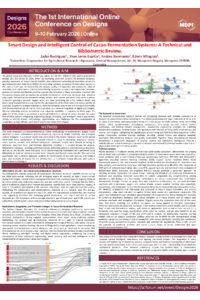
The modernization of cacao fermentation is essential to improve quality consistency, energy efficiency, and process traceability within tropical agro-industries. Traditional fermenters remain highly empirical, lacking thermal control and data-driven optimization. This study presents a technical–bibliometric review of recent research on cacao fermentation systems integrating design, modeling, and intelligent control approaches. A Scopus search covering 2016–2025 retrieved 20 documents from 13 sources, authored by 93 researchers with an international co-authorship rate of 30 % and an annual growth of 8 %. Data were analyzed through bibliometric mapping using VOSviewer and Biblioshiny, focusing on keyword co-occurrence and thematic evolution. Colombia emerged as the leading contributor, followed by Brazil, Canada, China, Côte d’Ivoire, and Ecuador, reflecting the strategic importance of cacao in tropical research agendas. The keyword network revealed three main clusters: (1) a bioprocess–thermal control cluster (red) linking fermentation process, thermal variables, and cocoa beans, oriented to modeling temperature, pH, and microbial kinetics; (2) a machine-learning and predictive modeling cluster (green) including random forests, adaptive boosting, and discriminant analysis, emphasizing algorithmic prediction of fermentation quality; and (3) an IoT and smart devices cluster (blue) focused on process monitoring, sensor networks, and energy control. Despite the growing integration of AI and digital tools, the analysis exposed notable gaps: limited use of hybrid energy systems, scarce CFD-based thermal modeling, and few pilot-scale intelligent fermenter designs for real tropical conditions. Future research should couple renewable-energy management, real-time data analytics, and AI-driven control architectures to develop scalable, sustainable fermentation technologies. These findings position cacao fermentation as an emerging interdisciplinary domain bridging food bioprocess engineering, smart energy design, and artificial intelligence for sustainable agro-industrial transformation.
Keywords
Cacao fermentation
intelligent control
machine learning
IoT
process modeling
renewable energy
bibliometric analysis
sustainable agro-industry.
Poster
sciforum-154004.pdf
Hybrid Solar–Biomass Energy Systems for Rural Agro-Industrial Applications: A Technical and Bibliometric Review
Federated Learning for Energy-Aware Decision Systems in Smart Built Environments