Event submissions
Published
This submission belongs to the session S3. Terrestrial and Marine Biodiversity and Habitat Loss Prevention of the event The 1st International Online Conference on Environments
Published date
27 Feb, 2026
Academic Editor
'%3e%3cpath%20d='M12.6657%2010.9104C12.4185%2010.325%2012.0599%209.79327%2011.6097%209.34482C11.1609%208.89508%2010.6293%208.5365%2010.0442%208.28888C10.0389%208.28626%2010.0337%208.28495%2010.0285%208.28233C10.8446%207.69279%2011.3752%206.73249%2011.3752%205.64904C11.3752%203.8542%209.92103%202.39999%208.1262%202.39999C6.33136%202.39999%204.87715%203.8542%204.87715%205.64904C4.87715%206.73249%205.40774%207.69279%206.22393%208.28364C6.21869%208.28626%206.21345%208.28757%206.20821%208.29019C5.62129%208.5378%205.09463%208.89284%204.64265%209.34613C4.1929%209.79493%203.83432%2010.3266%203.58671%2010.9117C3.34345%2011.4845%203.21226%2012.0987%203.20023%2012.7209C3.19988%2012.7349%203.20233%2012.7488%203.20744%2012.7619C3.21255%2012.7749%203.22022%2012.7867%203.22998%2012.7968C3.23975%2012.8068%203.25142%2012.8147%203.26431%2012.8202C3.2772%2012.8256%203.29105%2012.8284%203.30504%2012.8284H4.09109C4.14874%2012.8284%204.19459%2012.7825%204.1959%2012.7262C4.2221%2011.7148%204.62823%2010.7676%205.34617%2010.0497C6.08899%209.30683%207.0755%208.89808%208.1262%208.89808C9.17689%208.89808%2010.1634%209.30683%2010.9062%2010.0497C11.6242%2010.7676%2012.0303%2011.7148%2012.0565%2012.7262C12.0578%2012.7838%2012.1037%2012.8284%2012.1613%2012.8284H12.9474C12.9613%2012.8284%2012.9752%2012.8256%2012.9881%2012.8202C13.001%2012.8147%2013.0126%2012.8068%2013.0224%2012.7968C13.0322%2012.7867%2013.0398%2012.7749%2013.0449%2012.7619C13.0501%2012.7488%2013.0525%2012.7349%2013.0522%2012.7209C13.0391%2012.0947%2012.9094%2011.4855%2012.6657%2010.9104ZM8.1262%207.9024C7.52486%207.9024%206.9589%207.6679%206.53312%207.24211C6.10733%206.81633%205.87283%206.25037%205.87283%205.64904C5.87283%205.0477%206.10733%204.48174%206.53312%204.05596C6.9589%203.63018%207.52486%203.39567%208.1262%203.39567C8.72753%203.39567%209.29349%203.63018%209.71927%204.05596C10.1451%204.48174%2010.3796%205.0477%2010.3796%205.64904C10.3796%206.25037%2010.1451%206.81633%209.71927%207.24211C9.29349%207.6679%208.72753%207.9024%208.1262%207.9024Z'%20fill='%235D1EE1'/%3e%3c/g%3e%3c/svg%3e) Claudio Agnisola
Claudio AgnisolaCitation
Valentina Bernarello, Federica Oselladore, Federica Cacciatore, Michele Cornello, Marta Novello, Alessandra Girolimetto, Andrea Bonometto, Rossella Boscolo Brusà, Changes in the macrozoobenthic community across coastal lagoons in the Po River Delta (Northern Adriatic Sea, Italy) during the outbreak years of the blue crab Callinectes sapidus (Rathbun, 1896), in Proceedings of The 1st International Online Conference on Environments, 2 March–4 March 2026, MDPI: Basel, Switzerland
Share
Email
Facebook
Twitter
LinkedIn
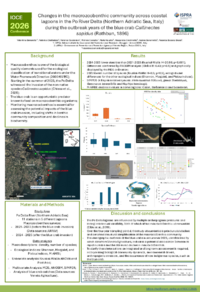
Changes in the macrozoobenthic community across coastal lagoons in the Po River Delta (Northern Adriatic Sea, Italy) during the outbreak years of the blue crab Callinectes sapidus (Rathbun, 1896)
'%3e%3cpath%20d='M12.6647%2010.9104C12.4176%2010.325%2012.0589%209.7933%2011.6088%209.34485C11.16%208.89511%2010.6283%208.53653%2010.0432%208.28891C10.038%208.28629%2010.0327%208.28498%2010.0275%208.28236C10.8437%207.69282%2011.3743%206.73252%2011.3743%205.64907C11.3743%203.85423%209.92005%202.40002%208.12522%202.40002C6.33038%202.40002%204.87618%203.85423%204.87618%205.64907C4.87618%206.73252%205.40677%207.69282%206.22296%208.28367C6.21772%208.28629%206.21248%208.2876%206.20724%208.29022C5.62031%208.53783%205.09365%208.89287%204.64167%209.34616C4.19192%209.79496%203.83334%2010.3266%203.58573%2010.9117C3.34247%2011.4846%203.21128%2012.0987%203.19925%2012.721C3.1989%2012.735%203.20135%2012.7489%203.20646%2012.7619C3.21157%2012.7749%203.21924%2012.7868%203.22901%2012.7968C3.23877%2012.8068%203.25045%2012.8148%203.26334%2012.8202C3.27623%2012.8256%203.29007%2012.8284%203.30406%2012.8284H4.09012C4.14776%2012.8284%204.19362%2012.7825%204.19493%2012.7262C4.22113%2011.7148%204.62726%2010.7676%205.34519%2010.0497C6.08802%209.30686%207.07452%208.89811%208.12522%208.89811C9.17592%208.89811%2010.1624%209.30686%2010.9052%2010.0497C11.6232%2010.7676%2012.0293%2011.7148%2012.0555%2012.7262C12.0568%2012.7839%2012.1027%2012.8284%2012.1603%2012.8284H12.9464C12.9604%2012.8284%2012.9742%2012.8256%2012.9871%2012.8202C13%2012.8148%2013.0117%2012.8068%2013.0214%2012.7968C13.0312%2012.7868%2013.0389%2012.7749%2013.044%2012.7619C13.0491%2012.7489%2013.0515%2012.735%2013.0512%2012.721C13.0381%2012.0947%2012.9084%2011.4856%2012.6647%2010.9104ZM8.12522%207.90243C7.52388%207.90243%206.95792%207.66793%206.53214%207.24215C6.10636%206.81636%205.87185%206.2504%205.87185%205.64907C5.87185%205.04773%206.10636%204.48177%206.53214%204.05599C6.95792%203.63021%207.52388%203.3957%208.12522%203.3957C8.72655%203.3957%209.29252%203.63021%209.7183%204.05599C10.1441%204.48177%2010.3786%205.04773%2010.3786%205.64907C10.3786%206.2504%2010.1441%206.81636%209.7183%207.24215C9.29252%207.66793%208.72655%207.90243%208.12522%207.90243Z'%20fill='%235D1EE1'/%3e%3c/g%3e%3c/svg%3e)
Valentina Bernarello 1
Federica Oselladore 1

Federica Cacciatore 1
Michele Cornello 1
Marta Novello 2
Alessandra Girolimetto 2
Andrea Bonometto 1

Rossella Boscolo Brusà 1
1. CN-COS/Tides and Lagoons Area, ISPRA, Italian Institute for Environmental Protection and Research, Chioggia – Venice 30015, Italy
2. Marine and Lagoon Water Monitoring Department, ARPAV - Environmental Prevention and Protection Agency of Veneto Region, Padua 35131, Italy
Abstract
The Po River Delta, situated in the Northwestern Adriatic Sea, is the largest river delta in Italy. It covers an area of 685 km2 and includes seven coastal lagoons. Since spring 2023, the presence of the alien invasive species Callinectes sapidus has increased rapidly in the area, causing damage, especially to the shellfish sector.
The blue crab is an opportunistic predator known to feed on macrozoobenthic organisms. Since macrozoobenthos is one of the biological quality elements used in the ecological classification of transitional waters under the Water Framework Directive (2000/60/EC), its monitoring is essential to assess potential impacts of the blue crab invasion, mostly through analysis of changes in benthic community composition and abundance. To this aim, two sampling campaigns were carried out in 2024 and 2025 at 11 stations across five lagoons of the Po River Delta.
The results were compared with data from previous years (2021-2023), collected within the WFD network.
The analysis of diversity and ecological indices showed variable trends over the years, with differences only identified for density, with lower values in 2024 and 2025 compared to the previous years.
Multivariate analyses also confirmed differences between 2024-2025 and 2021-2023 (ANOSIM for Factor “Year” Global R: 0.429; p=0.1%).
SIMPER analysis showed a different distribution of common species over the years, including Heteromastus filiformis, and species of the genus Streblospio, Gammarus insensibilis and Nephtys hombergii.
Also, the M-AMBI index confirmed a deterioration in ecological quality status over the last two years.
Even though the environmental status of the Po River Delta lagoons is influenced by multiple anthropogenic pressures and shows interannual variability, the results suggest that, considering market data showing a sharp increase in blue crab catches since July 2023, the blue crab may have affected the biodiversity of the macrozoobenthic community during the past two years.
Keywords
Transitional Waters
Macrozoobenthos
Biodiversity
Ecological indicators
Invasive species
Callinectes sapidus
Poster
Poster_IOCE_Bernarello_et_al.pdf
Military Pollutant Emissions
Mercury Speciation and Functional Gene Markers in Amazonian River Biofilms