Event submissions
Published
This submission belongs to the session 10. Submissions under other topics of Plant Protection of the event The 1st International Electronic Conference on Plant Protection
Published date
01 Mar, 2026
Academic Editor
'%3e%3cpath%20d='M12.6657%2010.9104C12.4185%2010.325%2012.0599%209.79327%2011.6097%209.34482C11.1609%208.89508%2010.6293%208.5365%2010.0442%208.28888C10.0389%208.28626%2010.0337%208.28495%2010.0285%208.28233C10.8446%207.69279%2011.3752%206.73249%2011.3752%205.64904C11.3752%203.8542%209.92103%202.39999%208.1262%202.39999C6.33136%202.39999%204.87715%203.8542%204.87715%205.64904C4.87715%206.73249%205.40774%207.69279%206.22393%208.28364C6.21869%208.28626%206.21345%208.28757%206.20821%208.29019C5.62129%208.5378%205.09463%208.89284%204.64265%209.34613C4.1929%209.79493%203.83432%2010.3266%203.58671%2010.9117C3.34345%2011.4845%203.21226%2012.0987%203.20023%2012.7209C3.19988%2012.7349%203.20233%2012.7488%203.20744%2012.7619C3.21255%2012.7749%203.22022%2012.7867%203.22998%2012.7968C3.23975%2012.8068%203.25142%2012.8147%203.26431%2012.8202C3.2772%2012.8256%203.29105%2012.8284%203.30504%2012.8284H4.09109C4.14874%2012.8284%204.19459%2012.7825%204.1959%2012.7262C4.2221%2011.7148%204.62823%2010.7676%205.34617%2010.0497C6.08899%209.30683%207.0755%208.89808%208.1262%208.89808C9.17689%208.89808%2010.1634%209.30683%2010.9062%2010.0497C11.6242%2010.7676%2012.0303%2011.7148%2012.0565%2012.7262C12.0578%2012.7838%2012.1037%2012.8284%2012.1613%2012.8284H12.9474C12.9613%2012.8284%2012.9752%2012.8256%2012.9881%2012.8202C13.001%2012.8147%2013.0126%2012.8068%2013.0224%2012.7968C13.0322%2012.7867%2013.0398%2012.7749%2013.0449%2012.7619C13.0501%2012.7488%2013.0525%2012.7349%2013.0522%2012.7209C13.0391%2012.0947%2012.9094%2011.4855%2012.6657%2010.9104ZM8.1262%207.9024C7.52486%207.9024%206.9589%207.6679%206.53312%207.24211C6.10733%206.81633%205.87283%206.25037%205.87283%205.64904C5.87283%205.0477%206.10733%204.48174%206.53312%204.05596C6.9589%203.63018%207.52486%203.39567%208.1262%203.39567C8.72753%203.39567%209.29349%203.63018%209.71927%204.05596C10.1451%204.48174%2010.3796%205.0477%2010.3796%205.64904C10.3796%206.25037%2010.1451%206.81633%209.71927%207.24211C9.29349%207.6679%208.72753%207.9024%208.1262%207.9024Z'%20fill='%235D1EE1'/%3e%3c/g%3e%3c/svg%3e) Jorge M. S. Faria
Jorge M. S. FariaCitation
Babur Ali Akbar, Peroxidase–Proline Coordination as a Biochemical Signature of Photoperiod Tolerance in Ginger (Zingiber officinale): Antioxidant Mechanisms, Shade Adaptation, and Biomarker-Guided Selection, in Proceedings of The 1st International Electronic Conference on Plant Protection, 2 March–8 March 2026, MDPI: Basel, Switzerland
Share
Email
Facebook
Twitter
LinkedIn
Peroxidase–Proline Coordination as a Biochemical Signature of Photoperiod Tolerance in Ginger (Zingiber officinale): Antioxidant Mechanisms, Shade Adaptation, and Biomarker-Guided Selection
'%3e%3cpath%20d='M12.6647%2010.9104C12.4176%2010.325%2012.0589%209.7933%2011.6088%209.34485C11.16%208.89511%2010.6283%208.53653%2010.0432%208.28891C10.038%208.28629%2010.0327%208.28498%2010.0275%208.28236C10.8437%207.69282%2011.3743%206.73252%2011.3743%205.64907C11.3743%203.85423%209.92005%202.40002%208.12522%202.40002C6.33038%202.40002%204.87618%203.85423%204.87618%205.64907C4.87618%206.73252%205.40677%207.69282%206.22296%208.28367C6.21772%208.28629%206.21248%208.2876%206.20724%208.29022C5.62031%208.53783%205.09365%208.89287%204.64167%209.34616C4.19192%209.79496%203.83334%2010.3266%203.58573%2010.9117C3.34247%2011.4846%203.21128%2012.0987%203.19925%2012.721C3.1989%2012.735%203.20135%2012.7489%203.20646%2012.7619C3.21157%2012.7749%203.21924%2012.7868%203.22901%2012.7968C3.23877%2012.8068%203.25045%2012.8148%203.26334%2012.8202C3.27623%2012.8256%203.29007%2012.8284%203.30406%2012.8284H4.09012C4.14776%2012.8284%204.19362%2012.7825%204.19493%2012.7262C4.22113%2011.7148%204.62726%2010.7676%205.34519%2010.0497C6.08802%209.30686%207.07452%208.89811%208.12522%208.89811C9.17592%208.89811%2010.1624%209.30686%2010.9052%2010.0497C11.6232%2010.7676%2012.0293%2011.7148%2012.0555%2012.7262C12.0568%2012.7839%2012.1027%2012.8284%2012.1603%2012.8284H12.9464C12.9604%2012.8284%2012.9742%2012.8256%2012.9871%2012.8202C13%2012.8148%2013.0117%2012.8068%2013.0214%2012.7968C13.0312%2012.7868%2013.0389%2012.7749%2013.044%2012.7619C13.0491%2012.7489%2013.0515%2012.735%2013.0512%2012.721C13.0381%2012.0947%2012.9084%2011.4856%2012.6647%2010.9104ZM8.12522%207.90243C7.52388%207.90243%206.95792%207.66793%206.53214%207.24215C6.10636%206.81636%205.87185%206.2504%205.87185%205.64907C5.87185%205.04773%206.10636%204.48177%206.53214%204.05599C6.95792%203.63021%207.52388%203.3957%208.12522%203.3957C8.72655%203.3957%209.29252%203.63021%209.7183%204.05599C10.1441%204.48177%2010.3786%205.04773%2010.3786%205.64907C10.3786%206.2504%2010.1441%206.81636%209.7183%207.24215C9.29252%207.66793%208.72655%207.90243%208.12522%207.90243Z'%20fill='%235D1EE1'/%3e%3c/g%3e%3c/svg%3e)
Babur Ali Akbar 1
1. Centre of Agricultural Biochemistry and Biotechnology, faculty of Agriculture, University of Agriculture Faisalabad, Faisalabad, 64101 , Pakistan
Abstract
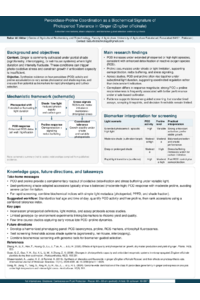
Ginger (Zingiber officinale R.) represents a commercially important rhizomatous crop adapted to tropical and subtropical shade environments, exhibiting marked physiological flexibility in response to varying photoperiodic conditions. Despite its agronomic significance and widespread cultivation, the underlying biochemical mechanisms governing light duration tolerance in this species remain poorly understood within the scientific literature. The present review summary examines the pivotal roles of peroxidase (POD) activity and proline accumulation as potential physiological indicators of photoadaptive stress tolerance mechanisms in Z. officinale, synthesizing available evidence from disparate studies to construct a coherent mechanistic framework. Peroxidase, a principal enzymatic component of the plant antioxidant defense system, functions centrally in the detoxification of reactive oxygen species generated during photosynthetic stress, particularly under prolonged or attenuated light regimes. Existing investigations demonstrate that POD activity increases substantially in ginger tissues exposed to extended photoperiods, reflecting adaptive upregulation of oxidative stress management capacity. Proline, an amino acid and compatible solute accumulates preferentially under light-limiting conditions, serving dual functions as both a cellular protectant against osmotic perturbation and a signaling molecule within stress response pathways. The empirical record indicates coordinated elevation of both POD activity and proline content under suboptimal light duration scenarios, suggesting these parameters function inter-relatedly rather than as independent stress indicators. Comparative investigations across ginger germplasm reveal considerable variation in the magnitude of biochemical responses, attributable to underlying genetic differences and phenotypic adaptation capacity. The literature further suggests that cultivars demonstrating robust POD activity and elevated proline biosynthesis capacity generally sustain superior growth performance under shade-cultivation practices common in agroforestry systems. However, substantial knowledge gaps persist regarding the precise genetic regulation of these biochemical responses and their molecular coordination under variable light conditions. Few studies have systematically evaluated the predictive utility of these biomarkers for rapid phenotyping and cultivar selection purposes. This study critically evidence base, identifies methodological inconsistencies across published investigations, discusses the physiological significance of these markers in light tolerance mechanisms, and proposes future research directions. Enhanced understanding of POD-proline interactions could facilitate development of screening protocols for identifying light-tolerant ginger accessions, thereby supporting improved cultivation strategies suited to diverse agroecological environments and diverse lighting regimes encountered in intercropping production systems.
Keywords
Ginger (Zingiber officinale R.)
Peroxidase (POD)
photoadaptive stress tolerance
Proline
light tolerance mechanisms,
Poster
Babur Ali Akbar (22).pdf
Moringa (Moringa oleifera)–Vegetable Agrisilviculture Under Fertilizer Inputs: Evidence Synthesis of Productivity Outcomes, Soil Fertility Trajectories, and Tree–Crop–Soil Mechanisms
Pear Stigmatic Exudate microRNAs as Next-Generation Anti–Fire Blight Biocontrols: Cross-Kingdom Mechanisms Targeting Erwinia amylovora, Technical Barriers, and Translational Pathways for IPM