Event submissions
Published
This submission belongs to the session 2. Innovations in Integrated Pest Management (IPM) of the event The 1st International Electronic Conference on Plant Protection
Published date
01 Mar, 2026
Academic Editor
'%3e%3cpath%20d='M12.6657%2010.9104C12.4185%2010.325%2012.0599%209.79327%2011.6097%209.34482C11.1609%208.89508%2010.6293%208.5365%2010.0442%208.28888C10.0389%208.28626%2010.0337%208.28495%2010.0285%208.28233C10.8446%207.69279%2011.3752%206.73249%2011.3752%205.64904C11.3752%203.8542%209.92103%202.39999%208.1262%202.39999C6.33136%202.39999%204.87715%203.8542%204.87715%205.64904C4.87715%206.73249%205.40774%207.69279%206.22393%208.28364C6.21869%208.28626%206.21345%208.28757%206.20821%208.29019C5.62129%208.5378%205.09463%208.89284%204.64265%209.34613C4.1929%209.79493%203.83432%2010.3266%203.58671%2010.9117C3.34345%2011.4845%203.21226%2012.0987%203.20023%2012.7209C3.19988%2012.7349%203.20233%2012.7488%203.20744%2012.7619C3.21255%2012.7749%203.22022%2012.7867%203.22998%2012.7968C3.23975%2012.8068%203.25142%2012.8147%203.26431%2012.8202C3.2772%2012.8256%203.29105%2012.8284%203.30504%2012.8284H4.09109C4.14874%2012.8284%204.19459%2012.7825%204.1959%2012.7262C4.2221%2011.7148%204.62823%2010.7676%205.34617%2010.0497C6.08899%209.30683%207.0755%208.89808%208.1262%208.89808C9.17689%208.89808%2010.1634%209.30683%2010.9062%2010.0497C11.6242%2010.7676%2012.0303%2011.7148%2012.0565%2012.7262C12.0578%2012.7838%2012.1037%2012.8284%2012.1613%2012.8284H12.9474C12.9613%2012.8284%2012.9752%2012.8256%2012.9881%2012.8202C13.001%2012.8147%2013.0126%2012.8068%2013.0224%2012.7968C13.0322%2012.7867%2013.0398%2012.7749%2013.0449%2012.7619C13.0501%2012.7488%2013.0525%2012.7349%2013.0522%2012.7209C13.0391%2012.0947%2012.9094%2011.4855%2012.6657%2010.9104ZM8.1262%207.9024C7.52486%207.9024%206.9589%207.6679%206.53312%207.24211C6.10733%206.81633%205.87283%206.25037%205.87283%205.64904C5.87283%205.0477%206.10733%204.48174%206.53312%204.05596C6.9589%203.63018%207.52486%203.39567%208.1262%203.39567C8.72753%203.39567%209.29349%203.63018%209.71927%204.05596C10.1451%204.48174%2010.3796%205.0477%2010.3796%205.64904C10.3796%206.25037%2010.1451%206.81633%209.71927%207.24211C9.29349%207.6679%208.72753%207.9024%208.1262%207.9024Z'%20fill='%235D1EE1'/%3e%3c/g%3e%3c/svg%3e) Ines Silva
Ines SilvaCitation
Babur Ali Akbar, Investigating the behaviour of nucleic acid based nanoparticles in plants for next generation crop protection, in Proceedings of The 1st International Electronic Conference on Plant Protection, 2 March–8 March 2026, MDPI: Basel, Switzerland
Share
Email
Facebook
Twitter
LinkedIn
Investigating the behaviour of nucleic acid based nanoparticles in plants for next generation crop protection
'%3e%3cpath%20d='M12.6647%2010.9104C12.4176%2010.325%2012.0589%209.7933%2011.6088%209.34485C11.16%208.89511%2010.6283%208.53653%2010.0432%208.28891C10.038%208.28629%2010.0327%208.28498%2010.0275%208.28236C10.8437%207.69282%2011.3743%206.73252%2011.3743%205.64907C11.3743%203.85423%209.92005%202.40002%208.12522%202.40002C6.33038%202.40002%204.87618%203.85423%204.87618%205.64907C4.87618%206.73252%205.40677%207.69282%206.22296%208.28367C6.21772%208.28629%206.21248%208.2876%206.20724%208.29022C5.62031%208.53783%205.09365%208.89287%204.64167%209.34616C4.19192%209.79496%203.83334%2010.3266%203.58573%2010.9117C3.34247%2011.4846%203.21128%2012.0987%203.19925%2012.721C3.1989%2012.735%203.20135%2012.7489%203.20646%2012.7619C3.21157%2012.7749%203.21924%2012.7868%203.22901%2012.7968C3.23877%2012.8068%203.25045%2012.8148%203.26334%2012.8202C3.27623%2012.8256%203.29007%2012.8284%203.30406%2012.8284H4.09012C4.14776%2012.8284%204.19362%2012.7825%204.19493%2012.7262C4.22113%2011.7148%204.62726%2010.7676%205.34519%2010.0497C6.08802%209.30686%207.07452%208.89811%208.12522%208.89811C9.17592%208.89811%2010.1624%209.30686%2010.9052%2010.0497C11.6232%2010.7676%2012.0293%2011.7148%2012.0555%2012.7262C12.0568%2012.7839%2012.1027%2012.8284%2012.1603%2012.8284H12.9464C12.9604%2012.8284%2012.9742%2012.8256%2012.9871%2012.8202C13%2012.8148%2013.0117%2012.8068%2013.0214%2012.7968C13.0312%2012.7868%2013.0389%2012.7749%2013.044%2012.7619C13.0491%2012.7489%2013.0515%2012.735%2013.0512%2012.721C13.0381%2012.0947%2012.9084%2011.4856%2012.6647%2010.9104ZM8.12522%207.90243C7.52388%207.90243%206.95792%207.66793%206.53214%207.24215C6.10636%206.81636%205.87185%206.2504%205.87185%205.64907C5.87185%205.04773%206.10636%204.48177%206.53214%204.05599C6.95792%203.63021%207.52388%203.3957%208.12522%203.3957C8.72655%203.3957%209.29252%203.63021%209.7183%204.05599C10.1441%204.48177%2010.3786%205.04773%2010.3786%205.64907C10.3786%206.2504%2010.1441%206.81636%209.7183%207.24215C9.29252%207.66793%208.72655%207.90243%208.12522%207.90243Z'%20fill='%235D1EE1'/%3e%3c/g%3e%3c/svg%3e)
Babur Ali Akbar 1
1. Centre of Agricultural Biochemistry and Biotechnology, Faculty of Agriculture, University of Agriculture Faisalabad, Faisalabad, 64101 , Pakistan
Abstract
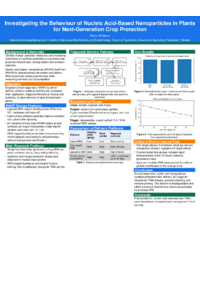
The major challenges of climate change, pesticide resistance, and the urgent need for sustainable agriculture have pushed conventional crop protection strategies to their limits. Nucleic acid-based nanoparticles (NANPs), particularly those formulated with DNA or RNA nanostructures, are emerging as a transformative technology for next-generation plant protection due to their non-toxicity, biocompatibility, and ability to cross biological barriers in plants. This work introduces an innovative class of stimuli-responsive nucleic acid nanoparticles engineered to deliver double-stranded RNA (dsRNA), small interfering RNA (siRNA), or artificial microRNAs (amiRNAs) with precision in crop species. Unlike traditional naked RNA spray face rapid environmental degradation (short shelf life) and poor cellular uptake, our NANPs are protected by layered DNA origami shields functionalized with pH-sensitive linkers and leaf-surface adhesion peptides. These smart carriers remain stable during foliar application but disassemble exclusively inside phloem or mesophyll cells upon sensing the slightly alkaline plant cell environment (pH 7.2–7.8), thereby achieving triggered and protected RNA release. Study demonstrate, for the first time, systemic and transgenerational silencing of harmful insects pest and pathogen target genes, (acetyl-CoA carboxylase of aphids, β-glucoronidase of Pseudomonas syringae, and coat protein of potyviruses), in tomato, soybean, and maize using a single low-dose application (<5 μg/plant). The lab and field Bioassays revealed >90% target gene knockdown prolonged up to 45 days, significantly outperforming commercial liposome or clay-based RNA formulations. Moreover, the DNA origami backbone itself acts as an immunostimulatory motif that primes salicylic acid and jasmonic acid pathways, conferring broad-spectrum resistance without genetic modification of the host genome. Toxicity profiling in non-target organisms (honeybees, ladybugs, and soil nematodes) and environmental fate studies confirmed rapid biodegradation within 72 hours and negligible off-target effects. These findings establish stimuli-responsive nucleic acid nanoparticles as a safe, potent, and fully biodegradable alternative to chemical pesticides, paving the way for RNA-based precision agriculture that is compatible with organic farming standards and global food security goals.
Keywords
Plant protection
gene knockdown
synthetic chemical insecticide
food security
Poster
Babur Ali Akbar (12).pdf
The Hologenome Approach: Co-Engineering Crop Genomes and Their Core Microbiome for Bioprotection
Climate-Resilient Himalayan Plants as Natural Biocontrol Agents Against Emerging Crop Pathogens with Translational Potential in Biomedical and Health Applications.