Event submissions
EventsThe 5th International Electronic Conference on Brain Sciences & 1st International Electronic Conference on Neurosciences
Published
This submission belongs to the session S1. Neurodegenerative Diseases of the event The 5th International Electronic Conference on Brain Sciences & 1st International Electronic Conference on Neurosciences
Published date
04 Mar, 2026
Academic Editor
'%3e%3cpath%20d='M12.6657%2010.9104C12.4185%2010.325%2012.0599%209.79327%2011.6097%209.34482C11.1609%208.89508%2010.6293%208.5365%2010.0442%208.28888C10.0389%208.28626%2010.0337%208.28495%2010.0285%208.28233C10.8446%207.69279%2011.3752%206.73249%2011.3752%205.64904C11.3752%203.8542%209.92103%202.39999%208.1262%202.39999C6.33136%202.39999%204.87715%203.8542%204.87715%205.64904C4.87715%206.73249%205.40774%207.69279%206.22393%208.28364C6.21869%208.28626%206.21345%208.28757%206.20821%208.29019C5.62129%208.5378%205.09463%208.89284%204.64265%209.34613C4.1929%209.79493%203.83432%2010.3266%203.58671%2010.9117C3.34345%2011.4845%203.21226%2012.0987%203.20023%2012.7209C3.19988%2012.7349%203.20233%2012.7488%203.20744%2012.7619C3.21255%2012.7749%203.22022%2012.7867%203.22998%2012.7968C3.23975%2012.8068%203.25142%2012.8147%203.26431%2012.8202C3.2772%2012.8256%203.29105%2012.8284%203.30504%2012.8284H4.09109C4.14874%2012.8284%204.19459%2012.7825%204.1959%2012.7262C4.2221%2011.7148%204.62823%2010.7676%205.34617%2010.0497C6.08899%209.30683%207.0755%208.89808%208.1262%208.89808C9.17689%208.89808%2010.1634%209.30683%2010.9062%2010.0497C11.6242%2010.7676%2012.0303%2011.7148%2012.0565%2012.7262C12.0578%2012.7838%2012.1037%2012.8284%2012.1613%2012.8284H12.9474C12.9613%2012.8284%2012.9752%2012.8256%2012.9881%2012.8202C13.001%2012.8147%2013.0126%2012.8068%2013.0224%2012.7968C13.0322%2012.7867%2013.0398%2012.7749%2013.0449%2012.7619C13.0501%2012.7488%2013.0525%2012.7349%2013.0522%2012.7209C13.0391%2012.0947%2012.9094%2011.4855%2012.6657%2010.9104ZM8.1262%207.9024C7.52486%207.9024%206.9589%207.6679%206.53312%207.24211C6.10733%206.81633%205.87283%206.25037%205.87283%205.64904C5.87283%205.0477%206.10733%204.48174%206.53312%204.05596C6.9589%203.63018%207.52486%203.39567%208.1262%203.39567C8.72753%203.39567%209.29349%203.63018%209.71927%204.05596C10.1451%204.48174%2010.3796%205.0477%2010.3796%205.64904C10.3796%206.25037%2010.1451%206.81633%209.71927%207.24211C9.29349%207.6679%208.72753%207.9024%208.1262%207.9024Z'%20fill='%235D1EE1'/%3e%3c/g%3e%3c/svg%3e) Grazyna Lietzau
Grazyna LietzauCitation
Loredana Maria Agavriloaei, Ivona Costachescu, Andrei Szilagyi, Maria Raluca Gogu, Dana Mihaela Turliuc, Toward Reproducibility in Preclinical Alzheimer’s Research: The Case for Standardizing Aβ₁–₄₂-Induced Rodent Models, in Proceedings of The 5th International Electronic Conference on Brain Sciences & 1st International Electronic Conference on Neurosciences, 9 March–11 March 2026, MDPI: Basel, Switzerland
Share
Email
Facebook
Twitter
LinkedIn
Toward Reproducibility in Preclinical Alzheimer’s Research: The Case for Standardizing Aβ₁–₄₂-Induced Rodent Models

Loredana Maria Agavriloaei 1
'%3e%3cpath%20d='M12.6647%2010.9104C12.4176%2010.325%2012.0589%209.7933%2011.6088%209.34485C11.16%208.89511%2010.6283%208.53653%2010.0432%208.28891C10.038%208.28629%2010.0327%208.28498%2010.0275%208.28236C10.8437%207.69282%2011.3743%206.73252%2011.3743%205.64907C11.3743%203.85423%209.92005%202.40002%208.12522%202.40002C6.33038%202.40002%204.87618%203.85423%204.87618%205.64907C4.87618%206.73252%205.40677%207.69282%206.22296%208.28367C6.21772%208.28629%206.21248%208.2876%206.20724%208.29022C5.62031%208.53783%205.09365%208.89287%204.64167%209.34616C4.19192%209.79496%203.83334%2010.3266%203.58573%2010.9117C3.34247%2011.4846%203.21128%2012.0987%203.19925%2012.721C3.1989%2012.735%203.20135%2012.7489%203.20646%2012.7619C3.21157%2012.7749%203.21924%2012.7868%203.22901%2012.7968C3.23877%2012.8068%203.25045%2012.8148%203.26334%2012.8202C3.27623%2012.8256%203.29007%2012.8284%203.30406%2012.8284H4.09012C4.14776%2012.8284%204.19362%2012.7825%204.19493%2012.7262C4.22113%2011.7148%204.62726%2010.7676%205.34519%2010.0497C6.08802%209.30686%207.07452%208.89811%208.12522%208.89811C9.17592%208.89811%2010.1624%209.30686%2010.9052%2010.0497C11.6232%2010.7676%2012.0293%2011.7148%2012.0555%2012.7262C12.0568%2012.7839%2012.1027%2012.8284%2012.1603%2012.8284H12.9464C12.9604%2012.8284%2012.9742%2012.8256%2012.9871%2012.8202C13%2012.8148%2013.0117%2012.8068%2013.0214%2012.7968C13.0312%2012.7868%2013.0389%2012.7749%2013.044%2012.7619C13.0491%2012.7489%2013.0515%2012.735%2013.0512%2012.721C13.0381%2012.0947%2012.9084%2011.4856%2012.6647%2010.9104ZM8.12522%207.90243C7.52388%207.90243%206.95792%207.66793%206.53214%207.24215C6.10636%206.81636%205.87185%206.2504%205.87185%205.64907C5.87185%205.04773%206.10636%204.48177%206.53214%204.05599C6.95792%203.63021%207.52388%203.3957%208.12522%203.3957C8.72655%203.3957%209.29252%203.63021%209.7183%204.05599C10.1441%204.48177%2010.3786%205.04773%2010.3786%205.64907C10.3786%206.2504%2010.1441%206.81636%209.7183%207.24215C9.29252%207.66793%208.72655%207.90243%208.12522%207.90243Z'%20fill='%235D1EE1'/%3e%3c/g%3e%3c/svg%3e)
Ivona Costachescu 2

Andrei Szilagyi 2
Maria Raluca Gogu 2
Dana Mihaela Turliuc 1,3
1. Department of Neurosurgery, “Grigore T. Popa” University of Medicine and Pharmacy, 700115 Iasi, Romania
2. Grigore T. Popa University of Medicine and Pharmacy Iasi, Advanced Research and Development Center for Experimental Medicine ”Prof. Ostin C. Mungiu” - CEMEX, Iasi, Romania
3. Department of Neurosurgery “Prof. Dr. N. Oblu” Emergency Clinical Hospital, Iasi, Romania
Abstract
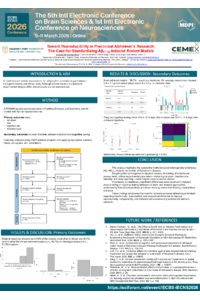
Introduction: Animal-induced models are necessary to bridge the translational gap between transgenic models and clinical trials. Although several models are standard, experimental designs differ, and protocols are not standardized.
Methods: A PRISMA-guided search was performed in PubMed, Embase, and Cochrane, and 60 studies with Aβ1-42 injected into rats were included. Primary outcomes were rat strain, sex, injection site, and dose. Secondary outcomes followed the time between induction and cognitive testing. Data was analyzed using JASP statistics program and applying descriptive statistics, t-tests, chi-square, and correlations.
Results: Bilateral injections showed up in 65% of the studies, most often in Wistar rats (64%), and hit either the intracerebroventricular (i.c.v., 48.7%) or intrahippocampal (i.h.c., 51.3%) regions. Most unilateral models—85.7%—used i.c.v. injections. On average, researchers injected 3.8 ± 2.1 µl in bilateral setups and 4.9 ± 2.6 µl in unilateral ones. They ran behavior tests about 18.4 ± 10.6 days after bilateral and 20.7 ± 12.9 days after unilateral injections. Statistically, those differences were not significant (p > 0.05).
Conclusions: The field still lacks a standard way to run Aβ₁–₄₂-based Alzheimer’s models. Even when timing and doses line up, choices around animal strain, injection site, and laterality vary widely. Establishing standardized reference parameters—dose, site, and timing—appears critical to enhance reproducibility and strengthen the translational validity of preclinical Alzheimer’s research.
Keywords
Alzheimer's disease
rat model
amyloid 1-42
Poster
AD-poster.pdf
The Cerebrocortical Disconnection Hypothesis: Reframing Alzheimer's Treatment Strategy
IMPROVEMENT OF COGNITIVE FUNCTIONS BY INDIRUBIN-3′-OXIME THROUGH GSK-3β- AND CDK-MEDIATED TAU HYPERPHOSPHORYLATION INHIBITION IN A RAT MODEL OF ALZHEIMER’S DISEASE