Event submissions
Published
This submission belongs to the session S6. Ecological, Environmental and Circular Economics of the event The 1st International Online Conference on Environments
Published date
05 Mar, 2026
Academic Editor
'%3e%3cpath%20d='M12.6657%2010.9104C12.4185%2010.325%2012.0599%209.79327%2011.6097%209.34482C11.1609%208.89508%2010.6293%208.5365%2010.0442%208.28888C10.0389%208.28626%2010.0337%208.28495%2010.0285%208.28233C10.8446%207.69279%2011.3752%206.73249%2011.3752%205.64904C11.3752%203.8542%209.92103%202.39999%208.1262%202.39999C6.33136%202.39999%204.87715%203.8542%204.87715%205.64904C4.87715%206.73249%205.40774%207.69279%206.22393%208.28364C6.21869%208.28626%206.21345%208.28757%206.20821%208.29019C5.62129%208.5378%205.09463%208.89284%204.64265%209.34613C4.1929%209.79493%203.83432%2010.3266%203.58671%2010.9117C3.34345%2011.4845%203.21226%2012.0987%203.20023%2012.7209C3.19988%2012.7349%203.20233%2012.7488%203.20744%2012.7619C3.21255%2012.7749%203.22022%2012.7867%203.22998%2012.7968C3.23975%2012.8068%203.25142%2012.8147%203.26431%2012.8202C3.2772%2012.8256%203.29105%2012.8284%203.30504%2012.8284H4.09109C4.14874%2012.8284%204.19459%2012.7825%204.1959%2012.7262C4.2221%2011.7148%204.62823%2010.7676%205.34617%2010.0497C6.08899%209.30683%207.0755%208.89808%208.1262%208.89808C9.17689%208.89808%2010.1634%209.30683%2010.9062%2010.0497C11.6242%2010.7676%2012.0303%2011.7148%2012.0565%2012.7262C12.0578%2012.7838%2012.1037%2012.8284%2012.1613%2012.8284H12.9474C12.9613%2012.8284%2012.9752%2012.8256%2012.9881%2012.8202C13.001%2012.8147%2013.0126%2012.8068%2013.0224%2012.7968C13.0322%2012.7867%2013.0398%2012.7749%2013.0449%2012.7619C13.0501%2012.7488%2013.0525%2012.7349%2013.0522%2012.7209C13.0391%2012.0947%2012.9094%2011.4855%2012.6657%2010.9104ZM8.1262%207.9024C7.52486%207.9024%206.9589%207.6679%206.53312%207.24211C6.10733%206.81633%205.87283%206.25037%205.87283%205.64904C5.87283%205.0477%206.10733%204.48174%206.53312%204.05596C6.9589%203.63018%207.52486%203.39567%208.1262%203.39567C8.72753%203.39567%209.29349%203.63018%209.71927%204.05596C10.1451%204.48174%2010.3796%205.0477%2010.3796%205.64904C10.3796%206.25037%2010.1451%206.81633%209.71927%207.24211C9.29349%207.6679%208.72753%207.9024%208.1262%207.9024Z'%20fill='%235D1EE1'/%3e%3c/g%3e%3c/svg%3e) WALTER ALBERTO PENGUE
WALTER ALBERTO PENGUECitation
Nelda Xanath Martínez-Galero, Rocio Guadalupe Franco-Fabian, Valeria Ruiz-Valencia, Azul Buenaventura Pérez-Estrada, Esther Carbajal-Alejandro, Adolfo Amador-Mendoza, Agro-industrial waste from pineapple (Ananas comosus L. Merr) in the Papaloapan basin: enzymes, a link in the value chain, in Proceedings of The 1st International Online Conference on Environments, 2 March–4 March 2026, MDPI: Basel, Switzerland
Share
Email
Facebook
Twitter
LinkedIn
Agro-industrial waste from pineapple (Ananas comosus L. Merr) in the Papaloapan basin: enzymes, a link in the value chain

Nelda Xanath Martínez-Galero 1
'%3e%3cpath%20d='M12.6647%2010.9104C12.4176%2010.325%2012.0589%209.7933%2011.6088%209.34485C11.16%208.89511%2010.6283%208.53653%2010.0432%208.28891C10.038%208.28629%2010.0327%208.28498%2010.0275%208.28236C10.8437%207.69282%2011.3743%206.73252%2011.3743%205.64907C11.3743%203.85423%209.92005%202.40002%208.12522%202.40002C6.33038%202.40002%204.87618%203.85423%204.87618%205.64907C4.87618%206.73252%205.40677%207.69282%206.22296%208.28367C6.21772%208.28629%206.21248%208.2876%206.20724%208.29022C5.62031%208.53783%205.09365%208.89287%204.64167%209.34616C4.19192%209.79496%203.83334%2010.3266%203.58573%2010.9117C3.34247%2011.4846%203.21128%2012.0987%203.19925%2012.721C3.1989%2012.735%203.20135%2012.7489%203.20646%2012.7619C3.21157%2012.7749%203.21924%2012.7868%203.22901%2012.7968C3.23877%2012.8068%203.25045%2012.8148%203.26334%2012.8202C3.27623%2012.8256%203.29007%2012.8284%203.30406%2012.8284H4.09012C4.14776%2012.8284%204.19362%2012.7825%204.19493%2012.7262C4.22113%2011.7148%204.62726%2010.7676%205.34519%2010.0497C6.08802%209.30686%207.07452%208.89811%208.12522%208.89811C9.17592%208.89811%2010.1624%209.30686%2010.9052%2010.0497C11.6232%2010.7676%2012.0293%2011.7148%2012.0555%2012.7262C12.0568%2012.7839%2012.1027%2012.8284%2012.1603%2012.8284H12.9464C12.9604%2012.8284%2012.9742%2012.8256%2012.9871%2012.8202C13%2012.8148%2013.0117%2012.8068%2013.0214%2012.7968C13.0312%2012.7868%2013.0389%2012.7749%2013.044%2012.7619C13.0491%2012.7489%2013.0515%2012.735%2013.0512%2012.721C13.0381%2012.0947%2012.9084%2011.4856%2012.6647%2010.9104ZM8.12522%207.90243C7.52388%207.90243%206.95792%207.66793%206.53214%207.24215C6.10636%206.81636%205.87185%206.2504%205.87185%205.64907C5.87185%205.04773%206.10636%204.48177%206.53214%204.05599C6.95792%203.63021%207.52388%203.3957%208.12522%203.3957C8.72655%203.3957%209.29252%203.63021%209.7183%204.05599C10.1441%204.48177%2010.3786%205.04773%2010.3786%205.64907C10.3786%206.2504%2010.1441%206.81636%209.7183%207.24215C9.29252%207.66793%208.72655%207.90243%208.12522%207.90243Z'%20fill='%235D1EE1'/%3e%3c/g%3e%3c/svg%3e)
Rocio Guadalupe Franco-Fabian 2
Valeria Ruiz-Valencia 3
Azul Buenaventura Pérez-Estrada 3
Esther Carbajal-Alejandro 3
Adolfo Amador-Mendoza 4
1. Organic Synthesis Laboratory, Scientific Research Center, Applied Chemistry Institute, Universidad del Papaloapan, Tuxtepec, 68301, México.
2. Medicine Faculty Chief, Universidad del Papaloapan, Tuxtepec, Oaxaca 68301, Mexico
3. Biotechnology Engineering, Universidad del Papaloapan, Tuxtepec, Oaxaca 68301, Mexico
4. Instituto de Agroingeniería, Universidad del Papaloapan, Loma Bonita, Oaxaca 68400, Mexico
Abstract
Pineapple cultivation and processing generate large volumes of agro-industrial residues, including peels, crowns, cores, leaves, and fibrous fractions. These residues pose both an environmental challenge and an opportunity for value recovery. The Papaloapan Basin, located in the Lower Papaloapan region of Oaxaca and Veracruz, Mexico, accounts for a significant portion of the country's pineapple production. However, regional waste management practices are uneven and often rely on open-air disposal or low-value applications. This manuscript reviews the composition variation and environmental impacts of pineapple residues and enzyme variation in 2022.
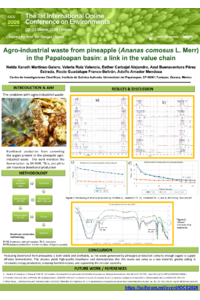
Four cysteine endopeptidases are known from the pineapple plant: fruit bromelain, stem bromelain, ananain, and comosain. Since bromelain is of natural origin, different sources of biological material may exhibit variability in its proteolytic or physiological activity. This work presents the results of monitoring the quantification of protein concentration, proteolytic activity of the cysteine enzymes, and physicochemical parameters (°Brix, pH) of the extracts from pineapple plant residues of the Smooth Cayenne variety in two growth stages. This is intended to explore the potential commercialization of agricultural and agro-industrial residues from whole pineapple plants, a cultivar used in Mexico for canning. The overall correlation between protein concentration and proteolytic activity during May for the four residues (Cs, Cr, Cz, Pu), two maturity levels (G2 and G5), and thirty days of storage at 4 °C (t0, t15, and t30) was r = +0.9358. The correlation values on the day of collection (t0) were +0.9788 ± 1.0 for all residues at both maturity levels. This data is extremely important for a pineapple producer's decision making, as it could determine, according to the degree of ripeness, which sector it will be most feasible to sell their product to. It also proposes an integrated circular-economy framework tailored to the socio-economic and agro-ecological context of the Papaloapan region.
Keywords
Pineapple Waste
Circular Economy
Valorization
Papaloapan Basin
Biocatalysis
Cysteine Endopeptidase
Poster
sciforum-162475 IOCE2026 Agroindustrial waste.pdf
Quantitative assessment of radiocesium transfer processes from soil to plant for appropriate remediation of radioactive contamination in Moroccan semi-arid agricultural areas
Reserve Areas in Public Agrarian Reform Settlements as a Potential for Carbon Credit in the State of Pernambuco, Northeastern Brazil