Event submissions
Published
This submission belongs to the session S3. Nanominerals and Clays: Emerging Applications in Materials Science of the event The 3rd International Online Conference on Mineral Science
Published date
06 Mar, 2026
Academic Editor
'%3e%3cpath%20d='M12.6657%2010.9104C12.4185%2010.325%2012.0599%209.79327%2011.6097%209.34482C11.1609%208.89508%2010.6293%208.5365%2010.0442%208.28888C10.0389%208.28626%2010.0337%208.28495%2010.0285%208.28233C10.8446%207.69279%2011.3752%206.73249%2011.3752%205.64904C11.3752%203.8542%209.92103%202.39999%208.1262%202.39999C6.33136%202.39999%204.87715%203.8542%204.87715%205.64904C4.87715%206.73249%205.40774%207.69279%206.22393%208.28364C6.21869%208.28626%206.21345%208.28757%206.20821%208.29019C5.62129%208.5378%205.09463%208.89284%204.64265%209.34613C4.1929%209.79493%203.83432%2010.3266%203.58671%2010.9117C3.34345%2011.4845%203.21226%2012.0987%203.20023%2012.7209C3.19988%2012.7349%203.20233%2012.7488%203.20744%2012.7619C3.21255%2012.7749%203.22022%2012.7867%203.22998%2012.7968C3.23975%2012.8068%203.25142%2012.8147%203.26431%2012.8202C3.2772%2012.8256%203.29105%2012.8284%203.30504%2012.8284H4.09109C4.14874%2012.8284%204.19459%2012.7825%204.1959%2012.7262C4.2221%2011.7148%204.62823%2010.7676%205.34617%2010.0497C6.08899%209.30683%207.0755%208.89808%208.1262%208.89808C9.17689%208.89808%2010.1634%209.30683%2010.9062%2010.0497C11.6242%2010.7676%2012.0303%2011.7148%2012.0565%2012.7262C12.0578%2012.7838%2012.1037%2012.8284%2012.1613%2012.8284H12.9474C12.9613%2012.8284%2012.9752%2012.8256%2012.9881%2012.8202C13.001%2012.8147%2013.0126%2012.8068%2013.0224%2012.7968C13.0322%2012.7867%2013.0398%2012.7749%2013.0449%2012.7619C13.0501%2012.7488%2013.0525%2012.7349%2013.0522%2012.7209C13.0391%2012.0947%2012.9094%2011.4855%2012.6657%2010.9104ZM8.1262%207.9024C7.52486%207.9024%206.9589%207.6679%206.53312%207.24211C6.10733%206.81633%205.87283%206.25037%205.87283%205.64904C5.87283%205.0477%206.10733%204.48174%206.53312%204.05596C6.9589%203.63018%207.52486%203.39567%208.1262%203.39567C8.72753%203.39567%209.29349%203.63018%209.71927%204.05596C10.1451%204.48174%2010.3796%205.0477%2010.3796%205.64904C10.3796%206.25037%2010.1451%206.81633%209.71927%207.24211C9.29349%207.6679%208.72753%207.9024%208.1262%207.9024Z'%20fill='%235D1EE1'/%3e%3c/g%3e%3c/svg%3e) Andrey Kalinichev
Andrey KalinichevCitation
Jomari ACOYMO CATAMA-AN, Edison Acosta Limbaga, Eduardo dela Rosa Magdaluyo Jr, Emie Salamangkit Mirasol, Maricar B Zabala, Raymond V.Rivera Virtudazo, Masayoshi Fuji, Local Diatomaceous Earth from Kapatagan, Northern Mindanao, Philippines: A Micro/Nanoporous Siliceous Additive for Ceramic Wall Tile Production, in Proceedings of The 3rd International Online Conference on Mineral Science, 10 March–12 March 2026, MDPI: Basel, Switzerland
Share
Email
Facebook
Twitter
LinkedIn
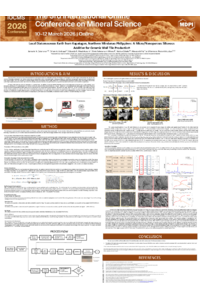
Local Diatomaceous Earth from Kapatagan, Northern Mindanao, Philippines: A Micro/Nanoporous Siliceous Additive for Ceramic Wall Tile Production
'%3e%3cpath%20d='M12.6647%2010.9104C12.4176%2010.325%2012.0589%209.7933%2011.6088%209.34485C11.16%208.89511%2010.6283%208.53653%2010.0432%208.28891C10.038%208.28629%2010.0327%208.28498%2010.0275%208.28236C10.8437%207.69282%2011.3743%206.73252%2011.3743%205.64907C11.3743%203.85423%209.92005%202.40002%208.12522%202.40002C6.33038%202.40002%204.87618%203.85423%204.87618%205.64907C4.87618%206.73252%205.40677%207.69282%206.22296%208.28367C6.21772%208.28629%206.21248%208.2876%206.20724%208.29022C5.62031%208.53783%205.09365%208.89287%204.64167%209.34616C4.19192%209.79496%203.83334%2010.3266%203.58573%2010.9117C3.34247%2011.4846%203.21128%2012.0987%203.19925%2012.721C3.1989%2012.735%203.20135%2012.7489%203.20646%2012.7619C3.21157%2012.7749%203.21924%2012.7868%203.22901%2012.7968C3.23877%2012.8068%203.25045%2012.8148%203.26334%2012.8202C3.27623%2012.8256%203.29007%2012.8284%203.30406%2012.8284H4.09012C4.14776%2012.8284%204.19362%2012.7825%204.19493%2012.7262C4.22113%2011.7148%204.62726%2010.7676%205.34519%2010.0497C6.08802%209.30686%207.07452%208.89811%208.12522%208.89811C9.17592%208.89811%2010.1624%209.30686%2010.9052%2010.0497C11.6232%2010.7676%2012.0293%2011.7148%2012.0555%2012.7262C12.0568%2012.7839%2012.1027%2012.8284%2012.1603%2012.8284H12.9464C12.9604%2012.8284%2012.9742%2012.8256%2012.9871%2012.8202C13%2012.8148%2013.0117%2012.8068%2013.0214%2012.7968C13.0312%2012.7868%2013.0389%2012.7749%2013.044%2012.7619C13.0491%2012.7489%2013.0515%2012.735%2013.0512%2012.721C13.0381%2012.0947%2012.9084%2011.4856%2012.6647%2010.9104ZM8.12522%207.90243C7.52388%207.90243%206.95792%207.66793%206.53214%207.24215C6.10636%206.81636%205.87185%206.2504%205.87185%205.64907C5.87185%205.04773%206.10636%204.48177%206.53214%204.05599C6.95792%203.63021%207.52388%203.3957%208.12522%203.3957C8.72655%203.3957%209.29252%203.63021%209.7183%204.05599C10.1441%204.48177%2010.3786%205.04773%2010.3786%205.64907C10.3786%206.2504%2010.1441%206.81636%209.7183%207.24215C9.29252%207.66793%208.72655%207.90243%208.12522%207.90243Z'%20fill='%235D1EE1'/%3e%3c/g%3e%3c/svg%3e)
Jomari ACOYMO CATAMA-AN 1
Edison Acosta Limbaga 1
Eduardo dela Rosa Magdaluyo Jr 2
Emie Salamangkit Mirasol 3
Maricar B Zabala 4
Raymond V.Rivera Virtudazo 5
Masayoshi Fuji 6
1. Research Center for Advanced Ceramics (RCAC), Mindanao State University – Iligan Institute of Technology, Iligan City 9200, Philippines
2. Department of Mining, Metallurgical and Materials Engineering, University of the Philippines – Diliman, Quezon City 1101, Philippines
3. Department of Materials Science and Engineering (Ceramic Engineering Program), Mariano Marcos State University, Batac City 2906, Philippines
4. Department of Education, Barayong National High School, Barayong, Magsaysay, Davao del Sur 8004, Philippines
5. Department of Materials and Resources Engineering and Technology, Mindanao State University – Iligan Institute of Technology, Iligan City 9200, Philippines
6. Advanced Ceramics Research Center (ACRC), Nagoya Institute of Technology, Tajimi 507-0033, Japan
Abstract
Advancements in micro/nanomineral-based materials are driving innovations in sustainable ceramics. This study explores the potential of locally sourced diatomaceous earth from Kapatagan, Lanao del Norte, Philippines, as a micro/nanoporous siliceous additive for improving the performance and sustainability of commercial ceramic wall tiles. The Kapatagan diatomaceous earth (KDE) exhibited notable physicochemical characteristics, including 52.49% water absorption, 19.28% fired shrinkage, 0.92 g/cm³ bulk density, and 48.79% apparent porosity. Scanning electron microscopy revealed the presence of intricate, porous diatom frustules that retained micro/nanostructured features even after sintering. X-ray diffraction (XRD) analysis indicated the presence of hematite and quartz in the raw KDE, with the transformation of phases to cristobalite and quartz upon sintering at 1150 °C.
Incorporating 5 wt.% KDE into a standard wall tile body (T5), sintered at 1235 °C, led to an increase in water absorption (0.48%) and apparent porosity (0.80%), while reducing fired weight (66.92 g) and bulk density. The microstructural evolution of T5 showed modified interparticle porosity, causing a slight decrease in the modulus of rupture (6.03 MPa). The XRD pattern of T5 confirmed quartz and cristobalite as the dominant crystalline phases. A control tile (T0, without KDE) was also fabricated for comparison.
These findings demonstrate the promising role of local diatomaceous earth as a sustainable micro/nanoporous siliceous additive, highlighting its contribution to the emerging field of micro/nanomineral-based materials for advanced and lightweight ceramic applications.
Keywords
Diatomaceous Earth
ceramic tiles
micronanoporous silica
Poster
Catamaan- Poster (IOCMS).pdf
Reactivity and structural characteristics of plasma-derived wind turbine blade slag in geopolymer systems
Plasma-induced melting and microfiber formation from zeolite-containing mineral waste