Event submissions
Published
This submission belongs to the session 4. Animal Genetics and Genomics of the event The 4th International Online Conference on Animals
Published date
12 Mar, 2026
Academic Editor
'%3e%3cpath%20d='M12.6657%2010.9104C12.4185%2010.325%2012.0599%209.79327%2011.6097%209.34482C11.1609%208.89508%2010.6293%208.5365%2010.0442%208.28888C10.0389%208.28626%2010.0337%208.28495%2010.0285%208.28233C10.8446%207.69279%2011.3752%206.73249%2011.3752%205.64904C11.3752%203.8542%209.92103%202.39999%208.1262%202.39999C6.33136%202.39999%204.87715%203.8542%204.87715%205.64904C4.87715%206.73249%205.40774%207.69279%206.22393%208.28364C6.21869%208.28626%206.21345%208.28757%206.20821%208.29019C5.62129%208.5378%205.09463%208.89284%204.64265%209.34613C4.1929%209.79493%203.83432%2010.3266%203.58671%2010.9117C3.34345%2011.4845%203.21226%2012.0987%203.20023%2012.7209C3.19988%2012.7349%203.20233%2012.7488%203.20744%2012.7619C3.21255%2012.7749%203.22022%2012.7867%203.22998%2012.7968C3.23975%2012.8068%203.25142%2012.8147%203.26431%2012.8202C3.2772%2012.8256%203.29105%2012.8284%203.30504%2012.8284H4.09109C4.14874%2012.8284%204.19459%2012.7825%204.1959%2012.7262C4.2221%2011.7148%204.62823%2010.7676%205.34617%2010.0497C6.08899%209.30683%207.0755%208.89808%208.1262%208.89808C9.17689%208.89808%2010.1634%209.30683%2010.9062%2010.0497C11.6242%2010.7676%2012.0303%2011.7148%2012.0565%2012.7262C12.0578%2012.7838%2012.1037%2012.8284%2012.1613%2012.8284H12.9474C12.9613%2012.8284%2012.9752%2012.8256%2012.9881%2012.8202C13.001%2012.8147%2013.0126%2012.8068%2013.0224%2012.7968C13.0322%2012.7867%2013.0398%2012.7749%2013.0449%2012.7619C13.0501%2012.7488%2013.0525%2012.7349%2013.0522%2012.7209C13.0391%2012.0947%2012.9094%2011.4855%2012.6657%2010.9104ZM8.1262%207.9024C7.52486%207.9024%206.9589%207.6679%206.53312%207.24211C6.10733%206.81633%205.87283%206.25037%205.87283%205.64904C5.87283%205.0477%206.10733%204.48174%206.53312%204.05596C6.9589%203.63018%207.52486%203.39567%208.1262%203.39567C8.72753%203.39567%209.29349%203.63018%209.71927%204.05596C10.1451%204.48174%2010.3796%205.0477%2010.3796%205.64904C10.3796%206.25037%2010.1451%206.81633%209.71927%207.24211C9.29349%207.6679%208.72753%207.9024%208.1262%207.9024Z'%20fill='%235D1EE1'/%3e%3c/g%3e%3c/svg%3e) Michael Hässig
Michael HässigCitation
Muhammad Tariq, Tanvir Hussain, Adaptive Genomics and Conservation Objectives: Balancing Hybrid Vigor and Climate Resilience in Pakistan’s Yak Population, in Proceedings of The 4th International Online Conference on Animals, 17 March–19 March 2026, MDPI: Basel, Switzerland
Share
Email
Facebook
Twitter
LinkedIn
Adaptive Genomics and Conservation Objectives: Balancing Hybrid Vigor and Climate Resilience in Pakistan’s Yak Population
'%3e%3cpath%20d='M12.6647%2010.9104C12.4176%2010.325%2012.0589%209.7933%2011.6088%209.34485C11.16%208.89511%2010.6283%208.53653%2010.0432%208.28891C10.038%208.28629%2010.0327%208.28498%2010.0275%208.28236C10.8437%207.69282%2011.3743%206.73252%2011.3743%205.64907C11.3743%203.85423%209.92005%202.40002%208.12522%202.40002C6.33038%202.40002%204.87618%203.85423%204.87618%205.64907C4.87618%206.73252%205.40677%207.69282%206.22296%208.28367C6.21772%208.28629%206.21248%208.2876%206.20724%208.29022C5.62031%208.53783%205.09365%208.89287%204.64167%209.34616C4.19192%209.79496%203.83334%2010.3266%203.58573%2010.9117C3.34247%2011.4846%203.21128%2012.0987%203.19925%2012.721C3.1989%2012.735%203.20135%2012.7489%203.20646%2012.7619C3.21157%2012.7749%203.21924%2012.7868%203.22901%2012.7968C3.23877%2012.8068%203.25045%2012.8148%203.26334%2012.8202C3.27623%2012.8256%203.29007%2012.8284%203.30406%2012.8284H4.09012C4.14776%2012.8284%204.19362%2012.7825%204.19493%2012.7262C4.22113%2011.7148%204.62726%2010.7676%205.34519%2010.0497C6.08802%209.30686%207.07452%208.89811%208.12522%208.89811C9.17592%208.89811%2010.1624%209.30686%2010.9052%2010.0497C11.6232%2010.7676%2012.0293%2011.7148%2012.0555%2012.7262C12.0568%2012.7839%2012.1027%2012.8284%2012.1603%2012.8284H12.9464C12.9604%2012.8284%2012.9742%2012.8256%2012.9871%2012.8202C13%2012.8148%2013.0117%2012.8068%2013.0214%2012.7968C13.0312%2012.7868%2013.0389%2012.7749%2013.044%2012.7619C13.0491%2012.7489%2013.0515%2012.735%2013.0512%2012.721C13.0381%2012.0947%2012.9084%2011.4856%2012.6647%2010.9104ZM8.12522%207.90243C7.52388%207.90243%206.95792%207.66793%206.53214%207.24215C6.10636%206.81636%205.87185%206.2504%205.87185%205.64907C5.87185%205.04773%206.10636%204.48177%206.53214%204.05599C6.95792%203.63021%207.52388%203.3957%208.12522%203.3957C8.72655%203.3957%209.29252%203.63021%209.7183%204.05599C10.1441%204.48177%2010.3786%205.04773%2010.3786%205.64907C10.3786%206.2504%2010.1441%206.81636%209.7183%207.24215C9.29252%207.66793%208.72655%207.90243%208.12522%207.90243Z'%20fill='%235D1EE1'/%3e%3c/g%3e%3c/svg%3e)
Muhammad Tariq 1
Tanvir Hussain 2
1. Department of Livestock Management, University of Agriculture, Faisalabad, Pakistan
2. Department of Biological Sciences, Virtual University Islamabad, Pakistan
Abstract
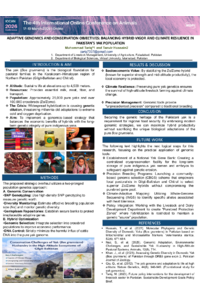
The yak (Bos grunniens) is not only an animal; it is the biological foundation sustaining life for thousands of pastoral families across the high-altitude Karakoram–Himalayan region of Northern Pakistan (Gilgit-Baltistan and Chitral). At altitudes of up to 4,500 meters, this species and its vital first-generation cross with cattle known locally as Zo or Zomo provide the only reliable sources of milk, meat, fiber, and transport. This system supports a significant population of approximately 25,000 pure yak and over 100,000 crossbreds, representing immense socioeconomic value. However, this critical livestock system is facing a profound genetic crisis. Local herders rely heavily on the Zo/Zomo hybrid for its superior strength and productivity at mid-altitudes (known as hybrid vigor). This practice, while beneficial for immediate production, unintentionally introduces cattle genes into the pure yak population (genetic dilution). This threatens to erase the yak’s unique, millennia-old genetic adaptations to extreme cold and oxygen deprivation, jeopardizing its role as a climate-resilient resource for future generations. To secure this irreplaceable heritage, we propose a strategic overhaul of conservation breeding, driven by population genetics. Our approach is two-fold. a) Genomic Conservation: We will use high-density SNP genotyping to measure the pure yak population's genetic worth with unprecedented precision. The approach permits us to monitor genetic diversity, estimate the effective breeding population size (Ne), and establish secure germplasm repositories to protect its irreplaceable adaptive genes. b) Hybrid Optimization: We will integrate genomic selection into the crossbred population for a systematic improvement in economic performance while strictly controlling and minimizing the harmful influx of cattle DNA into the pure yak genome. By embracing this modern, genomics-based strategy, we aim to maximize the economic benefits of productive hybrids while guaranteeing the long-term genetic integrity and survival of the pure indigenous yak, ensuring the resilience of high-altitude livestock farming against climate change.
Keywords
Yak
Bos grunniens
Zo/Zomo
Population Genetics
Hybridization
Genomic Selection
High-Altitude Adaptation
Socioeconomic Value.
Poster
Dr. Muhammad Tariq Poster ADAPTIVE GENOMICS AND CONSERVATION OBJECTIVES YAK.pdf
Genetic diversity and population structure analysis of goat breeds of Pakistan
Integrative Genomic Approaches to Improve Disease Resistance in Senegalese Sole: Insights from the BETTERFLAT Project