Event submissions
Published
This submission belongs to the session 4. Animal Genetics and Genomics of the event The 4th International Online Conference on Animals
Published date
12 Mar, 2026
Academic Editor
'%3e%3cpath%20d='M12.6657%2010.9104C12.4185%2010.325%2012.0599%209.79327%2011.6097%209.34482C11.1609%208.89508%2010.6293%208.5365%2010.0442%208.28888C10.0389%208.28626%2010.0337%208.28495%2010.0285%208.28233C10.8446%207.69279%2011.3752%206.73249%2011.3752%205.64904C11.3752%203.8542%209.92103%202.39999%208.1262%202.39999C6.33136%202.39999%204.87715%203.8542%204.87715%205.64904C4.87715%206.73249%205.40774%207.69279%206.22393%208.28364C6.21869%208.28626%206.21345%208.28757%206.20821%208.29019C5.62129%208.5378%205.09463%208.89284%204.64265%209.34613C4.1929%209.79493%203.83432%2010.3266%203.58671%2010.9117C3.34345%2011.4845%203.21226%2012.0987%203.20023%2012.7209C3.19988%2012.7349%203.20233%2012.7488%203.20744%2012.7619C3.21255%2012.7749%203.22022%2012.7867%203.22998%2012.7968C3.23975%2012.8068%203.25142%2012.8147%203.26431%2012.8202C3.2772%2012.8256%203.29105%2012.8284%203.30504%2012.8284H4.09109C4.14874%2012.8284%204.19459%2012.7825%204.1959%2012.7262C4.2221%2011.7148%204.62823%2010.7676%205.34617%2010.0497C6.08899%209.30683%207.0755%208.89808%208.1262%208.89808C9.17689%208.89808%2010.1634%209.30683%2010.9062%2010.0497C11.6242%2010.7676%2012.0303%2011.7148%2012.0565%2012.7262C12.0578%2012.7838%2012.1037%2012.8284%2012.1613%2012.8284H12.9474C12.9613%2012.8284%2012.9752%2012.8256%2012.9881%2012.8202C13.001%2012.8147%2013.0126%2012.8068%2013.0224%2012.7968C13.0322%2012.7867%2013.0398%2012.7749%2013.0449%2012.7619C13.0501%2012.7488%2013.0525%2012.7349%2013.0522%2012.7209C13.0391%2012.0947%2012.9094%2011.4855%2012.6657%2010.9104ZM8.1262%207.9024C7.52486%207.9024%206.9589%207.6679%206.53312%207.24211C6.10733%206.81633%205.87283%206.25037%205.87283%205.64904C5.87283%205.0477%206.10733%204.48174%206.53312%204.05596C6.9589%203.63018%207.52486%203.39567%208.1262%203.39567C8.72753%203.39567%209.29349%203.63018%209.71927%204.05596C10.1451%204.48174%2010.3796%205.0477%2010.3796%205.64904C10.3796%206.25037%2010.1451%206.81633%209.71927%207.24211C9.29349%207.6679%208.72753%207.9024%208.1262%207.9024Z'%20fill='%235D1EE1'/%3e%3c/g%3e%3c/svg%3e) Michael Hässig
Michael HässigCitation
Izally C. Gervasio, Luiz F. Brito, Andre C. Araujo, Simara L. Fanalli, Bárbara Silva-Vignato, Andrezza M. Felício, Aline S. M. Cesar, Post-GWAS mapping of genomic regions in quiescent chromatin linked to average feed intake per visit in Landrace pigs, in Proceedings of The 4th International Online Conference on Animals, 17 March–19 March 2026, MDPI: Basel, Switzerland
Share
Email
Facebook
Twitter
LinkedIn
Post-GWAS mapping of genomic regions in quiescent chromatin linked to average feed intake per visit in Landrace pigs
'%3e%3cpath%20d='M12.6647%2010.9104C12.4176%2010.325%2012.0589%209.7933%2011.6088%209.34485C11.16%208.89511%2010.6283%208.53653%2010.0432%208.28891C10.038%208.28629%2010.0327%208.28498%2010.0275%208.28236C10.8437%207.69282%2011.3743%206.73252%2011.3743%205.64907C11.3743%203.85423%209.92005%202.40002%208.12522%202.40002C6.33038%202.40002%204.87618%203.85423%204.87618%205.64907C4.87618%206.73252%205.40677%207.69282%206.22296%208.28367C6.21772%208.28629%206.21248%208.2876%206.20724%208.29022C5.62031%208.53783%205.09365%208.89287%204.64167%209.34616C4.19192%209.79496%203.83334%2010.3266%203.58573%2010.9117C3.34247%2011.4846%203.21128%2012.0987%203.19925%2012.721C3.1989%2012.735%203.20135%2012.7489%203.20646%2012.7619C3.21157%2012.7749%203.21924%2012.7868%203.22901%2012.7968C3.23877%2012.8068%203.25045%2012.8148%203.26334%2012.8202C3.27623%2012.8256%203.29007%2012.8284%203.30406%2012.8284H4.09012C4.14776%2012.8284%204.19362%2012.7825%204.19493%2012.7262C4.22113%2011.7148%204.62726%2010.7676%205.34519%2010.0497C6.08802%209.30686%207.07452%208.89811%208.12522%208.89811C9.17592%208.89811%2010.1624%209.30686%2010.9052%2010.0497C11.6232%2010.7676%2012.0293%2011.7148%2012.0555%2012.7262C12.0568%2012.7839%2012.1027%2012.8284%2012.1603%2012.8284H12.9464C12.9604%2012.8284%2012.9742%2012.8256%2012.9871%2012.8202C13%2012.8148%2013.0117%2012.8068%2013.0214%2012.7968C13.0312%2012.7868%2013.0389%2012.7749%2013.044%2012.7619C13.0491%2012.7489%2013.0515%2012.735%2013.0512%2012.721C13.0381%2012.0947%2012.9084%2011.4856%2012.6647%2010.9104ZM8.12522%207.90243C7.52388%207.90243%206.95792%207.66793%206.53214%207.24215C6.10636%206.81636%205.87185%206.2504%205.87185%205.64907C5.87185%205.04773%206.10636%204.48177%206.53214%204.05599C6.95792%203.63021%207.52388%203.3957%208.12522%203.3957C8.72655%203.3957%209.29252%203.63021%209.7183%204.05599C10.1441%204.48177%2010.3786%205.04773%2010.3786%205.64907C10.3786%206.2504%2010.1441%206.81636%209.7183%207.24215C9.29252%207.66793%208.72655%207.90243%208.12522%207.90243Z'%20fill='%235D1EE1'/%3e%3c/g%3e%3c/svg%3e)
Izally C. Gervasio 1
Luiz F. Brito 2
Andre C. Araujo 3
Simara L. Fanalli 4

Bárbara Silva-Vignato 1
Andrezza M. Felício 1
Aline S. M. Cesar 1
1. Luiz de Queiroz College of Agriculture (ESALQ), University of São Paulo, Piracicaba, São Paulo, Brazil
2. Department of Animal Sciences, Purdue University, West Lafayette, Indiana, USA
3. AcuFast Swine, Saskatoon, Saskatchewan, Canada
4. School of Animal Science and Food Engineering (FZEA), University of São Paulo, Pirassununga, São Paulo, Brazil
Abstract
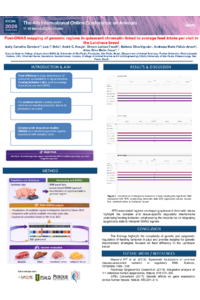
In this study, we conducted a GWAS analysis to further investigate the genomic regions associated with average feed intake per visit (AFIV) in Landrace pigs. Three QTL regions, located on chromosomes 12, 13, and 14, were identified based on visualizations in the Integrative Genomics Viewer (IGV). To assess the functionality of these regions, significant SNPs were compared with publicly available ATAC-Seq data from relevant tissues, including muscle, liver, cerebral cortex, and adipose tissue. All regions associated with AFIV were found to be within the “E15” chromatin state, characterized as a quiescent region with low transcriptional activity. This association suggests a potential regulatory role for these regions, which may act during specific developmental stages or in particular tissues, despite their epigenetically silent state. Our findings underscore the complexity of genetic and epigenetic regulation of feeding behavior in pigs and provide valuable insights for genetic improvement strategies targeting feed efficiency in Landrace pigs. Future functional studies are needed to clarify the role of these quiescent regions in regulating feed intake, thereby contributing to advances in genetic selection. Moreover, this work aligns with the United Nations Sustainable Development Goals (SDGs), particularly SDG 2 (Zero Hunger and Sustainable Agriculture), by promoting progress in efficient and sustainable animal production, and SDG 12 (Responsible Consumption and Production), by contributing to the optimization of feed resource use in pig farming.
Keywords
Epigenetic regulation
Chromatin states
Sustainable animal production
Regulatory regions
Feeding behavior
Poster
a0ac6faf72859ea6963b7c36dda74d3e_poster_Gervasio.pdf
Genome-Wide Identification and Evolutionary Dynamics of the F-Box Gene Family in Water Buffalo (Bubalus bubalis): Implications for Ubiquitin-Mediated Regulation
Application of Colostrum Enriched with Specific IgY for the Prevention of Diarrheal Infections in Newborn Calves