Event submissions
Published
This submission belongs to the session 7. Aquatic Animals of the event The 4th International Online Conference on Animals
Published date
12 Mar, 2026
Academic Editor
'%3e%3cpath%20d='M12.6657%2010.9104C12.4185%2010.325%2012.0599%209.79327%2011.6097%209.34482C11.1609%208.89508%2010.6293%208.5365%2010.0442%208.28888C10.0389%208.28626%2010.0337%208.28495%2010.0285%208.28233C10.8446%207.69279%2011.3752%206.73249%2011.3752%205.64904C11.3752%203.8542%209.92103%202.39999%208.1262%202.39999C6.33136%202.39999%204.87715%203.8542%204.87715%205.64904C4.87715%206.73249%205.40774%207.69279%206.22393%208.28364C6.21869%208.28626%206.21345%208.28757%206.20821%208.29019C5.62129%208.5378%205.09463%208.89284%204.64265%209.34613C4.1929%209.79493%203.83432%2010.3266%203.58671%2010.9117C3.34345%2011.4845%203.21226%2012.0987%203.20023%2012.7209C3.19988%2012.7349%203.20233%2012.7488%203.20744%2012.7619C3.21255%2012.7749%203.22022%2012.7867%203.22998%2012.7968C3.23975%2012.8068%203.25142%2012.8147%203.26431%2012.8202C3.2772%2012.8256%203.29105%2012.8284%203.30504%2012.8284H4.09109C4.14874%2012.8284%204.19459%2012.7825%204.1959%2012.7262C4.2221%2011.7148%204.62823%2010.7676%205.34617%2010.0497C6.08899%209.30683%207.0755%208.89808%208.1262%208.89808C9.17689%208.89808%2010.1634%209.30683%2010.9062%2010.0497C11.6242%2010.7676%2012.0303%2011.7148%2012.0565%2012.7262C12.0578%2012.7838%2012.1037%2012.8284%2012.1613%2012.8284H12.9474C12.9613%2012.8284%2012.9752%2012.8256%2012.9881%2012.8202C13.001%2012.8147%2013.0126%2012.8068%2013.0224%2012.7968C13.0322%2012.7867%2013.0398%2012.7749%2013.0449%2012.7619C13.0501%2012.7488%2013.0525%2012.7349%2013.0522%2012.7209C13.0391%2012.0947%2012.9094%2011.4855%2012.6657%2010.9104ZM8.1262%207.9024C7.52486%207.9024%206.9589%207.6679%206.53312%207.24211C6.10733%206.81633%205.87283%206.25037%205.87283%205.64904C5.87283%205.0477%206.10733%204.48174%206.53312%204.05596C6.9589%203.63018%207.52486%203.39567%208.1262%203.39567C8.72753%203.39567%209.29349%203.63018%209.71927%204.05596C10.1451%204.48174%2010.3796%205.0477%2010.3796%205.64904C10.3796%206.25037%2010.1451%206.81633%209.71927%207.24211C9.29349%207.6679%208.72753%207.9024%208.1262%207.9024Z'%20fill='%235D1EE1'/%3e%3c/g%3e%3c/svg%3e) Jorge Galindo-Villegas
Jorge Galindo-VillegasCitation
Tetty Barunawati Siagian, Risa Tiuria, Gary Yefta Herbeth Siagian, Dhito Dwi Pramardika, Occurrence of Anisakis sp. Infection in Mackerel (Rastrelliger sp.) from Traditional Markets in Bogor, Indonesia, in Proceedings of The 4th International Online Conference on Animals, 17 March–19 March 2026, MDPI: Basel, Switzerland
Share
Email
Facebook
Twitter
LinkedIn
Occurrence of Anisakis sp. Infection in Mackerel (Rastrelliger sp.) from Traditional Markets in Bogor, Indonesia
'%3e%3cpath%20d='M12.6647%2010.9104C12.4176%2010.325%2012.0589%209.7933%2011.6088%209.34485C11.16%208.89511%2010.6283%208.53653%2010.0432%208.28891C10.038%208.28629%2010.0327%208.28498%2010.0275%208.28236C10.8437%207.69282%2011.3743%206.73252%2011.3743%205.64907C11.3743%203.85423%209.92005%202.40002%208.12522%202.40002C6.33038%202.40002%204.87618%203.85423%204.87618%205.64907C4.87618%206.73252%205.40677%207.69282%206.22296%208.28367C6.21772%208.28629%206.21248%208.2876%206.20724%208.29022C5.62031%208.53783%205.09365%208.89287%204.64167%209.34616C4.19192%209.79496%203.83334%2010.3266%203.58573%2010.9117C3.34247%2011.4846%203.21128%2012.0987%203.19925%2012.721C3.1989%2012.735%203.20135%2012.7489%203.20646%2012.7619C3.21157%2012.7749%203.21924%2012.7868%203.22901%2012.7968C3.23877%2012.8068%203.25045%2012.8148%203.26334%2012.8202C3.27623%2012.8256%203.29007%2012.8284%203.30406%2012.8284H4.09012C4.14776%2012.8284%204.19362%2012.7825%204.19493%2012.7262C4.22113%2011.7148%204.62726%2010.7676%205.34519%2010.0497C6.08802%209.30686%207.07452%208.89811%208.12522%208.89811C9.17592%208.89811%2010.1624%209.30686%2010.9052%2010.0497C11.6232%2010.7676%2012.0293%2011.7148%2012.0555%2012.7262C12.0568%2012.7839%2012.1027%2012.8284%2012.1603%2012.8284H12.9464C12.9604%2012.8284%2012.9742%2012.8256%2012.9871%2012.8202C13%2012.8148%2013.0117%2012.8068%2013.0214%2012.7968C13.0312%2012.7868%2013.0389%2012.7749%2013.044%2012.7619C13.0491%2012.7489%2013.0515%2012.735%2013.0512%2012.721C13.0381%2012.0947%2012.9084%2011.4856%2012.6647%2010.9104ZM8.12522%207.90243C7.52388%207.90243%206.95792%207.66793%206.53214%207.24215C6.10636%206.81636%205.87185%206.2504%205.87185%205.64907C5.87185%205.04773%206.10636%204.48177%206.53214%204.05599C6.95792%203.63021%207.52388%203.3957%208.12522%203.3957C8.72655%203.3957%209.29252%203.63021%209.7183%204.05599C10.1441%204.48177%2010.3786%205.04773%2010.3786%205.64907C10.3786%206.2504%2010.1441%206.81636%209.7183%207.24215C9.29252%207.66793%208.72655%207.90243%208.12522%207.90243Z'%20fill='%235D1EE1'/%3e%3c/g%3e%3c/svg%3e)
Tetty Barunawati Siagian 1
Risa Tiuria 2
Gary Yefta Herbeth Siagian 3
Dhito Dwi Pramardika 4
1. College of Vocational Studies, IPB University (Bogor Agricultural University), Bogor, 16128, Indonesia
2. School of Veterinary Medicine and Biomedical Sciences, IPB University (Bogor Agricultural University), Dramaga, Bogor, 16680, Indonesia
3. Food Technology Study Program, Faculty of Science and Technology, Universitas Terbuka (Open University), South Tangerang, 15418, Indonesia
4. Department of Health, Politeknik Negeri Nusa Utara, North Sulawesi, 95812, Indonesia
Abstract
Abstract
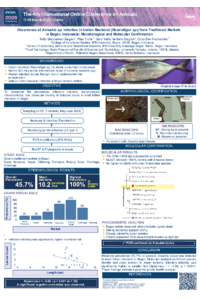
Anisakis spp. are zoonotic nematodes that are widely recognized as a food safety concern in marine fish. In Indonesia, however, information on Anisakis infection in fish sold at traditional markets is still limited, especially in inland areas of consumption such as Bogor. This study aimed to describe the occurrence and infection characteristics of Anisakis larvae in mackerel (Rastrelliger sp.) marketed in traditional markets in Bogor, Indonesia, as baseline information for fish parasitology and food safety considerations. A total of 35 mackerel were randomly collected from seven traditional markets in Bogor between May and June 2024. Each fish underwent physical examination followed by necropsy, and the intestinal organs were examined using native parasitological methods. Larvae recovered from the samples were identified based on their morphological features under light microscopy, and infection levels were expressed as prevalence and degree of infection. All larvae identified in this study were third-stage (L3) Anisakis sp. Type 1, characterized by the presence of a boring tooth, ventriculus, and mucron. The overall prevalence of infection was 45.7%, with a mean degree of infection of 10.2 larvae per infected fish, indicating a commonly occurring infection with moderate intensity. Higher prevalence and infection intensity were observed in mackerel obtained from markets located in Bogor Regency compared to those in Bogor City. In addition, infection was more frequently found in larger fish, suggesting greater exposure over time. The results provide market-based evidence of Anisakis sp. infection in mackerel sold in traditional markets in Bogor. These findings underline the importance of routine monitoring of parasites in marketed fish and reinforce the need for proper handling and thorough cooking to minimize the potential zoonotic risk of anisakiasis.
Keywords
Anisakis sp.
mackerel (Rastrelliger sp.)
zoonotic parasites
fish parasitology
food safety
Poster
a0ac6faf72859ea6963b7c36dda74d3e.pptx (38.1 x 54.2 cm)_20260305_215214_0000.pdf
Zoohirudotherapy (Leech Therapy) for Horses
Hypolipidemic Pharmaceuticals Atorvastatin and Ezetimibe Shake Up Brown Trout Lipid Metabolism