Event submissions
Published
This submission belongs to the session 1. Sustainable Animal Welfare, Ethics and Human–Animal Interactions of the event The 4th International Online Conference on Animals
Published date
12 Mar, 2026
Academic Editor
'%3e%3cpath%20d='M12.6657%2010.9104C12.4185%2010.325%2012.0599%209.79327%2011.6097%209.34482C11.1609%208.89508%2010.6293%208.5365%2010.0442%208.28888C10.0389%208.28626%2010.0337%208.28495%2010.0285%208.28233C10.8446%207.69279%2011.3752%206.73249%2011.3752%205.64904C11.3752%203.8542%209.92103%202.39999%208.1262%202.39999C6.33136%202.39999%204.87715%203.8542%204.87715%205.64904C4.87715%206.73249%205.40774%207.69279%206.22393%208.28364C6.21869%208.28626%206.21345%208.28757%206.20821%208.29019C5.62129%208.5378%205.09463%208.89284%204.64265%209.34613C4.1929%209.79493%203.83432%2010.3266%203.58671%2010.9117C3.34345%2011.4845%203.21226%2012.0987%203.20023%2012.7209C3.19988%2012.7349%203.20233%2012.7488%203.20744%2012.7619C3.21255%2012.7749%203.22022%2012.7867%203.22998%2012.7968C3.23975%2012.8068%203.25142%2012.8147%203.26431%2012.8202C3.2772%2012.8256%203.29105%2012.8284%203.30504%2012.8284H4.09109C4.14874%2012.8284%204.19459%2012.7825%204.1959%2012.7262C4.2221%2011.7148%204.62823%2010.7676%205.34617%2010.0497C6.08899%209.30683%207.0755%208.89808%208.1262%208.89808C9.17689%208.89808%2010.1634%209.30683%2010.9062%2010.0497C11.6242%2010.7676%2012.0303%2011.7148%2012.0565%2012.7262C12.0578%2012.7838%2012.1037%2012.8284%2012.1613%2012.8284H12.9474C12.9613%2012.8284%2012.9752%2012.8256%2012.9881%2012.8202C13.001%2012.8147%2013.0126%2012.8068%2013.0224%2012.7968C13.0322%2012.7867%2013.0398%2012.7749%2013.0449%2012.7619C13.0501%2012.7488%2013.0525%2012.7349%2013.0522%2012.7209C13.0391%2012.0947%2012.9094%2011.4855%2012.6657%2010.9104ZM8.1262%207.9024C7.52486%207.9024%206.9589%207.6679%206.53312%207.24211C6.10733%206.81633%205.87283%206.25037%205.87283%205.64904C5.87283%205.0477%206.10733%204.48174%206.53312%204.05596C6.9589%203.63018%207.52486%203.39567%208.1262%203.39567C8.72753%203.39567%209.29349%203.63018%209.71927%204.05596C10.1451%204.48174%2010.3796%205.0477%2010.3796%205.64904C10.3796%206.25037%2010.1451%206.81633%209.71927%207.24211C9.29349%207.6679%208.72753%207.9024%208.1262%207.9024Z'%20fill='%235D1EE1'/%3e%3c/g%3e%3c/svg%3e) Clive Julian Phillips
Clive Julian PhillipsCitation
Cristina Bazo Pérez, Antonio Espinosa-Sánchez, Miguel Ángel Hurtado-Preciado, Miguel Ángel Habela Martínez-Estéllez, José Luis Fernández-García, Adriana Ripa López-Barrante, Non-invasive molecular monitoring as an ethical imperative in wildlife research: the case of the Pyrenean desman, in Proceedings of The 4th International Online Conference on Animals, 17 March–19 March 2026, MDPI: Basel, Switzerland
Share
Email
Facebook
Twitter
LinkedIn
Non-invasive molecular monitoring as an ethical imperative in wildlife research: the case of the Pyrenean desman
'%3e%3cpath%20d='M12.6647%2010.9104C12.4176%2010.325%2012.0589%209.7933%2011.6088%209.34485C11.16%208.89511%2010.6283%208.53653%2010.0432%208.28891C10.038%208.28629%2010.0327%208.28498%2010.0275%208.28236C10.8437%207.69282%2011.3743%206.73252%2011.3743%205.64907C11.3743%203.85423%209.92005%202.40002%208.12522%202.40002C6.33038%202.40002%204.87618%203.85423%204.87618%205.64907C4.87618%206.73252%205.40677%207.69282%206.22296%208.28367C6.21772%208.28629%206.21248%208.2876%206.20724%208.29022C5.62031%208.53783%205.09365%208.89287%204.64167%209.34616C4.19192%209.79496%203.83334%2010.3266%203.58573%2010.9117C3.34247%2011.4846%203.21128%2012.0987%203.19925%2012.721C3.1989%2012.735%203.20135%2012.7489%203.20646%2012.7619C3.21157%2012.7749%203.21924%2012.7868%203.22901%2012.7968C3.23877%2012.8068%203.25045%2012.8148%203.26334%2012.8202C3.27623%2012.8256%203.29007%2012.8284%203.30406%2012.8284H4.09012C4.14776%2012.8284%204.19362%2012.7825%204.19493%2012.7262C4.22113%2011.7148%204.62726%2010.7676%205.34519%2010.0497C6.08802%209.30686%207.07452%208.89811%208.12522%208.89811C9.17592%208.89811%2010.1624%209.30686%2010.9052%2010.0497C11.6232%2010.7676%2012.0293%2011.7148%2012.0555%2012.7262C12.0568%2012.7839%2012.1027%2012.8284%2012.1603%2012.8284H12.9464C12.9604%2012.8284%2012.9742%2012.8256%2012.9871%2012.8202C13%2012.8148%2013.0117%2012.8068%2013.0214%2012.7968C13.0312%2012.7868%2013.0389%2012.7749%2013.044%2012.7619C13.0491%2012.7489%2013.0515%2012.735%2013.0512%2012.721C13.0381%2012.0947%2012.9084%2011.4856%2012.6647%2010.9104ZM8.12522%207.90243C7.52388%207.90243%206.95792%207.66793%206.53214%207.24215C6.10636%206.81636%205.87185%206.2504%205.87185%205.64907C5.87185%205.04773%206.10636%204.48177%206.53214%204.05599C6.95792%203.63021%207.52388%203.3957%208.12522%203.3957C8.72655%203.3957%209.29252%203.63021%209.7183%204.05599C10.1441%204.48177%2010.3786%205.04773%2010.3786%205.64907C10.3786%206.2504%2010.1441%206.81636%209.7183%207.24215C9.29252%207.66793%208.72655%207.90243%208.12522%207.90243Z'%20fill='%235D1EE1'/%3e%3c/g%3e%3c/svg%3e)
Cristina Bazo Pérez 1
Antonio Espinosa-Sánchez 1
Miguel Ángel Hurtado-Preciado 1
Miguel Ángel Habela Martínez-Estéllez 1
José Luis Fernández-García 1
Adriana Ripa López-Barrante 1
1. Department of Genetic, Faculty of Veterinary, University of Extremadura, Cáceres, 10005, Spain
Abstract
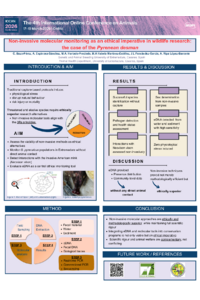
Non-invasive methodologies are emerging as essential ethical alternatives in wildlife research, especially when studying threatened or elusive species. Traditional capture-based protocols, although scientifically valuable, can induce physiological stress, disrupt natural behavior and increase the risk of injury or mortality. These impacts raise ethical concerns regarding researcher’s moral obligations to minimize harm while generating reliable data. Non-invasive molecular tools align with the 3R principles —Replacement, Reduction and Refinement—by reducing animal manipulation and preventing unnecessary suffering.
This study illustrates these advantages through monitoring the endangered Pyrenean desman (Galemys pyrenaicus) in Extremadura. Fecal material, environmental samples and biological traces were analyzed to obtain ecological, genetic and health information without capturing individuals. Real-time PCR, conventional PCR and sequencing enabled species identification, sex determination, pathogen detection and assessment of interactions with invasive species like American mink (Neovison vison), eliminating ethical conflicts associated with invasive surveillance.
Environmental DNA (eDNA) represents a central ethical framework element. eDNA allows the highly sensitive detection of G. pyrenaicus from water and sediment samples, providing presence, distribution and community-level information without direct animal contact. eDNA replaces high-impact monitoring with greater sensitivity and broader ecological insight while avoiding stress, capture or disturbance. Its capacity to anticipate declines, detect emerging risks and monitor biodiversity supports both scientific goals and moral obligations toward species protection.
Results demonstrate that non-invasive techniques are not merely methodologically efficient but ethically superior. Reducing human impact, avoiding physiological stress and eliminating necropsies or intrusive sampling needs makes them particularly suitable for vulnerable species, promoting a research culture grounded in responsibility, transparency and respect for wildlife integrity.
This Pyrenean desman study shows the ethical imperative of integrating non-invasive and molecular approaches and highlights that they should be prioritized in conservation programs and research protocols, balancing scientific rigor with animal welfare and moral responsibility, thereby contributing to respectful and sustainable wildlife interactions.
Keywords
Endangered species
non-invasive methodologies
wildlife
welfare
Poster
POSTER IOCAN 2026.pdf
Feeding behaviour of cattle along aridity gradients in northern KwaZulu-Natal, South Africa
Insects, Horses, and One Health: Lessons from an Extensive System in Central Spain