Event submissions
Published
This submission belongs to the session 1. Sustainable Animal Welfare, Ethics and Human–Animal Interactions of the event The 4th International Online Conference on Animals
Published date
12 Mar, 2026
Academic Editor
'%3e%3cpath%20d='M12.6657%2010.9104C12.4185%2010.325%2012.0599%209.79327%2011.6097%209.34482C11.1609%208.89508%2010.6293%208.5365%2010.0442%208.28888C10.0389%208.28626%2010.0337%208.28495%2010.0285%208.28233C10.8446%207.69279%2011.3752%206.73249%2011.3752%205.64904C11.3752%203.8542%209.92103%202.39999%208.1262%202.39999C6.33136%202.39999%204.87715%203.8542%204.87715%205.64904C4.87715%206.73249%205.40774%207.69279%206.22393%208.28364C6.21869%208.28626%206.21345%208.28757%206.20821%208.29019C5.62129%208.5378%205.09463%208.89284%204.64265%209.34613C4.1929%209.79493%203.83432%2010.3266%203.58671%2010.9117C3.34345%2011.4845%203.21226%2012.0987%203.20023%2012.7209C3.19988%2012.7349%203.20233%2012.7488%203.20744%2012.7619C3.21255%2012.7749%203.22022%2012.7867%203.22998%2012.7968C3.23975%2012.8068%203.25142%2012.8147%203.26431%2012.8202C3.2772%2012.8256%203.29105%2012.8284%203.30504%2012.8284H4.09109C4.14874%2012.8284%204.19459%2012.7825%204.1959%2012.7262C4.2221%2011.7148%204.62823%2010.7676%205.34617%2010.0497C6.08899%209.30683%207.0755%208.89808%208.1262%208.89808C9.17689%208.89808%2010.1634%209.30683%2010.9062%2010.0497C11.6242%2010.7676%2012.0303%2011.7148%2012.0565%2012.7262C12.0578%2012.7838%2012.1037%2012.8284%2012.1613%2012.8284H12.9474C12.9613%2012.8284%2012.9752%2012.8256%2012.9881%2012.8202C13.001%2012.8147%2013.0126%2012.8068%2013.0224%2012.7968C13.0322%2012.7867%2013.0398%2012.7749%2013.0449%2012.7619C13.0501%2012.7488%2013.0525%2012.7349%2013.0522%2012.7209C13.0391%2012.0947%2012.9094%2011.4855%2012.6657%2010.9104ZM8.1262%207.9024C7.52486%207.9024%206.9589%207.6679%206.53312%207.24211C6.10733%206.81633%205.87283%206.25037%205.87283%205.64904C5.87283%205.0477%206.10733%204.48174%206.53312%204.05596C6.9589%203.63018%207.52486%203.39567%208.1262%203.39567C8.72753%203.39567%209.29349%203.63018%209.71927%204.05596C10.1451%204.48174%2010.3796%205.0477%2010.3796%205.64904C10.3796%206.25037%2010.1451%206.81633%209.71927%207.24211C9.29349%207.6679%208.72753%207.9024%208.1262%207.9024Z'%20fill='%235D1EE1'/%3e%3c/g%3e%3c/svg%3e) Colin Scanes
Colin ScanesCitation
Ali Amini Harandi, Amin Ahmadi, Alireza Ansari Mahabadi, The Gut–Systemic Axis in Companion Animals: Systemic Review of the Microbiome's Role in Metabolic and Behavioral Disease, in Proceedings of The 4th International Online Conference on Animals, 17 March–19 March 2026, MDPI: Basel, Switzerland
Share
Email
Facebook
Twitter
LinkedIn
The Gut–Systemic Axis in Companion Animals: Systemic Review of the Microbiome's Role in Metabolic and Behavioral Disease
'%3e%3cpath%20d='M12.6647%2010.9104C12.4176%2010.325%2012.0589%209.7933%2011.6088%209.34485C11.16%208.89511%2010.6283%208.53653%2010.0432%208.28891C10.038%208.28629%2010.0327%208.28498%2010.0275%208.28236C10.8437%207.69282%2011.3743%206.73252%2011.3743%205.64907C11.3743%203.85423%209.92005%202.40002%208.12522%202.40002C6.33038%202.40002%204.87618%203.85423%204.87618%205.64907C4.87618%206.73252%205.40677%207.69282%206.22296%208.28367C6.21772%208.28629%206.21248%208.2876%206.20724%208.29022C5.62031%208.53783%205.09365%208.89287%204.64167%209.34616C4.19192%209.79496%203.83334%2010.3266%203.58573%2010.9117C3.34247%2011.4846%203.21128%2012.0987%203.19925%2012.721C3.1989%2012.735%203.20135%2012.7489%203.20646%2012.7619C3.21157%2012.7749%203.21924%2012.7868%203.22901%2012.7968C3.23877%2012.8068%203.25045%2012.8148%203.26334%2012.8202C3.27623%2012.8256%203.29007%2012.8284%203.30406%2012.8284H4.09012C4.14776%2012.8284%204.19362%2012.7825%204.19493%2012.7262C4.22113%2011.7148%204.62726%2010.7676%205.34519%2010.0497C6.08802%209.30686%207.07452%208.89811%208.12522%208.89811C9.17592%208.89811%2010.1624%209.30686%2010.9052%2010.0497C11.6232%2010.7676%2012.0293%2011.7148%2012.0555%2012.7262C12.0568%2012.7839%2012.1027%2012.8284%2012.1603%2012.8284H12.9464C12.9604%2012.8284%2012.9742%2012.8256%2012.9871%2012.8202C13%2012.8148%2013.0117%2012.8068%2013.0214%2012.7968C13.0312%2012.7868%2013.0389%2012.7749%2013.044%2012.7619C13.0491%2012.7489%2013.0515%2012.735%2013.0512%2012.721C13.0381%2012.0947%2012.9084%2011.4856%2012.6647%2010.9104ZM8.12522%207.90243C7.52388%207.90243%206.95792%207.66793%206.53214%207.24215C6.10636%206.81636%205.87185%206.2504%205.87185%205.64907C5.87185%205.04773%206.10636%204.48177%206.53214%204.05599C6.95792%203.63021%207.52388%203.3957%208.12522%203.3957C8.72655%203.3957%209.29252%203.63021%209.7183%204.05599C10.1441%204.48177%2010.3786%205.04773%2010.3786%205.64907C10.3786%206.2504%2010.1441%206.81636%209.7183%207.24215C9.29252%207.66793%208.72655%207.90243%208.12522%207.90243Z'%20fill='%235D1EE1'/%3e%3c/g%3e%3c/svg%3e)
Ali Amini Harandi 1
Amin Ahmadi 2
Alireza Ansari Mahabadi 2
1. Faculty of Veterinary Medicine, Shahrekord University, Chaharmahal & Bakhtiari, Iran
2. Doctor of Veterinary Medicine (DVM) Student,
Faculty of Veterinary Medicine, Shahrekord University, Chaharmahal & Bakhtiari, Iran
Abstract
Abstract:
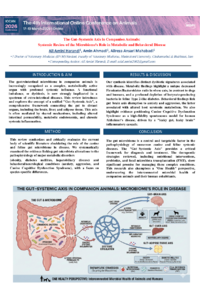
Introduction: The gastrointestinal microbiome in companion animals is increasingly recognized as a complex, metabolically active organ with profound systemic influence. A functional imbalance, or dysbiosis, is now strongly implicated in a spectrum of extra-intestinal diseases. This review introduces and explores the concept of a unified "Gut–Systemic Axis", a comprehensive framework connecting the gut to distant organs, including the brain, liver, and adipose tissue. This axis is often mediated by shared mechanisms, including altered intestinal permeability, metabolic endotoxemia, and chronic systemic inflammation.
Methods: This review synthesizes and critically evaluates the current body of scientific literature elucidating the role of the canine and feline gut microbiome in disease. We systematically examined the evidence linking gut microbiota alterations to the pathophysiology of major metabolic disorders (obesity, diabetes mellitus, hepatobiliary disease) and behavioral/neurological conditions (anxiety, aggression, and Canine Cognitive Dysfunction Syndrome), with a focus on species-specific differences.
Results: Our synthesis identifies distinct dysbiotic signatures associated with disease. Metabolic findings highlight a unique decreased Firmicutes/Bacteroidetes ratio in obese cats, in contrast to dogs and humans, and a profound depletion of butyrate-producing bacteria in feline Type 2-like diabetes. Behavioral findings link gut–brain axis disruption to anxiety and aggression, the latter associated with altered host serotonin metabolism. We also highlight evidence positioning Canine Cognitive Dysfunction Syndrome as a high-fidelity spontaneous model for human Alzheimer's disease, driven by a "leaky gut, leaky brain" inflammatory cascade.
Conclusions: The gut microbiome is a central and targetable factor in the pathophysiology of numerous canine and feline systemic diseases. The "Gut–Systemic Axis" provides a critical framework for diagnosis and treatment. The therapeutic strategies reviewed, including nutritional interventions, probiotics, and fecal microbiota transplantation (FMT), show significant promise for managing these complex conditions. This research also champions a "One Health" perspective, underscoring the interconnected microbial health of companion animals and their human cohabitants.
Keywords
Gut microbiome
Dysbiosis
Systemic inflammation
Canine and feline diseases
Gut–brain axis
Metabolic disorders
One Health
Poster
The Gut–Systemic Axis in Companion Animals.pdf
Circular biotechnologies for goat reproduction: integrating animal welfare, sustainable resource use, and in vitro embryo technologies
Digital and Precision Welfare Monitoring: A Systematic Review of Emerging Technologies for Sustainable Animal Welfare