Event submissions
Published
This submission belongs to the session 7. Aquatic Animals of the event The 4th International Online Conference on Animals
Published date
12 Mar, 2026
Academic Editor
'%3e%3cpath%20d='M12.6657%2010.9104C12.4185%2010.325%2012.0599%209.79327%2011.6097%209.34482C11.1609%208.89508%2010.6293%208.5365%2010.0442%208.28888C10.0389%208.28626%2010.0337%208.28495%2010.0285%208.28233C10.8446%207.69279%2011.3752%206.73249%2011.3752%205.64904C11.3752%203.8542%209.92103%202.39999%208.1262%202.39999C6.33136%202.39999%204.87715%203.8542%204.87715%205.64904C4.87715%206.73249%205.40774%207.69279%206.22393%208.28364C6.21869%208.28626%206.21345%208.28757%206.20821%208.29019C5.62129%208.5378%205.09463%208.89284%204.64265%209.34613C4.1929%209.79493%203.83432%2010.3266%203.58671%2010.9117C3.34345%2011.4845%203.21226%2012.0987%203.20023%2012.7209C3.19988%2012.7349%203.20233%2012.7488%203.20744%2012.7619C3.21255%2012.7749%203.22022%2012.7867%203.22998%2012.7968C3.23975%2012.8068%203.25142%2012.8147%203.26431%2012.8202C3.2772%2012.8256%203.29105%2012.8284%203.30504%2012.8284H4.09109C4.14874%2012.8284%204.19459%2012.7825%204.1959%2012.7262C4.2221%2011.7148%204.62823%2010.7676%205.34617%2010.0497C6.08899%209.30683%207.0755%208.89808%208.1262%208.89808C9.17689%208.89808%2010.1634%209.30683%2010.9062%2010.0497C11.6242%2010.7676%2012.0303%2011.7148%2012.0565%2012.7262C12.0578%2012.7838%2012.1037%2012.8284%2012.1613%2012.8284H12.9474C12.9613%2012.8284%2012.9752%2012.8256%2012.9881%2012.8202C13.001%2012.8147%2013.0126%2012.8068%2013.0224%2012.7968C13.0322%2012.7867%2013.0398%2012.7749%2013.0449%2012.7619C13.0501%2012.7488%2013.0525%2012.7349%2013.0522%2012.7209C13.0391%2012.0947%2012.9094%2011.4855%2012.6657%2010.9104ZM8.1262%207.9024C7.52486%207.9024%206.9589%207.6679%206.53312%207.24211C6.10733%206.81633%205.87283%206.25037%205.87283%205.64904C5.87283%205.0477%206.10733%204.48174%206.53312%204.05596C6.9589%203.63018%207.52486%203.39567%208.1262%203.39567C8.72753%203.39567%209.29349%203.63018%209.71927%204.05596C10.1451%204.48174%2010.3796%205.0477%2010.3796%205.64904C10.3796%206.25037%2010.1451%206.81633%209.71927%207.24211C9.29349%207.6679%208.72753%207.9024%208.1262%207.9024Z'%20fill='%235D1EE1'/%3e%3c/g%3e%3c/svg%3e) Jorge Galindo-Villegas
Jorge Galindo-VillegasCitation
Michelle Magriet Marchan Gonzalez, Simona Manuguerra, Rosaria Arena, Concetta Maria Messina, Andrea Santulli, Circular economy approaches to enhance the sustainability of supply chains in aquatic animal production, in Proceedings of The 4th International Online Conference on Animals, 17 March–19 March 2026, MDPI: Basel, Switzerland
Share
Email
Facebook
Twitter
LinkedIn
Circular economy approaches to enhance the sustainability of supply chains in aquatic animal production
'%3e%3cpath%20d='M12.6647%2010.9104C12.4176%2010.325%2012.0589%209.7933%2011.6088%209.34485C11.16%208.89511%2010.6283%208.53653%2010.0432%208.28891C10.038%208.28629%2010.0327%208.28498%2010.0275%208.28236C10.8437%207.69282%2011.3743%206.73252%2011.3743%205.64907C11.3743%203.85423%209.92005%202.40002%208.12522%202.40002C6.33038%202.40002%204.87618%203.85423%204.87618%205.64907C4.87618%206.73252%205.40677%207.69282%206.22296%208.28367C6.21772%208.28629%206.21248%208.2876%206.20724%208.29022C5.62031%208.53783%205.09365%208.89287%204.64167%209.34616C4.19192%209.79496%203.83334%2010.3266%203.58573%2010.9117C3.34247%2011.4846%203.21128%2012.0987%203.19925%2012.721C3.1989%2012.735%203.20135%2012.7489%203.20646%2012.7619C3.21157%2012.7749%203.21924%2012.7868%203.22901%2012.7968C3.23877%2012.8068%203.25045%2012.8148%203.26334%2012.8202C3.27623%2012.8256%203.29007%2012.8284%203.30406%2012.8284H4.09012C4.14776%2012.8284%204.19362%2012.7825%204.19493%2012.7262C4.22113%2011.7148%204.62726%2010.7676%205.34519%2010.0497C6.08802%209.30686%207.07452%208.89811%208.12522%208.89811C9.17592%208.89811%2010.1624%209.30686%2010.9052%2010.0497C11.6232%2010.7676%2012.0293%2011.7148%2012.0555%2012.7262C12.0568%2012.7839%2012.1027%2012.8284%2012.1603%2012.8284H12.9464C12.9604%2012.8284%2012.9742%2012.8256%2012.9871%2012.8202C13%2012.8148%2013.0117%2012.8068%2013.0214%2012.7968C13.0312%2012.7868%2013.0389%2012.7749%2013.044%2012.7619C13.0491%2012.7489%2013.0515%2012.735%2013.0512%2012.721C13.0381%2012.0947%2012.9084%2011.4856%2012.6647%2010.9104ZM8.12522%207.90243C7.52388%207.90243%206.95792%207.66793%206.53214%207.24215C6.10636%206.81636%205.87185%206.2504%205.87185%205.64907C5.87185%205.04773%206.10636%204.48177%206.53214%204.05599C6.95792%203.63021%207.52388%203.3957%208.12522%203.3957C8.72655%203.3957%209.29252%203.63021%209.7183%204.05599C10.1441%204.48177%2010.3786%205.04773%2010.3786%205.64907C10.3786%206.2504%2010.1441%206.81636%209.7183%207.24215C9.29252%207.66793%208.72655%207.90243%208.12522%207.90243Z'%20fill='%235D1EE1'/%3e%3c/g%3e%3c/svg%3e)
Michelle Magriet Marchan Gonzalez 1
Simona Manuguerra 1
Rosaria Arena 1
Concetta Maria Messina 1
Andrea Santulli 1
1. Department of Earth and Marine Sciences DiSTeM, Laboratory of Marine Biochemistry and Ecotoxicology, University of Palermo, Via Barlotta 4, 91100 Trapani, Italy
Abstract
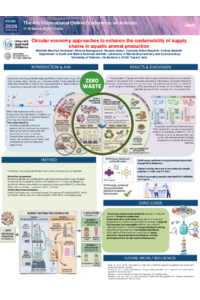
The global seafood sector generates substantial volumes of by-products, such as fish viscera, heads, skins, frames, and crustacean shells. These materials are often treated as waste, contributing to environmental pressure and economic loss, despite being rich in compounds with functional value. Their valorisation represents an opportunity to reduce waste generation, enhance resource efficiency, and support the transition toward more sustainable and circular production systems.
In this context, the present study focused on the recovery of high-value bioactive compounds from marine processing side streams, including omega-3 polyunsaturated fatty acids, protein hydrolysates, and natural antioxidant molecules. Particular attention was given to crustacean by-products, which are notable for their high content of carotenoids and peptides with recognised nutraceutical and pharmaceutical potential, expanding the range of compounds that can be sustainably produced from seafood by-products.
The extraction of astaxanthin and peptide fractions was carried out using green extraction techniques, specifically Supercritical Fluid Extraction (SFE) and enzymatic hydrolysis, respectively. These techniques preserve the quality of the recovered compounds while limiting solvent use and environmental impact. The antioxidant activity, assessed through radical scavenging (DPPH) assays, confirmed their high bioactive properties, supporting their potential use as functional ingredients for nutraceutical, feed, food, and cosmeceutical applications.
The results demonstrate a basis for scalable and transferable valorisation pathways, supporting the development of high-value bio-based products derived from seafood by-products. By shifting from disposal to resource utilisation, this work strengthens circularity, reduces environmental pressure, and contributes to a more sustainable, efficient, and competitive seafood sector.
Keywords
Seafood by-products
valorisation
Circular bioeconomy
Astaxanthin
Protein hydrolysates
Poster
Animals Conference- Poster - Marchan V2.pdf
Cucullanus (Rhabditida, Cucullanidae) parasitizing the thinlip conger Gnathophis mystax (Delaroche, 1809) (Congridae) from the coast of Calabria (Italy)
Age and Sex Differences in the Prevalence of Dirofilaria immitis: Results of a Field Study in 84 Rural Dogs in Bon County, Iran