Event submissions
Published
This submission belongs to the session S4. Clinical Data Management—Balancing Transparency with Innovation for Enhanced Care Quality of the event The 1st International Online Conference on Healthcare
Published date
20 Mar, 2026
Academic Editor
'%3e%3cpath%20d='M12.6657%2010.9104C12.4185%2010.325%2012.0599%209.79327%2011.6097%209.34482C11.1609%208.89508%2010.6293%208.5365%2010.0442%208.28888C10.0389%208.28626%2010.0337%208.28495%2010.0285%208.28233C10.8446%207.69279%2011.3752%206.73249%2011.3752%205.64904C11.3752%203.8542%209.92103%202.39999%208.1262%202.39999C6.33136%202.39999%204.87715%203.8542%204.87715%205.64904C4.87715%206.73249%205.40774%207.69279%206.22393%208.28364C6.21869%208.28626%206.21345%208.28757%206.20821%208.29019C5.62129%208.5378%205.09463%208.89284%204.64265%209.34613C4.1929%209.79493%203.83432%2010.3266%203.58671%2010.9117C3.34345%2011.4845%203.21226%2012.0987%203.20023%2012.7209C3.19988%2012.7349%203.20233%2012.7488%203.20744%2012.7619C3.21255%2012.7749%203.22022%2012.7867%203.22998%2012.7968C3.23975%2012.8068%203.25142%2012.8147%203.26431%2012.8202C3.2772%2012.8256%203.29105%2012.8284%203.30504%2012.8284H4.09109C4.14874%2012.8284%204.19459%2012.7825%204.1959%2012.7262C4.2221%2011.7148%204.62823%2010.7676%205.34617%2010.0497C6.08899%209.30683%207.0755%208.89808%208.1262%208.89808C9.17689%208.89808%2010.1634%209.30683%2010.9062%2010.0497C11.6242%2010.7676%2012.0303%2011.7148%2012.0565%2012.7262C12.0578%2012.7838%2012.1037%2012.8284%2012.1613%2012.8284H12.9474C12.9613%2012.8284%2012.9752%2012.8256%2012.9881%2012.8202C13.001%2012.8147%2013.0126%2012.8068%2013.0224%2012.7968C13.0322%2012.7867%2013.0398%2012.7749%2013.0449%2012.7619C13.0501%2012.7488%2013.0525%2012.7349%2013.0522%2012.7209C13.0391%2012.0947%2012.9094%2011.4855%2012.6657%2010.9104ZM8.1262%207.9024C7.52486%207.9024%206.9589%207.6679%206.53312%207.24211C6.10733%206.81633%205.87283%206.25037%205.87283%205.64904C5.87283%205.0477%206.10733%204.48174%206.53312%204.05596C6.9589%203.63018%207.52486%203.39567%208.1262%203.39567C8.72753%203.39567%209.29349%203.63018%209.71927%204.05596C10.1451%204.48174%2010.3796%205.0477%2010.3796%205.64904C10.3796%206.25037%2010.1451%206.81633%209.71927%207.24211C9.29349%207.6679%208.72753%207.9024%208.1262%207.9024Z'%20fill='%235D1EE1'/%3e%3c/g%3e%3c/svg%3e) Rüdiger Pryss
Rüdiger PryssCitation
Seojeong Kim, Monica L Miller, Ellen Schellhease, Rhona Sloss, Michelle Sullilvan, Smart Infusion Pumps and Clinical Data: Evaluating Medication Errors to Improve Patient Safety, in Proceedings of The 1st International Online Conference on Healthcare, 25 March–26 March 2026, MDPI: Basel, Switzerland
Share
Email
Facebook
Twitter
LinkedIn
Smart Infusion Pumps and Clinical Data: Evaluating Medication Errors to Improve Patient Safety
'%3e%3cpath%20d='M12.6647%2010.9104C12.4176%2010.325%2012.0589%209.7933%2011.6088%209.34485C11.16%208.89511%2010.6283%208.53653%2010.0432%208.28891C10.038%208.28629%2010.0327%208.28498%2010.0275%208.28236C10.8437%207.69282%2011.3743%206.73252%2011.3743%205.64907C11.3743%203.85423%209.92005%202.40002%208.12522%202.40002C6.33038%202.40002%204.87618%203.85423%204.87618%205.64907C4.87618%206.73252%205.40677%207.69282%206.22296%208.28367C6.21772%208.28629%206.21248%208.2876%206.20724%208.29022C5.62031%208.53783%205.09365%208.89287%204.64167%209.34616C4.19192%209.79496%203.83334%2010.3266%203.58573%2010.9117C3.34247%2011.4846%203.21128%2012.0987%203.19925%2012.721C3.1989%2012.735%203.20135%2012.7489%203.20646%2012.7619C3.21157%2012.7749%203.21924%2012.7868%203.22901%2012.7968C3.23877%2012.8068%203.25045%2012.8148%203.26334%2012.8202C3.27623%2012.8256%203.29007%2012.8284%203.30406%2012.8284H4.09012C4.14776%2012.8284%204.19362%2012.7825%204.19493%2012.7262C4.22113%2011.7148%204.62726%2010.7676%205.34519%2010.0497C6.08802%209.30686%207.07452%208.89811%208.12522%208.89811C9.17592%208.89811%2010.1624%209.30686%2010.9052%2010.0497C11.6232%2010.7676%2012.0293%2011.7148%2012.0555%2012.7262C12.0568%2012.7839%2012.1027%2012.8284%2012.1603%2012.8284H12.9464C12.9604%2012.8284%2012.9742%2012.8256%2012.9871%2012.8202C13%2012.8148%2013.0117%2012.8068%2013.0214%2012.7968C13.0312%2012.7868%2013.0389%2012.7749%2013.044%2012.7619C13.0491%2012.7489%2013.0515%2012.735%2013.0512%2012.721C13.0381%2012.0947%2012.9084%2011.4856%2012.6647%2010.9104ZM8.12522%207.90243C7.52388%207.90243%206.95792%207.66793%206.53214%207.24215C6.10636%206.81636%205.87185%206.2504%205.87185%205.64907C5.87185%205.04773%206.10636%204.48177%206.53214%204.05599C6.95792%203.63021%207.52388%203.3957%208.12522%203.3957C8.72655%203.3957%209.29252%203.63021%209.7183%204.05599C10.1441%204.48177%2010.3786%205.04773%2010.3786%205.64907C10.3786%206.2504%2010.1441%206.81636%209.7183%207.24215C9.29252%207.66793%208.72655%207.90243%208.12522%207.90243Z'%20fill='%235D1EE1'/%3e%3c/g%3e%3c/svg%3e)
Seojeong Kim 1
Monica L Miller 1
Ellen Schellhease 1
Rhona Sloss 2
Michelle Sullilvan 2
1. College of Pharmacy, Purdue University, West Lafayette, Indiana 47907, United States of America
2. Pharmacy Department, St Bartholomew’s Hospital, London EC1A 7BE, United Kingdom
Abstract
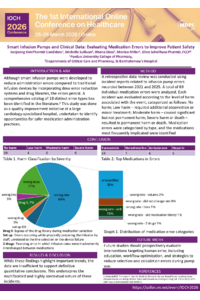
Introduction: Smart infusion pumps reduce administration errors by incorporating dose error reduction systems and drug libraries. Despite these safeguards, errors still occur. This quality improvement study aimed to evaluate infusion pump-related medication errors and identify opportunities for safer administration practices.
Methods: A retrospective data review of infusion pump error incident reports from an electronic data reporting system (DATIX) within the Intensive Therapy Unit (ITU) recorded between 2021 and 2025 was conducted. Data reviewed included error type, harm severity, and associated medications. Harm was categorised as no harm; low harm (additional observation or minor treatment); moderate harm (significant but not permanent harm); severe harm; or death (permanent harm or fatal outcome). Descriptive statistics were used to analyse data.
Results: There were 69 pump errors evaluated. Of those, 59 (85.5%) caused no harm, 4 (5.8%) caused low harm, and 6 (8.7%) caused moderate harm. No severe harm or deaths were reported. The most common error was incorrect infusion rate, which accounted for 64% (44) of all errors. Within this category, unit confusion was the most frequent error at 15% (6), followed by failure to adjust the rate with new prescriptions at 9% (4). Furosemide was the most involved medication, appearing in 14 reports (20.1%). A notable pattern for furosemide was the selection error between 1 mg/mL and 10 mg/mL concentrations when setting the infusion rate. The primary cause of incorrect dose errors was the use of an inaccurate patient weight in dose calculations.
Conclusion: While these findings highlight important trends, the data are insufficient to support definitive quantitative conclusions. This underscores the multifaceted and highly contextual nature of smart infusion pump incidents within an ITU. Next steps include transforming this data into actionable patient safety practices, including writing ITU-specific protocols, building decision-support tools, and staff education to proactively reduce infusion-related errors and optimise medication administration processes.
Keywords
Smart Infusion Pumps
Medication Safety
Clinical Data Management
Error Reporting Systems
Quality Improvement (Shows the purpose and practical application of findings.)
Poster
IOCH_infusion_pump.pdf
Assessing Patient-Centered Engagement: Provider–Patient Interaction (PPI), Trust, and Cultural Sensitivity Scales
When Patients Say No: Understanding Habitual Enoxaparin Refusal and Its Impact on Care