Event submissions
Published
This submission belongs to the session S4. Clinical Data Management—Balancing Transparency with Innovation for Enhanced Care Quality of the event The 1st International Online Conference on Healthcare
Published date
20 Mar, 2026
Academic Editor
'%3e%3cpath%20d='M12.6657%2010.9104C12.4185%2010.325%2012.0599%209.79327%2011.6097%209.34482C11.1609%208.89508%2010.6293%208.5365%2010.0442%208.28888C10.0389%208.28626%2010.0337%208.28495%2010.0285%208.28233C10.8446%207.69279%2011.3752%206.73249%2011.3752%205.64904C11.3752%203.8542%209.92103%202.39999%208.1262%202.39999C6.33136%202.39999%204.87715%203.8542%204.87715%205.64904C4.87715%206.73249%205.40774%207.69279%206.22393%208.28364C6.21869%208.28626%206.21345%208.28757%206.20821%208.29019C5.62129%208.5378%205.09463%208.89284%204.64265%209.34613C4.1929%209.79493%203.83432%2010.3266%203.58671%2010.9117C3.34345%2011.4845%203.21226%2012.0987%203.20023%2012.7209C3.19988%2012.7349%203.20233%2012.7488%203.20744%2012.7619C3.21255%2012.7749%203.22022%2012.7867%203.22998%2012.7968C3.23975%2012.8068%203.25142%2012.8147%203.26431%2012.8202C3.2772%2012.8256%203.29105%2012.8284%203.30504%2012.8284H4.09109C4.14874%2012.8284%204.19459%2012.7825%204.1959%2012.7262C4.2221%2011.7148%204.62823%2010.7676%205.34617%2010.0497C6.08899%209.30683%207.0755%208.89808%208.1262%208.89808C9.17689%208.89808%2010.1634%209.30683%2010.9062%2010.0497C11.6242%2010.7676%2012.0303%2011.7148%2012.0565%2012.7262C12.0578%2012.7838%2012.1037%2012.8284%2012.1613%2012.8284H12.9474C12.9613%2012.8284%2012.9752%2012.8256%2012.9881%2012.8202C13.001%2012.8147%2013.0126%2012.8068%2013.0224%2012.7968C13.0322%2012.7867%2013.0398%2012.7749%2013.0449%2012.7619C13.0501%2012.7488%2013.0525%2012.7349%2013.0522%2012.7209C13.0391%2012.0947%2012.9094%2011.4855%2012.6657%2010.9104ZM8.1262%207.9024C7.52486%207.9024%206.9589%207.6679%206.53312%207.24211C6.10733%206.81633%205.87283%206.25037%205.87283%205.64904C5.87283%205.0477%206.10733%204.48174%206.53312%204.05596C6.9589%203.63018%207.52486%203.39567%208.1262%203.39567C8.72753%203.39567%209.29349%203.63018%209.71927%204.05596C10.1451%204.48174%2010.3796%205.0477%2010.3796%205.64904C10.3796%206.25037%2010.1451%206.81633%209.71927%207.24211C9.29349%207.6679%208.72753%207.9024%208.1262%207.9024Z'%20fill='%235D1EE1'/%3e%3c/g%3e%3c/svg%3e) Rüdiger Pryss
Rüdiger PryssCitation
Diana Lopes Oliveira, Sara Martins, Ângelo Miguel Cardoso Jesus, Ana Martín Suaréz, Safety Profile and Adverse Drug Reactions of Radium-223 in the EudraVigilance Database: A Retrospective Descriptive Analysis, in Proceedings of The 1st International Online Conference on Healthcare, 25 March–26 March 2026, MDPI: Basel, Switzerland
Share
Email
Facebook
Twitter
LinkedIn
Safety Profile and Adverse Drug Reactions of Radium-223 in the EudraVigilance Database: A Retrospective Descriptive Analysis
'%3e%3cpath%20d='M12.6647%2010.9104C12.4176%2010.325%2012.0589%209.7933%2011.6088%209.34485C11.16%208.89511%2010.6283%208.53653%2010.0432%208.28891C10.038%208.28629%2010.0327%208.28498%2010.0275%208.28236C10.8437%207.69282%2011.3743%206.73252%2011.3743%205.64907C11.3743%203.85423%209.92005%202.40002%208.12522%202.40002C6.33038%202.40002%204.87618%203.85423%204.87618%205.64907C4.87618%206.73252%205.40677%207.69282%206.22296%208.28367C6.21772%208.28629%206.21248%208.2876%206.20724%208.29022C5.62031%208.53783%205.09365%208.89287%204.64167%209.34616C4.19192%209.79496%203.83334%2010.3266%203.58573%2010.9117C3.34247%2011.4846%203.21128%2012.0987%203.19925%2012.721C3.1989%2012.735%203.20135%2012.7489%203.20646%2012.7619C3.21157%2012.7749%203.21924%2012.7868%203.22901%2012.7968C3.23877%2012.8068%203.25045%2012.8148%203.26334%2012.8202C3.27623%2012.8256%203.29007%2012.8284%203.30406%2012.8284H4.09012C4.14776%2012.8284%204.19362%2012.7825%204.19493%2012.7262C4.22113%2011.7148%204.62726%2010.7676%205.34519%2010.0497C6.08802%209.30686%207.07452%208.89811%208.12522%208.89811C9.17592%208.89811%2010.1624%209.30686%2010.9052%2010.0497C11.6232%2010.7676%2012.0293%2011.7148%2012.0555%2012.7262C12.0568%2012.7839%2012.1027%2012.8284%2012.1603%2012.8284H12.9464C12.9604%2012.8284%2012.9742%2012.8256%2012.9871%2012.8202C13%2012.8148%2013.0117%2012.8068%2013.0214%2012.7968C13.0312%2012.7868%2013.0389%2012.7749%2013.044%2012.7619C13.0491%2012.7489%2013.0515%2012.735%2013.0512%2012.721C13.0381%2012.0947%2012.9084%2011.4856%2012.6647%2010.9104ZM8.12522%207.90243C7.52388%207.90243%206.95792%207.66793%206.53214%207.24215C6.10636%206.81636%205.87185%206.2504%205.87185%205.64907C5.87185%205.04773%206.10636%204.48177%206.53214%204.05599C6.95792%203.63021%207.52388%203.3957%208.12522%203.3957C8.72655%203.3957%209.29252%203.63021%209.7183%204.05599C10.1441%204.48177%2010.3786%205.04773%2010.3786%205.64907C10.3786%206.2504%2010.1441%206.81636%209.7183%207.24215C9.29252%207.66793%208.72655%207.90243%208.12522%207.90243Z'%20fill='%235D1EE1'/%3e%3c/g%3e%3c/svg%3e)
Diana Lopes Oliveira 1
Sara Martins 2,3

Ângelo Miguel Cardoso Jesus 4
Ana Martín Suaréz 3
1. School of Health, Porto Polytechnic Institute, Rua Dr António Bernardino de Almeida, 400, 4200-072, Porto, Portugal
2. LAQV/REQUIMTE, School of Health, Porto Polytechnic Institute, Rua Dr António Bernardino de Almeida, 400, 4200-072, Porto, Portugal
3. Pharmaceutical Sciences Department, Universidad de Salamanca, 37007 Salamanca, Spain
4. LAQV/REQUIMTE, School of Health, Porto Polytechnic Institute, Rua Dr António Bernardino de Almeida, 400, 4200-072, Porto, Portugal
Abstract
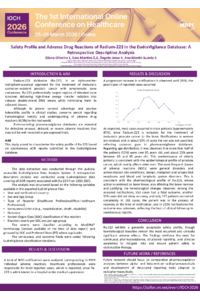
Background: Radium-223 dichloride (Ra-223) is an alpha-emitter radiopharmaceutical approved for the treatment of metastatic castration-resistant prostate cancer with symptomatic bone metastases. Despite its therapeutic benefits, concerns persist regarding haematological toxicity and underreporting of adverse drug reactions (ADRs). This study aimed to characterise the safety profile of Ra-223 based on spontaneous ADR reports submitted to the EudraVigilance database.
Methods: A retrospective descriptive analysis was conducted using EudraVigilance data covering all ADR reports associated with Ra-223 from 2013 to 2023. Variables analysed included patient demographics, reporter characteristics, seriousness, outcome, System Organ Class (SOC), and geographical distribution. Data were categorised according to MedDRA terminology.
Results: A total of 8919 ADR reports were identified, the majority involving male patients aged ≥ 65 years. The most frequently affected SOCs were blood and lymphatic system disorders and general disorders and administration site conditions. Thrombocytopenia and leukopenia represented the most reported reactions. Serious ADRs accounted for more than half of all reports, predominantly resulting in hospitalisation. Temporal analysis revealed a progressive increase in reports after 2018, suggesting improved awareness and reporting practices among healthcare professionals.
Conclusions: Ra-223 exhibits a generally acceptable safety profile, though haematological toxicities remain the most recurrent and clinically significant adverse effects. The findings reinforce the need for continuous pharmacovigilance, structured reporting, and clinician awareness to mitigate risks and ensure patient safety in radionuclide therapy.
Keywords
Radium-223
radiopharmaceuticals
adverse drug reactions
pharmacovigilance
EudraVigilance
nuclear medicine.
Poster
Poster Conferência.pdf
Integrating Digital Health Diaries to Help Improve Patient-Centered Care in Children with Chronic Illnesses: A Pilot Study of Engagement and Outcome monitoring.
Feeding the Future: Household Food Security and Infant Feeding Practices among Stunted Children in Urban Indonesia