Event submissions
Published
This submission belongs to the session S2. Patient-Centered Care—Optimizing Care Pathways through Engagement and Outcome Measurement of the event The 1st International Online Conference on Healthcare
Published date
20 Mar, 2026
Academic Editor
'%3e%3cpath%20d='M12.6657%2010.9104C12.4185%2010.325%2012.0599%209.79327%2011.6097%209.34482C11.1609%208.89508%2010.6293%208.5365%2010.0442%208.28888C10.0389%208.28626%2010.0337%208.28495%2010.0285%208.28233C10.8446%207.69279%2011.3752%206.73249%2011.3752%205.64904C11.3752%203.8542%209.92103%202.39999%208.1262%202.39999C6.33136%202.39999%204.87715%203.8542%204.87715%205.64904C4.87715%206.73249%205.40774%207.69279%206.22393%208.28364C6.21869%208.28626%206.21345%208.28757%206.20821%208.29019C5.62129%208.5378%205.09463%208.89284%204.64265%209.34613C4.1929%209.79493%203.83432%2010.3266%203.58671%2010.9117C3.34345%2011.4845%203.21226%2012.0987%203.20023%2012.7209C3.19988%2012.7349%203.20233%2012.7488%203.20744%2012.7619C3.21255%2012.7749%203.22022%2012.7867%203.22998%2012.7968C3.23975%2012.8068%203.25142%2012.8147%203.26431%2012.8202C3.2772%2012.8256%203.29105%2012.8284%203.30504%2012.8284H4.09109C4.14874%2012.8284%204.19459%2012.7825%204.1959%2012.7262C4.2221%2011.7148%204.62823%2010.7676%205.34617%2010.0497C6.08899%209.30683%207.0755%208.89808%208.1262%208.89808C9.17689%208.89808%2010.1634%209.30683%2010.9062%2010.0497C11.6242%2010.7676%2012.0303%2011.7148%2012.0565%2012.7262C12.0578%2012.7838%2012.1037%2012.8284%2012.1613%2012.8284H12.9474C12.9613%2012.8284%2012.9752%2012.8256%2012.9881%2012.8202C13.001%2012.8147%2013.0126%2012.8068%2013.0224%2012.7968C13.0322%2012.7867%2013.0398%2012.7749%2013.0449%2012.7619C13.0501%2012.7488%2013.0525%2012.7349%2013.0522%2012.7209C13.0391%2012.0947%2012.9094%2011.4855%2012.6657%2010.9104ZM8.1262%207.9024C7.52486%207.9024%206.9589%207.6679%206.53312%207.24211C6.10733%206.81633%205.87283%206.25037%205.87283%205.64904C5.87283%205.0477%206.10733%204.48174%206.53312%204.05596C6.9589%203.63018%207.52486%203.39567%208.1262%203.39567C8.72753%203.39567%209.29349%203.63018%209.71927%204.05596C10.1451%204.48174%2010.3796%205.0477%2010.3796%205.64904C10.3796%206.25037%2010.1451%206.81633%209.71927%207.24211C9.29349%207.6679%208.72753%207.9024%208.1262%207.9024Z'%20fill='%235D1EE1'/%3e%3c/g%3e%3c/svg%3e) Lorraine Evangelista
Lorraine EvangelistaCitation
Alexandra Neate, Kai William Alan Woodfall, Terence Felix, Gurpreet Saini, Carson Defreitas, Michelle Roets, Andre van Zundert, Airway Complications in Morbidly Obese Patients Undergoing General Anaesthesia: a Systematic Review, in Proceedings of The 1st International Online Conference on Healthcare, 25 March–26 March 2026, MDPI: Basel, Switzerland
Share
Email
Facebook
Twitter
LinkedIn
Airway Complications in Morbidly Obese Patients Undergoing General Anaesthesia: a Systematic Review
'%3e%3cpath%20d='M12.6647%2010.9104C12.4176%2010.325%2012.0589%209.7933%2011.6088%209.34485C11.16%208.89511%2010.6283%208.53653%2010.0432%208.28891C10.038%208.28629%2010.0327%208.28498%2010.0275%208.28236C10.8437%207.69282%2011.3743%206.73252%2011.3743%205.64907C11.3743%203.85423%209.92005%202.40002%208.12522%202.40002C6.33038%202.40002%204.87618%203.85423%204.87618%205.64907C4.87618%206.73252%205.40677%207.69282%206.22296%208.28367C6.21772%208.28629%206.21248%208.2876%206.20724%208.29022C5.62031%208.53783%205.09365%208.89287%204.64167%209.34616C4.19192%209.79496%203.83334%2010.3266%203.58573%2010.9117C3.34247%2011.4846%203.21128%2012.0987%203.19925%2012.721C3.1989%2012.735%203.20135%2012.7489%203.20646%2012.7619C3.21157%2012.7749%203.21924%2012.7868%203.22901%2012.7968C3.23877%2012.8068%203.25045%2012.8148%203.26334%2012.8202C3.27623%2012.8256%203.29007%2012.8284%203.30406%2012.8284H4.09012C4.14776%2012.8284%204.19362%2012.7825%204.19493%2012.7262C4.22113%2011.7148%204.62726%2010.7676%205.34519%2010.0497C6.08802%209.30686%207.07452%208.89811%208.12522%208.89811C9.17592%208.89811%2010.1624%209.30686%2010.9052%2010.0497C11.6232%2010.7676%2012.0293%2011.7148%2012.0555%2012.7262C12.0568%2012.7839%2012.1027%2012.8284%2012.1603%2012.8284H12.9464C12.9604%2012.8284%2012.9742%2012.8256%2012.9871%2012.8202C13%2012.8148%2013.0117%2012.8068%2013.0214%2012.7968C13.0312%2012.7868%2013.0389%2012.7749%2013.044%2012.7619C13.0491%2012.7489%2013.0515%2012.735%2013.0512%2012.721C13.0381%2012.0947%2012.9084%2011.4856%2012.6647%2010.9104ZM8.12522%207.90243C7.52388%207.90243%206.95792%207.66793%206.53214%207.24215C6.10636%206.81636%205.87185%206.2504%205.87185%205.64907C5.87185%205.04773%206.10636%204.48177%206.53214%204.05599C6.95792%203.63021%207.52388%203.3957%208.12522%203.3957C8.72655%203.3957%209.29252%203.63021%209.7183%204.05599C10.1441%204.48177%2010.3786%205.04773%2010.3786%205.64907C10.3786%206.2504%2010.1441%206.81636%209.7183%207.24215C9.29252%207.66793%208.72655%207.90243%208.12522%207.90243Z'%20fill='%235D1EE1'/%3e%3c/g%3e%3c/svg%3e)
Alexandra Neate 1

Kai William Alan Woodfall 1,2
Terence Felix 1
Gurpreet Saini 1
Carson Defreitas 1
Michelle Roets 1,2
Andre van Zundert 1,2
1. Faculty of Medicine, University of Queensland, Brisbane, 4072, Australia
2. Department of Anaesthesia, Royal Brisbane and Women's Hospital, Brisbane, 4029, Australia
Abstract
Introduction
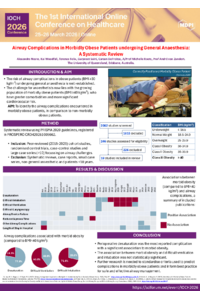
The worldwide prevalence of morbid obesity (BMI ≥40 kg/m²) is rising rapidly.1 While airway complications in obese patients (BMI ≥30 kg/m²) undergoing general anesthesia are well-documented, evidence specifically focusing on morbidly obese patients remains limited.2 This systematic review aims to identify airway complications in morbidly obese compared to non-morbidly obese patients undergoing general anesthesia.
Methods
Following the PRISMA 2020 guidelines, five databases were reviewed (PubMed, Embase, Scopus, Web of Science, and Cochrane Library) for studies published from January 2015 to February 2025. The inclusion criteria were as follows: patients ≥18 years with BMI ≥40 kg/m² undergoing general anaesthesia compared to non-morbidly obese patients. Cohort studies, RCTs, case–control studies, and large case series were included. The extracted data was not suitable for meta-analysis due to the heterogeneous nature of the research. Thus, a SWiM approach was undertaken using Stive synthesis and vote counting for direction of effect.
Results
Out of the 2,062 studies screened, 19 publications met the inclusion criteria. Perioperative desaturation was most frequently reported (nine studies), with seven studies showing significant associations (incidence 2.2-35%). Difficult intubation (seven studies) and difficult mask ventilation (five studies) showed inconsistent associations. Airway device failure, reduced apnea time (halved in morbidly obese patients), and increased hospital/ICU length of stay demonstrated positive associations.
Discussion
Perioperative desaturation was consistently associated with morbid obesity. The inconsistent links with difficult intubation or ventilation likely stem from varied outcome definitions and the multifactorial nature of airway difficulty. Future research with standardized outcome measures is needed for this growing patient population.
References
- World Obesity Federation. Prevalence of Obesity [Internet]. [cited 2025 Feb 23]. Available from: https://www.worldobesity.org/about/about-obesity/prevalence-of-obesity
- Seyni-Boureima R, Zhang Z, Antoine MMLK, Antoine-Frank CD. A review on the anesthetic management of obese patients undergoing surgery. BMC Anesthesiol. 2022 Apr 5;22(1):98.
Keywords
morbid obesity
airway management
general anaesthesia
perioperative desaturation
Poster
IOCH Poster 070326.pdf
Latent Profile Analysis and Influencing Factors of Symptom Burden in Postoperative Patients with Acute Coronary Syndrome
IoT-Enabled Smart Toothbrushes for Oral Hygiene Monitoring: A Multi-Group Comparative Study Among Undergraduates, Dental Students, and Patients Across Educational and Clinical Settings in District Mandi, India