Event submissions
Published
This submission belongs to the session S5. Social Psychology of the event The 1st International Online Conference on Behavioral Sciences
Published date
01 Apr, 2026
Academic Editor
'%3e%3cpath%20d='M12.6657%2010.9104C12.4185%2010.325%2012.0599%209.79327%2011.6097%209.34482C11.1609%208.89508%2010.6293%208.5365%2010.0442%208.28888C10.0389%208.28626%2010.0337%208.28495%2010.0285%208.28233C10.8446%207.69279%2011.3752%206.73249%2011.3752%205.64904C11.3752%203.8542%209.92103%202.39999%208.1262%202.39999C6.33136%202.39999%204.87715%203.8542%204.87715%205.64904C4.87715%206.73249%205.40774%207.69279%206.22393%208.28364C6.21869%208.28626%206.21345%208.28757%206.20821%208.29019C5.62129%208.5378%205.09463%208.89284%204.64265%209.34613C4.1929%209.79493%203.83432%2010.3266%203.58671%2010.9117C3.34345%2011.4845%203.21226%2012.0987%203.20023%2012.7209C3.19988%2012.7349%203.20233%2012.7488%203.20744%2012.7619C3.21255%2012.7749%203.22022%2012.7867%203.22998%2012.7968C3.23975%2012.8068%203.25142%2012.8147%203.26431%2012.8202C3.2772%2012.8256%203.29105%2012.8284%203.30504%2012.8284H4.09109C4.14874%2012.8284%204.19459%2012.7825%204.1959%2012.7262C4.2221%2011.7148%204.62823%2010.7676%205.34617%2010.0497C6.08899%209.30683%207.0755%208.89808%208.1262%208.89808C9.17689%208.89808%2010.1634%209.30683%2010.9062%2010.0497C11.6242%2010.7676%2012.0303%2011.7148%2012.0565%2012.7262C12.0578%2012.7838%2012.1037%2012.8284%2012.1613%2012.8284H12.9474C12.9613%2012.8284%2012.9752%2012.8256%2012.9881%2012.8202C13.001%2012.8147%2013.0126%2012.8068%2013.0224%2012.7968C13.0322%2012.7867%2013.0398%2012.7749%2013.0449%2012.7619C13.0501%2012.7488%2013.0525%2012.7349%2013.0522%2012.7209C13.0391%2012.0947%2012.9094%2011.4855%2012.6657%2010.9104ZM8.1262%207.9024C7.52486%207.9024%206.9589%207.6679%206.53312%207.24211C6.10733%206.81633%205.87283%206.25037%205.87283%205.64904C5.87283%205.0477%206.10733%204.48174%206.53312%204.05596C6.9589%203.63018%207.52486%203.39567%208.1262%203.39567C8.72753%203.39567%209.29349%203.63018%209.71927%204.05596C10.1451%204.48174%2010.3796%205.0477%2010.3796%205.64904C10.3796%206.25037%2010.1451%206.81633%209.71927%207.24211C9.29349%207.6679%208.72753%207.9024%208.1262%207.9024Z'%20fill='%235D1EE1'/%3e%3c/g%3e%3c/svg%3e) Jerrell Cassady
Jerrell CassadyCitation
Priyasha Parekh, Julia Whyte, Shyh Poh Teo, Stigma as a behavioural determinant of healthy ageing: ageism and dementia as illustrative contexts, in Proceedings of The 1st International Online Conference on Behavioral Sciences, 1 April–3 April 2026, MDPI: Basel, Switzerland
Share
Email
Facebook
Twitter
LinkedIn
Stigma as a behavioural determinant of healthy ageing: ageism and dementia as illustrative contexts
'%3e%3cpath%20d='M12.6647%2010.9104C12.4176%2010.325%2012.0589%209.7933%2011.6088%209.34485C11.16%208.89511%2010.6283%208.53653%2010.0432%208.28891C10.038%208.28629%2010.0327%208.28498%2010.0275%208.28236C10.8437%207.69282%2011.3743%206.73252%2011.3743%205.64907C11.3743%203.85423%209.92005%202.40002%208.12522%202.40002C6.33038%202.40002%204.87618%203.85423%204.87618%205.64907C4.87618%206.73252%205.40677%207.69282%206.22296%208.28367C6.21772%208.28629%206.21248%208.2876%206.20724%208.29022C5.62031%208.53783%205.09365%208.89287%204.64167%209.34616C4.19192%209.79496%203.83334%2010.3266%203.58573%2010.9117C3.34247%2011.4846%203.21128%2012.0987%203.19925%2012.721C3.1989%2012.735%203.20135%2012.7489%203.20646%2012.7619C3.21157%2012.7749%203.21924%2012.7868%203.22901%2012.7968C3.23877%2012.8068%203.25045%2012.8148%203.26334%2012.8202C3.27623%2012.8256%203.29007%2012.8284%203.30406%2012.8284H4.09012C4.14776%2012.8284%204.19362%2012.7825%204.19493%2012.7262C4.22113%2011.7148%204.62726%2010.7676%205.34519%2010.0497C6.08802%209.30686%207.07452%208.89811%208.12522%208.89811C9.17592%208.89811%2010.1624%209.30686%2010.9052%2010.0497C11.6232%2010.7676%2012.0293%2011.7148%2012.0555%2012.7262C12.0568%2012.7839%2012.1027%2012.8284%2012.1603%2012.8284H12.9464C12.9604%2012.8284%2012.9742%2012.8256%2012.9871%2012.8202C13%2012.8148%2013.0117%2012.8068%2013.0214%2012.7968C13.0312%2012.7868%2013.0389%2012.7749%2013.044%2012.7619C13.0491%2012.7489%2013.0515%2012.735%2013.0512%2012.721C13.0381%2012.0947%2012.9084%2011.4856%2012.6647%2010.9104ZM8.12522%207.90243C7.52388%207.90243%206.95792%207.66793%206.53214%207.24215C6.10636%206.81636%205.87185%206.2504%205.87185%205.64907C5.87185%205.04773%206.10636%204.48177%206.53214%204.05599C6.95792%203.63021%207.52388%203.3957%208.12522%203.3957C8.72655%203.3957%209.29252%203.63021%209.7183%204.05599C10.1441%204.48177%2010.3786%205.04773%2010.3786%205.64907C10.3786%206.2504%2010.1441%206.81636%209.7183%207.24215C9.29252%207.66793%208.72655%207.90243%208.12522%207.90243Z'%20fill='%235D1EE1'/%3e%3c/g%3e%3c/svg%3e)
Priyasha Parekh 1
Julia Whyte 1
Shyh Poh Teo 1,2
1. Health of the Older Person Kenepuru, Capital Coast and Hutt Valley Health New Zealand Te Whatu Ora, Porirua 5022, New Zealand
2. PAPRSB Institute of Health Sciences, Universiti Brunei Darussalam, Gadong BE1410, Brunei Darussalam
Abstract
Introduction
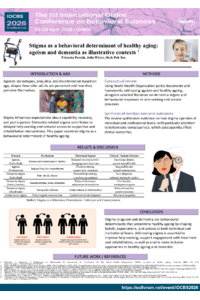
Stigma is a social and psychological construct that shapes beliefs, attitudes, and behaviours across the life course. Stigma related to related to ageing and dementia influence expectations about capability, recovery, and participation. Ageism is defined by the World Health Organization as stereotypes, prejudice, and discrimination based on age, shapes how older adults are perceived and how they perceive themselves. Dementia-related stigma compounds these effects, contributing to delayed help-seeking and reduced access to supportive and rehabilitative interventions. This paper examines stigma as a behavioural determinant of healthy ageing, using dementia and ageism as illustrative constructs.
Methods
A focused conceptual review was undertaken, drawing primarily on World Health Organisation policy documents and frameworks addressing ageism and healthy ageing, alongside selected literature on dementia stigma and behavioural responses in care-seeking and service provision. The review synthesises evidence on how stigma operates at individual and professional levels, with particular attention to behavioural consequences, which subsequently affect clinical outcomes.
Results
The synthesis indicates that ageism normalises assumptions of decline, dependency, and limited capacity for change in later life. These can be internalised by older adults, reducing engagement in health-promoting behaviours. This may also shape professional expectations and decision-making regarding treatment options. In dementia, stigma is associated with delayed recognition of symptoms, reluctance to seek diagnosis, and lowered expectations regarding rehabilitation or cognitive support. Among treatment providers, this may contribute to therapeutic nihilism, resulting in under-referral to rehabilitation, cognitive stimulation, and psychosocial interventions.
Conclusion
Stigma such as in ageism and dementia are behavioural determinants that undermine healthy ageing by shaping beliefs, expectations, and actions at both individual and institutional levels. Addressing stigma is essential to improve help-seeking, support engagement with treatment and rehabilitation, as well as enable more inclusive approaches to healthy ageing and dementia.
Keywords
ageism
dementia
healthy ageing
social psychology
stigma
Poster
poster.pdf
Post-Anesthesia Awareness and PTSD Risk: Exploring the Psychological Aftermath of Intraoperative Awareness