Event submissions
Published
This submission belongs to the session S1. Antimicrobial Resistance Mechanisms of the event Antibiotics 2026—Advances in Antimicrobial Action and Resistance
Published date
04 May, 2026
Academic Editor
'%3e%3cpath%20d='M12.6657%2010.9104C12.4185%2010.325%2012.0599%209.79327%2011.6097%209.34482C11.1609%208.89508%2010.6293%208.5365%2010.0442%208.28888C10.0389%208.28626%2010.0337%208.28495%2010.0285%208.28233C10.8446%207.69279%2011.3752%206.73249%2011.3752%205.64904C11.3752%203.8542%209.92103%202.39999%208.1262%202.39999C6.33136%202.39999%204.87715%203.8542%204.87715%205.64904C4.87715%206.73249%205.40774%207.69279%206.22393%208.28364C6.21869%208.28626%206.21345%208.28757%206.20821%208.29019C5.62129%208.5378%205.09463%208.89284%204.64265%209.34613C4.1929%209.79493%203.83432%2010.3266%203.58671%2010.9117C3.34345%2011.4845%203.21226%2012.0987%203.20023%2012.7209C3.19988%2012.7349%203.20233%2012.7488%203.20744%2012.7619C3.21255%2012.7749%203.22022%2012.7867%203.22998%2012.7968C3.23975%2012.8068%203.25142%2012.8147%203.26431%2012.8202C3.2772%2012.8256%203.29105%2012.8284%203.30504%2012.8284H4.09109C4.14874%2012.8284%204.19459%2012.7825%204.1959%2012.7262C4.2221%2011.7148%204.62823%2010.7676%205.34617%2010.0497C6.08899%209.30683%207.0755%208.89808%208.1262%208.89808C9.17689%208.89808%2010.1634%209.30683%2010.9062%2010.0497C11.6242%2010.7676%2012.0303%2011.7148%2012.0565%2012.7262C12.0578%2012.7838%2012.1037%2012.8284%2012.1613%2012.8284H12.9474C12.9613%2012.8284%2012.9752%2012.8256%2012.9881%2012.8202C13.001%2012.8147%2013.0126%2012.8068%2013.0224%2012.7968C13.0322%2012.7867%2013.0398%2012.7749%2013.0449%2012.7619C13.0501%2012.7488%2013.0525%2012.7349%2013.0522%2012.7209C13.0391%2012.0947%2012.9094%2011.4855%2012.6657%2010.9104ZM8.1262%207.9024C7.52486%207.9024%206.9589%207.6679%206.53312%207.24211C6.10733%206.81633%205.87283%206.25037%205.87283%205.64904C5.87283%205.0477%206.10733%204.48174%206.53312%204.05596C6.9589%203.63018%207.52486%203.39567%208.1262%203.39567C8.72753%203.39567%209.29349%203.63018%209.71927%204.05596C10.1451%204.48174%2010.3796%205.0477%2010.3796%205.64904C10.3796%206.25037%2010.1451%206.81633%209.71927%207.24211C9.29349%207.6679%208.72753%207.9024%208.1262%207.9024Z'%20fill='%235D1EE1'/%3e%3c/g%3e%3c/svg%3e) Manuel Simões
Manuel SimõesCitation
Manal Rossi, Moussa Benboubker, Salim Belchkar, Fouzia Hmami, Bouchra Oumokhtar, Silent Invaders: When Neonatal Devices Become Gateways to Antibiotic Resistance., in Proceedings of Antibiotics 2026—Advances in Antimicrobial Action and Resistance, Barcelona, 11 May–14 May 2026, MDPI: Basel, Switzerland
Share
Email
Facebook
Twitter
LinkedIn
Silent Invaders: When Neonatal Devices Become Gateways to Antibiotic Resistance.
'%3e%3cpath%20d='M12.6647%2010.9104C12.4176%2010.325%2012.0589%209.7933%2011.6088%209.34485C11.16%208.89511%2010.6283%208.53653%2010.0432%208.28891C10.038%208.28629%2010.0327%208.28498%2010.0275%208.28236C10.8437%207.69282%2011.3743%206.73252%2011.3743%205.64907C11.3743%203.85423%209.92005%202.40002%208.12522%202.40002C6.33038%202.40002%204.87618%203.85423%204.87618%205.64907C4.87618%206.73252%205.40677%207.69282%206.22296%208.28367C6.21772%208.28629%206.21248%208.2876%206.20724%208.29022C5.62031%208.53783%205.09365%208.89287%204.64167%209.34616C4.19192%209.79496%203.83334%2010.3266%203.58573%2010.9117C3.34247%2011.4846%203.21128%2012.0987%203.19925%2012.721C3.1989%2012.735%203.20135%2012.7489%203.20646%2012.7619C3.21157%2012.7749%203.21924%2012.7868%203.22901%2012.7968C3.23877%2012.8068%203.25045%2012.8148%203.26334%2012.8202C3.27623%2012.8256%203.29007%2012.8284%203.30406%2012.8284H4.09012C4.14776%2012.8284%204.19362%2012.7825%204.19493%2012.7262C4.22113%2011.7148%204.62726%2010.7676%205.34519%2010.0497C6.08802%209.30686%207.07452%208.89811%208.12522%208.89811C9.17592%208.89811%2010.1624%209.30686%2010.9052%2010.0497C11.6232%2010.7676%2012.0293%2011.7148%2012.0555%2012.7262C12.0568%2012.7839%2012.1027%2012.8284%2012.1603%2012.8284H12.9464C12.9604%2012.8284%2012.9742%2012.8256%2012.9871%2012.8202C13%2012.8148%2013.0117%2012.8068%2013.0214%2012.7968C13.0312%2012.7868%2013.0389%2012.7749%2013.044%2012.7619C13.0491%2012.7489%2013.0515%2012.735%2013.0512%2012.721C13.0381%2012.0947%2012.9084%2011.4856%2012.6647%2010.9104ZM8.12522%207.90243C7.52388%207.90243%206.95792%207.66793%206.53214%207.24215C6.10636%206.81636%205.87185%206.2504%205.87185%205.64907C5.87185%205.04773%206.10636%204.48177%206.53214%204.05599C6.95792%203.63021%207.52388%203.3957%208.12522%203.3957C8.72655%203.3957%209.29252%203.63021%209.7183%204.05599C10.1441%204.48177%2010.3786%205.04773%2010.3786%205.64907C10.3786%206.2504%2010.1441%206.81636%209.7183%207.24215C9.29252%207.66793%208.72655%207.90243%208.12522%207.90243Z'%20fill='%235D1EE1'/%3e%3c/g%3e%3c/svg%3e)
Manal Rossi 1
Moussa Benboubker 1
Salim Belchkar 2
Fouzia Hmami 3
Bouchra Oumokhtar 3
1. Human Pathology, Biomedicine, and Environment Laboratory, Faculty of Medicine, Pharmacy and Dentistry of Fez, Sidi Mohammed Ben Abdellah University, Fez, Morocco.
2. Epidemiology and Health Science Research Laboratory, Faculty of Medicine, Pharmacy and Dentistry of Fez, Sidi Mohammed Ben Abdellah University, Fez, Morocco.
3. Human Pathology, Biomedicine, and Environment Laboratory, Faculty of Medicine, Pharmacy and Dentistry of Fez, Sidi Mohammed Ben Abdellah University, Fez, Morocco.
Abstract
Background and Aims
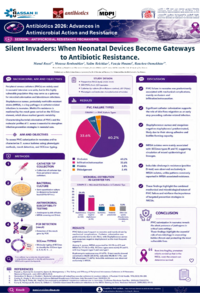
In the delicate realm of neonatal care, peripheral venous catheters (PVCs) are indispensable but also serve as potential gateways for catheter-associated infections (CAIs). These infections, often caused by Staphylococcus aureus, including methicillin-resistant strains (MRSA), contribute significantly to the growing challenge of bacterial resistance in hospital settings. This study aimed to assess catheter colonization, characterize resistance profiles—especially methicillin resistance—and identify factors linked to infection risk. Particular attention was given to Staphylococcus spp. and their resistance mechanisms.
Methods
We collected 403 catheter tip samples from 325 neonates hospitalized in NICUs. Bacterial colonization was evaluated using the quantitative Cleri–Brun–Buisson method. Emphasis was placed on S. aureus. Methicillin resistance was confirmed through PCR detection of the mecA gene. We conducted a genetic diversity analysis of mecA sequences to explore clonal variation. Additionally, the D-test was used to detect inducible clindamycin resistance, offering insight into phenotypic resistance expression.
Results
Colonization by MRSA and methicillin-resistant CoNS was identified in a subset of samples. Prolonged catheter dwell time and inconsistent aseptic technique were associated with higher colonization rates. The mecA gene was detected in several isolates, displaying notable genetic diversity indicative of multiple circulating clones. The D-test revealed inducible clindamycin resistance in various strains, underscoring the relevance of phenotypic testing.
Conclusion
Our findings highlight the need to reinforce infection prevention protocols and closely monitor bacterial resistance in NICUs. The diversity of mecA-positive strains and the detection of inducible resistance patterns underscore the importance of combining molecular and phenotypic methods. Improved catheter management and targeted surveillance can significantly reduce CAIs and enhance the protection of vulnerable neonatal patients.
Keywords
Neonatal infections
Peripheral venous catheters
Bacterial resistance
MRSA
mecA
D-test.
Poster
141900_poster.pdf
Pharmacists’ observations and attitudes towards medication supply and community self-medication intentions during the COVID-19 pandemic: a qualitative, descriptive study
Antibiotic treatment in humans and companion animals – is a pet like a human?