Event submissions
Published
This submission belongs to the session S4. Conventional and Novel Approaches in the Discovery of New Antimicrobial Agents of the event Antibiotics 2026—Advances in Antimicrobial Action and Resistance
Published date
04 May, 2026
Academic Editor
'%3e%3cpath%20d='M12.6657%2010.9104C12.4185%2010.325%2012.0599%209.79327%2011.6097%209.34482C11.1609%208.89508%2010.6293%208.5365%2010.0442%208.28888C10.0389%208.28626%2010.0337%208.28495%2010.0285%208.28233C10.8446%207.69279%2011.3752%206.73249%2011.3752%205.64904C11.3752%203.8542%209.92103%202.39999%208.1262%202.39999C6.33136%202.39999%204.87715%203.8542%204.87715%205.64904C4.87715%206.73249%205.40774%207.69279%206.22393%208.28364C6.21869%208.28626%206.21345%208.28757%206.20821%208.29019C5.62129%208.5378%205.09463%208.89284%204.64265%209.34613C4.1929%209.79493%203.83432%2010.3266%203.58671%2010.9117C3.34345%2011.4845%203.21226%2012.0987%203.20023%2012.7209C3.19988%2012.7349%203.20233%2012.7488%203.20744%2012.7619C3.21255%2012.7749%203.22022%2012.7867%203.22998%2012.7968C3.23975%2012.8068%203.25142%2012.8147%203.26431%2012.8202C3.2772%2012.8256%203.29105%2012.8284%203.30504%2012.8284H4.09109C4.14874%2012.8284%204.19459%2012.7825%204.1959%2012.7262C4.2221%2011.7148%204.62823%2010.7676%205.34617%2010.0497C6.08899%209.30683%207.0755%208.89808%208.1262%208.89808C9.17689%208.89808%2010.1634%209.30683%2010.9062%2010.0497C11.6242%2010.7676%2012.0303%2011.7148%2012.0565%2012.7262C12.0578%2012.7838%2012.1037%2012.8284%2012.1613%2012.8284H12.9474C12.9613%2012.8284%2012.9752%2012.8256%2012.9881%2012.8202C13.001%2012.8147%2013.0126%2012.8068%2013.0224%2012.7968C13.0322%2012.7867%2013.0398%2012.7749%2013.0449%2012.7619C13.0501%2012.7488%2013.0525%2012.7349%2013.0522%2012.7209C13.0391%2012.0947%2012.9094%2011.4855%2012.6657%2010.9104ZM8.1262%207.9024C7.52486%207.9024%206.9589%207.6679%206.53312%207.24211C6.10733%206.81633%205.87283%206.25037%205.87283%205.64904C5.87283%205.0477%206.10733%204.48174%206.53312%204.05596C6.9589%203.63018%207.52486%203.39567%208.1262%203.39567C8.72753%203.39567%209.29349%203.63018%209.71927%204.05596C10.1451%204.48174%2010.3796%205.0477%2010.3796%205.64904C10.3796%206.25037%2010.1451%206.81633%209.71927%207.24211C9.29349%207.6679%208.72753%207.9024%208.1262%207.9024Z'%20fill='%235D1EE1'/%3e%3c/g%3e%3c/svg%3e) Jordi Vila
Jordi VilaCitation
Julie Eliene Hernandez-Salmeron, Yemurayi Hungwe, Samran Prasla, Shiv Naik, Ria Menon, Aranksha Thakor, Alyssa Overton, Jenn Knapp, Trevor Charles, Functional characterization approach to identify novel antimicrobial resistance genes using cosmid libraries from Pseudomonas spp., in Proceedings of Antibiotics 2026—Advances in Antimicrobial Action and Resistance, Barcelona, 11 May–14 May 2026, MDPI: Basel, Switzerland
Share
Email
Facebook
Twitter
LinkedIn
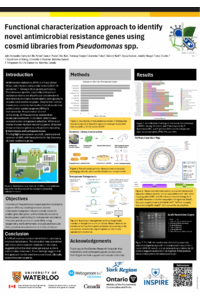
Functional characterization approach to identify novel antimicrobial resistance genes using cosmid libraries from Pseudomonas spp.
'%3e%3cpath%20d='M12.6647%2010.9104C12.4176%2010.325%2012.0589%209.7933%2011.6088%209.34485C11.16%208.89511%2010.6283%208.53653%2010.0432%208.28891C10.038%208.28629%2010.0327%208.28498%2010.0275%208.28236C10.8437%207.69282%2011.3743%206.73252%2011.3743%205.64907C11.3743%203.85423%209.92005%202.40002%208.12522%202.40002C6.33038%202.40002%204.87618%203.85423%204.87618%205.64907C4.87618%206.73252%205.40677%207.69282%206.22296%208.28367C6.21772%208.28629%206.21248%208.2876%206.20724%208.29022C5.62031%208.53783%205.09365%208.89287%204.64167%209.34616C4.19192%209.79496%203.83334%2010.3266%203.58573%2010.9117C3.34247%2011.4846%203.21128%2012.0987%203.19925%2012.721C3.1989%2012.735%203.20135%2012.7489%203.20646%2012.7619C3.21157%2012.7749%203.21924%2012.7868%203.22901%2012.7968C3.23877%2012.8068%203.25045%2012.8148%203.26334%2012.8202C3.27623%2012.8256%203.29007%2012.8284%203.30406%2012.8284H4.09012C4.14776%2012.8284%204.19362%2012.7825%204.19493%2012.7262C4.22113%2011.7148%204.62726%2010.7676%205.34519%2010.0497C6.08802%209.30686%207.07452%208.89811%208.12522%208.89811C9.17592%208.89811%2010.1624%209.30686%2010.9052%2010.0497C11.6232%2010.7676%2012.0293%2011.7148%2012.0555%2012.7262C12.0568%2012.7839%2012.1027%2012.8284%2012.1603%2012.8284H12.9464C12.9604%2012.8284%2012.9742%2012.8256%2012.9871%2012.8202C13%2012.8148%2013.0117%2012.8068%2013.0214%2012.7968C13.0312%2012.7868%2013.0389%2012.7749%2013.044%2012.7619C13.0491%2012.7489%2013.0515%2012.735%2013.0512%2012.721C13.0381%2012.0947%2012.9084%2011.4856%2012.6647%2010.9104ZM8.12522%207.90243C7.52388%207.90243%206.95792%207.66793%206.53214%207.24215C6.10636%206.81636%205.87185%206.2504%205.87185%205.64907C5.87185%205.04773%206.10636%204.48177%206.53214%204.05599C6.95792%203.63021%207.52388%203.3957%208.12522%203.3957C8.72655%203.3957%209.29252%203.63021%209.7183%204.05599C10.1441%204.48177%2010.3786%205.04773%2010.3786%205.64907C10.3786%206.2504%2010.1441%206.81636%209.7183%207.24215C9.29252%207.66793%208.72655%207.90243%208.12522%207.90243Z'%20fill='%235D1EE1'/%3e%3c/g%3e%3c/svg%3e)
Julie Eliene Hernandez-Salmeron 1
Yemurayi Hungwe 1
Samran Prasla 1
Shiv Naik 1
Ria Menon 1
Aranksha Thakor 1
Alyssa Overton 1
Jenn Knapp 1
Trevor Charles 1,2
1. University of Waterloo
2. Metagenom Bio Life Science Inc.
Abstract
Bacterial infections pose a significant threat to global health, especially with the growing resistance to antibiotics. Among critical priority pathogens, Pseudomonas species are of particular concern due to their intrinsic resistance mechanisms and capacity to acquire novel resistance genes. Despite their clinical importance, relatively few studies have characterized antimicrobial resistance genes (ARGs) in environmental Pseudomonas strains, especially those encoding β-lactamases.
In this study, we analyzed a collection of 56 bacterial genomes isolated under carbapenem antibiotic selection from municipal and hospital wastewater systems across Ontario. Whole-genome sequencing revealed that 33 of these isolates belonged to 11 Pseudomonas species; further annotation in CARD and ResFinder databases identified the presence of known ARGs across all isolates. However, most of the carbapenem-resistant isolates did not show observable β-lactamases or carbapenemase gene determinants. To investigate the nature of the antibiotic resistance, we constructed cosmid-based genomic libraries using DNA extracted from highly resistant Pseudomonas isolates. After confirming carbapenem resistance, the positive clones were sequenced using Oxford Nanopore Technology. Further analysis showed a group of clones with overlapping regions when mapped to the reference genome, containing several uncharacterized coding sequences. Through functional screening of these clones, subcloning and Tn5 mutagenesis, we aim to identify and characterize novel resistance genes, with particular emphasis on uncharacterized β-lactamase and carbapenemase activities. This approach not only supports the detection of ARGs that may be overlooked by sequence-based methods but also enables the characterization of their phenotypic effects and potential clinical implications of ARGs found in non-clinical settings. Furthermore, it emphasizes the importance of monitoring wastewater as a reservoir system for emerging resistance threats.
Keywords
ARGs
AMR
antimicrobial resistance
antimicrobial resistance genes
Pseudomonas
wastewater
Poster
Antibiotics2026-JHS.pdf
Docking-based screening and interaction analysis of β-Lactamase inhibitors targeting TEM-1, KPC-2 and BcII
Nature’s Nanofactory: Leveraging Medicinal Plants as Novel Therapeutics