Event submissions
Published
This submission belongs to the session S4. Conventional and Novel Approaches in the Discovery of New Antimicrobial Agents of the event Antibiotics 2026—Advances in Antimicrobial Action and Resistance
Published date
04 May, 2026
Academic Editor
'%3e%3cpath%20d='M12.6657%2010.9104C12.4185%2010.325%2012.0599%209.79327%2011.6097%209.34482C11.1609%208.89508%2010.6293%208.5365%2010.0442%208.28888C10.0389%208.28626%2010.0337%208.28495%2010.0285%208.28233C10.8446%207.69279%2011.3752%206.73249%2011.3752%205.64904C11.3752%203.8542%209.92103%202.39999%208.1262%202.39999C6.33136%202.39999%204.87715%203.8542%204.87715%205.64904C4.87715%206.73249%205.40774%207.69279%206.22393%208.28364C6.21869%208.28626%206.21345%208.28757%206.20821%208.29019C5.62129%208.5378%205.09463%208.89284%204.64265%209.34613C4.1929%209.79493%203.83432%2010.3266%203.58671%2010.9117C3.34345%2011.4845%203.21226%2012.0987%203.20023%2012.7209C3.19988%2012.7349%203.20233%2012.7488%203.20744%2012.7619C3.21255%2012.7749%203.22022%2012.7867%203.22998%2012.7968C3.23975%2012.8068%203.25142%2012.8147%203.26431%2012.8202C3.2772%2012.8256%203.29105%2012.8284%203.30504%2012.8284H4.09109C4.14874%2012.8284%204.19459%2012.7825%204.1959%2012.7262C4.2221%2011.7148%204.62823%2010.7676%205.34617%2010.0497C6.08899%209.30683%207.0755%208.89808%208.1262%208.89808C9.17689%208.89808%2010.1634%209.30683%2010.9062%2010.0497C11.6242%2010.7676%2012.0303%2011.7148%2012.0565%2012.7262C12.0578%2012.7838%2012.1037%2012.8284%2012.1613%2012.8284H12.9474C12.9613%2012.8284%2012.9752%2012.8256%2012.9881%2012.8202C13.001%2012.8147%2013.0126%2012.8068%2013.0224%2012.7968C13.0322%2012.7867%2013.0398%2012.7749%2013.0449%2012.7619C13.0501%2012.7488%2013.0525%2012.7349%2013.0522%2012.7209C13.0391%2012.0947%2012.9094%2011.4855%2012.6657%2010.9104ZM8.1262%207.9024C7.52486%207.9024%206.9589%207.6679%206.53312%207.24211C6.10733%206.81633%205.87283%206.25037%205.87283%205.64904C5.87283%205.0477%206.10733%204.48174%206.53312%204.05596C6.9589%203.63018%207.52486%203.39567%208.1262%203.39567C8.72753%203.39567%209.29349%203.63018%209.71927%204.05596C10.1451%204.48174%2010.3796%205.0477%2010.3796%205.64904C10.3796%206.25037%2010.1451%206.81633%209.71927%207.24211C9.29349%207.6679%208.72753%207.9024%208.1262%207.9024Z'%20fill='%235D1EE1'/%3e%3c/g%3e%3c/svg%3e) Marc Maresca
Marc MarescaCitation
Mehlayl Tariq, Krzysztof Fink, Bożena Szermer Olearnik, Michalina Gos, Waldemar Goldeman, Tomasz Goszczyński, Design and Evaluation of Metallacarborane-Peptide Conjugates as Novel Antimicrobial Agents, in Proceedings of Antibiotics 2026—Advances in Antimicrobial Action and Resistance, Barcelona, 11 May–14 May 2026, MDPI: Basel, Switzerland
Share
Email
Facebook
Twitter
LinkedIn
Design and Evaluation of Metallacarborane-Peptide Conjugates as Novel Antimicrobial Agents
'%3e%3cpath%20d='M12.6647%2010.9104C12.4176%2010.325%2012.0589%209.7933%2011.6088%209.34485C11.16%208.89511%2010.6283%208.53653%2010.0432%208.28891C10.038%208.28629%2010.0327%208.28498%2010.0275%208.28236C10.8437%207.69282%2011.3743%206.73252%2011.3743%205.64907C11.3743%203.85423%209.92005%202.40002%208.12522%202.40002C6.33038%202.40002%204.87618%203.85423%204.87618%205.64907C4.87618%206.73252%205.40677%207.69282%206.22296%208.28367C6.21772%208.28629%206.21248%208.2876%206.20724%208.29022C5.62031%208.53783%205.09365%208.89287%204.64167%209.34616C4.19192%209.79496%203.83334%2010.3266%203.58573%2010.9117C3.34247%2011.4846%203.21128%2012.0987%203.19925%2012.721C3.1989%2012.735%203.20135%2012.7489%203.20646%2012.7619C3.21157%2012.7749%203.21924%2012.7868%203.22901%2012.7968C3.23877%2012.8068%203.25045%2012.8148%203.26334%2012.8202C3.27623%2012.8256%203.29007%2012.8284%203.30406%2012.8284H4.09012C4.14776%2012.8284%204.19362%2012.7825%204.19493%2012.7262C4.22113%2011.7148%204.62726%2010.7676%205.34519%2010.0497C6.08802%209.30686%207.07452%208.89811%208.12522%208.89811C9.17592%208.89811%2010.1624%209.30686%2010.9052%2010.0497C11.6232%2010.7676%2012.0293%2011.7148%2012.0555%2012.7262C12.0568%2012.7839%2012.1027%2012.8284%2012.1603%2012.8284H12.9464C12.9604%2012.8284%2012.9742%2012.8256%2012.9871%2012.8202C13%2012.8148%2013.0117%2012.8068%2013.0214%2012.7968C13.0312%2012.7868%2013.0389%2012.7749%2013.044%2012.7619C13.0491%2012.7489%2013.0515%2012.735%2013.0512%2012.721C13.0381%2012.0947%2012.9084%2011.4856%2012.6647%2010.9104ZM8.12522%207.90243C7.52388%207.90243%206.95792%207.66793%206.53214%207.24215C6.10636%206.81636%205.87185%206.2504%205.87185%205.64907C5.87185%205.04773%206.10636%204.48177%206.53214%204.05599C6.95792%203.63021%207.52388%203.3957%208.12522%203.3957C8.72655%203.3957%209.29252%203.63021%209.7183%204.05599C10.1441%204.48177%2010.3786%205.04773%2010.3786%205.64907C10.3786%206.2504%2010.1441%206.81636%209.7183%207.24215C9.29252%207.66793%208.72655%207.90243%208.12522%207.90243Z'%20fill='%235D1EE1'/%3e%3c/g%3e%3c/svg%3e)
Mehlayl Tariq 1
Krzysztof Fink 1
Bożena Szermer Olearnik 1
Michalina Gos 1
Waldemar Goldeman 2
Tomasz Goszczyński 1
1. Laboratory of Biomedical Chemistry, Hirszfeld Institute of Immunology and Experimental Therapy, Polish Academy of Sciences, 12 Weigla St., 53-114 Wrocław, Poland
2. Department of Organic and Medicinal Chemistry, Faculty of Chemistry, Wrocław University of Science and Technology, 4/6 Norwida St., 50-370 Wrocław, Poland
Abstract
Abstract
Antimicrobial resistance (AMR) poses a significant global health threat, ranking among the top ten threats to humanity according to the World Health Organization [1]. The rise of multidrug-resistant (MDR), extensively drug-resistant (XDR), and pan-drug-resistant (PDR) pathogens is linked to their increasing insensitivity to traditional antibiotics [2]. Antimicrobial peptides (AMPs) offer a promising solution to combat drug-resistant infections [3]. These peptides, which possess cationic and hydrophobic regions, can disrupt bacterial cell membranes, leading to bacterial death [4]. However, challenges such as instability, high costs, and toxicity to normal cells must be addressed. Metallacarboranes are stable compounds consisting of one or more boron hydride clusters coordinating a metal cation. They possess unique structures and properties that make them a promising platform for the development of new antimicrobial agents [5].
In our studies, we synthesized a series of metallacarborane–ultrashort cationic peptide conjugates and comprehensively characterized their physicochemical properties. Their antimicrobial activity was evaluated by determination of minimum inhibitory concentrations (MICs) and minimum bactericidal concentrations (MBCs) against representative Gram‑positive and Gram‑negative bacteria, demonstrating broad‑spectrum and predominantly bactericidal effects at low micromolar levels. In parallel, cytotoxicity and hemolysis assays were performed, enabling calculation of selectivity indices that relate MIC/MBC values to toxicity thresholds and thus substantiate the favorable therapeutic window of these conjugates.
ACKNOWLEDGMENTS
The study was supported by a grant from the National Science Centre, Poland (grant number 2023/51/D/NZ7/02609).
REFERENCES
1] Kumar, S. EClinicalMedicine 2021, 41, 101221.
[2] Pulingam, T.; Parumasivam, T.; Gazzali, A. M.; Sulaiman, A. M.; Chee, J. Y.; Lakshmanan, M.; et al. Eur. J. Pharm. Sci. 2022, 170, 106103.
[3] Bucataru, C.; Ciobanasu, C. Microbiol. Res. 2024, 127822.
[4] Matthyssen, T.; Li, W.; Holden, J. A.; Lenzo, J. C.; Hadjigol, S.; O’Brien-Simpson, N. M. Front. Chem. 2022, 9, 795433.
[5] Fink, K.; Uchman, M. Coord. Chem. Rev. 2021, 477, 214940
Keywords
Antimicrobial resitance
Novel Antimicrobial Agents
Metallacarborane-peptide conjugates
Poster
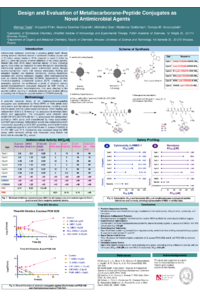
Poster_Antibiotics2026_Mehlayl Tariq.pdf
Extending the Potency and Lifespan of Antibiotics: Inhibitors of Gram-Negative Bacterial Efflux Pumps
Computational Evaluation of Mel4 and Lactoferricin Interactions with Adenovirus and Norovirus Capsids