Event submissions
Published
This submission belongs to the session S1. Antimicrobial Resistance Mechanisms of the event Antibiotics 2026—Advances in Antimicrobial Action and Resistance
Published date
06 May, 2026
Academic Editor
'%3e%3cpath%20d='M12.6657%2010.9104C12.4185%2010.325%2012.0599%209.79327%2011.6097%209.34482C11.1609%208.89508%2010.6293%208.5365%2010.0442%208.28888C10.0389%208.28626%2010.0337%208.28495%2010.0285%208.28233C10.8446%207.69279%2011.3752%206.73249%2011.3752%205.64904C11.3752%203.8542%209.92103%202.39999%208.1262%202.39999C6.33136%202.39999%204.87715%203.8542%204.87715%205.64904C4.87715%206.73249%205.40774%207.69279%206.22393%208.28364C6.21869%208.28626%206.21345%208.28757%206.20821%208.29019C5.62129%208.5378%205.09463%208.89284%204.64265%209.34613C4.1929%209.79493%203.83432%2010.3266%203.58671%2010.9117C3.34345%2011.4845%203.21226%2012.0987%203.20023%2012.7209C3.19988%2012.7349%203.20233%2012.7488%203.20744%2012.7619C3.21255%2012.7749%203.22022%2012.7867%203.22998%2012.7968C3.23975%2012.8068%203.25142%2012.8147%203.26431%2012.8202C3.2772%2012.8256%203.29105%2012.8284%203.30504%2012.8284H4.09109C4.14874%2012.8284%204.19459%2012.7825%204.1959%2012.7262C4.2221%2011.7148%204.62823%2010.7676%205.34617%2010.0497C6.08899%209.30683%207.0755%208.89808%208.1262%208.89808C9.17689%208.89808%2010.1634%209.30683%2010.9062%2010.0497C11.6242%2010.7676%2012.0303%2011.7148%2012.0565%2012.7262C12.0578%2012.7838%2012.1037%2012.8284%2012.1613%2012.8284H12.9474C12.9613%2012.8284%2012.9752%2012.8256%2012.9881%2012.8202C13.001%2012.8147%2013.0126%2012.8068%2013.0224%2012.7968C13.0322%2012.7867%2013.0398%2012.7749%2013.0449%2012.7619C13.0501%2012.7488%2013.0525%2012.7349%2013.0522%2012.7209C13.0391%2012.0947%2012.9094%2011.4855%2012.6657%2010.9104ZM8.1262%207.9024C7.52486%207.9024%206.9589%207.6679%206.53312%207.24211C6.10733%206.81633%205.87283%206.25037%205.87283%205.64904C5.87283%205.0477%206.10733%204.48174%206.53312%204.05596C6.9589%203.63018%207.52486%203.39567%208.1262%203.39567C8.72753%203.39567%209.29349%203.63018%209.71927%204.05596C10.1451%204.48174%2010.3796%205.0477%2010.3796%205.64904C10.3796%206.25037%2010.1451%206.81633%209.71927%207.24211C9.29349%207.6679%208.72753%207.9024%208.1262%207.9024Z'%20fill='%235D1EE1'/%3e%3c/g%3e%3c/svg%3e) Manuel Simões
Manuel SimõesCitation
Ana Rodrigo-Moreno, Rebeca Lavilla, Alexandre Viu, Romina Romero, María Carla Iglesias, Juan Pablo Horcajada, Eduardo Padilla, María Milagro Montero, Juan José Hernández, Genomic co-occurrence of blaNDM-5 and yersiniabactin-associated loci in cefiderocol-resistant Enterobacterales, in Proceedings of Antibiotics 2026—Advances in Antimicrobial Action and Resistance, Barcelona, 11 May–14 May 2026, MDPI: Basel, Switzerland
Share
Email
Facebook
Twitter
LinkedIn
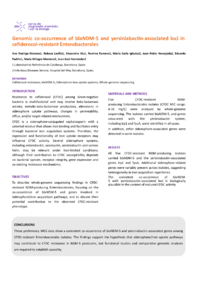
Genomic co-occurrence of blaNDM-5 and yersiniabactin-associated loci in cefiderocol-resistant Enterobacterales
'%3e%3cpath%20d='M12.6647%2010.9104C12.4176%2010.325%2012.0589%209.7933%2011.6088%209.34485C11.16%208.89511%2010.6283%208.53653%2010.0432%208.28891C10.038%208.28629%2010.0327%208.28498%2010.0275%208.28236C10.8437%207.69282%2011.3743%206.73252%2011.3743%205.64907C11.3743%203.85423%209.92005%202.40002%208.12522%202.40002C6.33038%202.40002%204.87618%203.85423%204.87618%205.64907C4.87618%206.73252%205.40677%207.69282%206.22296%208.28367C6.21772%208.28629%206.21248%208.2876%206.20724%208.29022C5.62031%208.53783%205.09365%208.89287%204.64167%209.34616C4.19192%209.79496%203.83334%2010.3266%203.58573%2010.9117C3.34247%2011.4846%203.21128%2012.0987%203.19925%2012.721C3.1989%2012.735%203.20135%2012.7489%203.20646%2012.7619C3.21157%2012.7749%203.21924%2012.7868%203.22901%2012.7968C3.23877%2012.8068%203.25045%2012.8148%203.26334%2012.8202C3.27623%2012.8256%203.29007%2012.8284%203.30406%2012.8284H4.09012C4.14776%2012.8284%204.19362%2012.7825%204.19493%2012.7262C4.22113%2011.7148%204.62726%2010.7676%205.34519%2010.0497C6.08802%209.30686%207.07452%208.89811%208.12522%208.89811C9.17592%208.89811%2010.1624%209.30686%2010.9052%2010.0497C11.6232%2010.7676%2012.0293%2011.7148%2012.0555%2012.7262C12.0568%2012.7839%2012.1027%2012.8284%2012.1603%2012.8284H12.9464C12.9604%2012.8284%2012.9742%2012.8256%2012.9871%2012.8202C13%2012.8148%2013.0117%2012.8068%2013.0214%2012.7968C13.0312%2012.7868%2013.0389%2012.7749%2013.044%2012.7619C13.0491%2012.7489%2013.0515%2012.735%2013.0512%2012.721C13.0381%2012.0947%2012.9084%2011.4856%2012.6647%2010.9104ZM8.12522%207.90243C7.52388%207.90243%206.95792%207.66793%206.53214%207.24215C6.10636%206.81636%205.87185%206.2504%205.87185%205.64907C5.87185%205.04773%206.10636%204.48177%206.53214%204.05599C6.95792%203.63021%207.52388%203.3957%208.12522%203.3957C8.72655%203.3957%209.29252%203.63021%209.7183%204.05599C10.1441%204.48177%2010.3786%205.04773%2010.3786%205.64907C10.3786%206.2504%2010.1441%206.81636%209.7183%207.24215C9.29252%207.66793%208.72655%207.90243%208.12522%207.90243Z'%20fill='%235D1EE1'/%3e%3c/g%3e%3c/svg%3e)
Ana Rodrigo-Moreno 1
Rebeca Lavilla 1
Alexandre Viu 1
Romina Romero 1
María Carla Iglesias 2
Juan Pablo Horcajada 2
Eduardo Padilla 1
María Milagro Montero 2
Juan José Hernández 1
1. Laboratori de Referència de Catalunya, Barcelona, Spain
2. Infectious Diseases Service, Hospital del Mar, Barcelona, Spain
Abstract
Introduction
Resistance to cefiderocol (CFDC) among Gram-negative bacteria is multifactorial and may involve beta-lactamase activity, metallo-beta-lactamase production, alterations in siderophore uptake pathways, changes in permeability, efflux, and/or target-related mechanisms.
CFDC is a siderophore-conjugated cephalosporin with a catechol residue that allows iron binding and facilitates entry through bacterial iron acquisition systems. Therefore, the expression and functionality of iron uptake receptors may influence CFDC activity.
Several siderophore systems, including enterobactin, aerobactin, yersiniabactin and salmochelin, may be relevant under iron-limited conditions, although their contribution to CFDC susceptibility depends on bacterial species, receptor integrity, gene expression and co-existing resistance mechanisms.
Objectives
To describe whole-genome sequencing findings in CFDC-resistant NDM-producing Enterobacterales, focusing on the co-occurrence of blaNDM-5 and genes involved in siderophore/iron acquisition pathways, and to discuss their potential contribution to the observed CFDC-resistant phenotype.
Materials and methods
Five CFDC-resistant NDM-producing Enterobacterales isolates (CFDC MIC range: 4-16 mg/L) were analyzed by whole-genome sequencing. The isolates carried blaNDM-5, and genes associated with the yersiniabactin system, including irp1 and fyuA, were identified in all cases.
In addition, other siderophore-associated genes were detected in some isolates.
Results
All five CFDC-resistant NDM-producing isolates carried blaNDM-5 and the yersiniabactin-associated genes irp1 and fyuA. Additional siderophore-related genes were variably present across isolates, suggesting heterogeneity in iron acquisition repertoires.
The consistent co-occurrence of blaNDM-5 with yersiniabactin-associated loci is biologically plausible in the context of reduced CFDC activity.
Conclusions
These preliminary WGS data show a consistent co-occurrence of blaNDM-5 and yersiniabactin-associated genes among CFDC-resistant Enterobacterales isolates. The findings support the hypothesis that siderophore/iron uptake pathways may contribute to CFDC resistance in NDM-5 producers, but functional studies and comparative genomic analyses are required to establish causality.
Keywords
Cefiderocol resistance
blaNDM-5
Siderophore iron uptake systems
Whole-genome sequencing
Poster
Poster Yersiniabactin.pdf
In vitro activity of eravacycline against cefiderocol-resistant ESBL/NDM-producing Enterobacterales: a preliminary series
Phenotypic profiling of biofilm formation and antibiotic susceptibility in poultry-derived Listeria monocytogenes isolates