Event submissions
Published
This submission belongs to the session S3. Energy and Environment. Sustainable Transition of the event The 3rd International Online Conference on Energies
Published date
07 May, 2026
Academic Editor
'%3e%3cpath%20d='M12.6657%2010.9104C12.4185%2010.325%2012.0599%209.79327%2011.6097%209.34482C11.1609%208.89508%2010.6293%208.5365%2010.0442%208.28888C10.0389%208.28626%2010.0337%208.28495%2010.0285%208.28233C10.8446%207.69279%2011.3752%206.73249%2011.3752%205.64904C11.3752%203.8542%209.92103%202.39999%208.1262%202.39999C6.33136%202.39999%204.87715%203.8542%204.87715%205.64904C4.87715%206.73249%205.40774%207.69279%206.22393%208.28364C6.21869%208.28626%206.21345%208.28757%206.20821%208.29019C5.62129%208.5378%205.09463%208.89284%204.64265%209.34613C4.1929%209.79493%203.83432%2010.3266%203.58671%2010.9117C3.34345%2011.4845%203.21226%2012.0987%203.20023%2012.7209C3.19988%2012.7349%203.20233%2012.7488%203.20744%2012.7619C3.21255%2012.7749%203.22022%2012.7867%203.22998%2012.7968C3.23975%2012.8068%203.25142%2012.8147%203.26431%2012.8202C3.2772%2012.8256%203.29105%2012.8284%203.30504%2012.8284H4.09109C4.14874%2012.8284%204.19459%2012.7825%204.1959%2012.7262C4.2221%2011.7148%204.62823%2010.7676%205.34617%2010.0497C6.08899%209.30683%207.0755%208.89808%208.1262%208.89808C9.17689%208.89808%2010.1634%209.30683%2010.9062%2010.0497C11.6242%2010.7676%2012.0303%2011.7148%2012.0565%2012.7262C12.0578%2012.7838%2012.1037%2012.8284%2012.1613%2012.8284H12.9474C12.9613%2012.8284%2012.9752%2012.8256%2012.9881%2012.8202C13.001%2012.8147%2013.0126%2012.8068%2013.0224%2012.7968C13.0322%2012.7867%2013.0398%2012.7749%2013.0449%2012.7619C13.0501%2012.7488%2013.0525%2012.7349%2013.0522%2012.7209C13.0391%2012.0947%2012.9094%2011.4855%2012.6657%2010.9104ZM8.1262%207.9024C7.52486%207.9024%206.9589%207.6679%206.53312%207.24211C6.10733%206.81633%205.87283%206.25037%205.87283%205.64904C5.87283%205.0477%206.10733%204.48174%206.53312%204.05596C6.9589%203.63018%207.52486%203.39567%208.1262%203.39567C8.72753%203.39567%209.29349%203.63018%209.71927%204.05596C10.1451%204.48174%2010.3796%205.0477%2010.3796%205.64904C10.3796%206.25037%2010.1451%206.81633%209.71927%207.24211C9.29349%207.6679%208.72753%207.9024%208.1262%207.9024Z'%20fill='%235D1EE1'/%3e%3c/g%3e%3c/svg%3e) Jose Ramon Fernandez
Jose Ramon FernandezCitation
Julius Oluwatosin Ajani, Grace Oluwabukola Kolapo, Monday Hendrick Nwonu, DEVELOPMENT OF AN ENERGY SCENARIO FOR IMPROVING ENERGY INFRASTRUCTURE IN A DEVELOPING NATION (NIGERIA AS A CASE STUDY), in Proceedings of The 3rd International Online Conference on Energies, 12 May–15 May 2026, MDPI: Basel, Switzerland
Share
Email
Facebook
Twitter
LinkedIn
DEVELOPMENT OF AN ENERGY SCENARIO FOR IMPROVING ENERGY INFRASTRUCTURE IN A DEVELOPING NATION (NIGERIA AS A CASE STUDY)

Julius Oluwatosin Ajani 1
'%3e%3cpath%20d='M12.6647%2010.9104C12.4176%2010.325%2012.0589%209.7933%2011.6088%209.34485C11.16%208.89511%2010.6283%208.53653%2010.0432%208.28891C10.038%208.28629%2010.0327%208.28498%2010.0275%208.28236C10.8437%207.69282%2011.3743%206.73252%2011.3743%205.64907C11.3743%203.85423%209.92005%202.40002%208.12522%202.40002C6.33038%202.40002%204.87618%203.85423%204.87618%205.64907C4.87618%206.73252%205.40677%207.69282%206.22296%208.28367C6.21772%208.28629%206.21248%208.2876%206.20724%208.29022C5.62031%208.53783%205.09365%208.89287%204.64167%209.34616C4.19192%209.79496%203.83334%2010.3266%203.58573%2010.9117C3.34247%2011.4846%203.21128%2012.0987%203.19925%2012.721C3.1989%2012.735%203.20135%2012.7489%203.20646%2012.7619C3.21157%2012.7749%203.21924%2012.7868%203.22901%2012.7968C3.23877%2012.8068%203.25045%2012.8148%203.26334%2012.8202C3.27623%2012.8256%203.29007%2012.8284%203.30406%2012.8284H4.09012C4.14776%2012.8284%204.19362%2012.7825%204.19493%2012.7262C4.22113%2011.7148%204.62726%2010.7676%205.34519%2010.0497C6.08802%209.30686%207.07452%208.89811%208.12522%208.89811C9.17592%208.89811%2010.1624%209.30686%2010.9052%2010.0497C11.6232%2010.7676%2012.0293%2011.7148%2012.0555%2012.7262C12.0568%2012.7839%2012.1027%2012.8284%2012.1603%2012.8284H12.9464C12.9604%2012.8284%2012.9742%2012.8256%2012.9871%2012.8202C13%2012.8148%2013.0117%2012.8068%2013.0214%2012.7968C13.0312%2012.7868%2013.0389%2012.7749%2013.044%2012.7619C13.0491%2012.7489%2013.0515%2012.735%2013.0512%2012.721C13.0381%2012.0947%2012.9084%2011.4856%2012.6647%2010.9104ZM8.12522%207.90243C7.52388%207.90243%206.95792%207.66793%206.53214%207.24215C6.10636%206.81636%205.87185%206.2504%205.87185%205.64907C5.87185%205.04773%206.10636%204.48177%206.53214%204.05599C6.95792%203.63021%207.52388%203.3957%208.12522%203.3957C8.72655%203.3957%209.29252%203.63021%209.7183%204.05599C10.1441%204.48177%2010.3786%205.04773%2010.3786%205.64907C10.3786%206.2504%2010.1441%206.81636%209.7183%207.24215C9.29252%207.66793%208.72655%207.90243%208.12522%207.90243Z'%20fill='%235D1EE1'/%3e%3c/g%3e%3c/svg%3e)
Grace Oluwabukola Kolapo 1
Monday Hendrick Nwonu 1
1. Department of Electrical and Electronics Engineering, Federal University of Technology Minna. Niger state, Nigeria
Abstract
Despite Nigeria’s vast and diverse untapped potential in solar, wind, biomass, and small-scale hydropower, a significant and persistent gap remains between national policy ambition and the practical implementation of renewable energy projects. This study investigates the underlying structural reasons why existing sustainable energy strategies have failed to significantly reduce fossil-fuel dependency or resolve chronic electricity shortages, particularly within underserved semi-urban and rural communities where energy poverty remains a major barrier to development. Through a comprehensive thematic analysis of current regulatory frameworks, international development reports, and peer-reviewed academic literature, the research identifies critical bottlenecks in the energy transition process, with a specific focus on the deployment of solar mini-grids and decentralized energy systems as viable alternatives to the struggling national grid. The findings reveal that progress is hindered not by a lack of natural resources or high-level policy intent, but by fragmented institutional coordination, weak regulatory enforcement, and a lack of robust de-risking mechanisms necessary to attract essential private sector investment. The study highlights that the current reliance on thermal power plants fueled by gas and oil continues to cause significant environmental degradation and economic instability. To bridge this implementation gap, the paper proposes a multi-dimensional strategic framework centered on fostering inter-agency synergy, implementing specialized capacity-building programs for both policy-makers and technical personnel, and the stabilization of financial foundations for renewable infrastructure through targeted incentives. The study concludes that strengthening these institutional, financial, and technical pillars is the vital prerequisite for translating high-level policy commitments into measurable, sustainable development outcomes in addition to good and revised government policies to engage more stakeholders in the energy sector. Furthermore, the lessons derived from the Nigerian context offer a scalable roadmap for low-carbon growth and socioeconomic transformation that is highly relevant for other West African nations pursuing similar sustainable energy goals in the face of global climate challenges and the urgent need for a regional energy transition.
Keywords
Sustainable energy policy
Renewable energy
Energy transition
Climate change
Developing countries
Poster
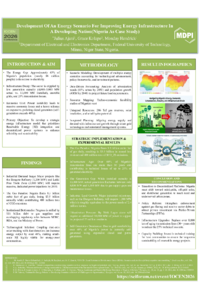
Development Of An Energy Scenario For Improving Energy Infrastructure In A Developing Nation(Nigeria As Case Study)_Poster.pdf
Influence of Torrefaction Temperature and Residence Time on the Physicochemical Properties and Structural Transformation of Market Waste-Derived Torrefied Solid Fuel
A Comparative Assessment of Nanostructured Adsorbents for Direct Air Capture