Event submissions
Published
This submission belongs to the session S8. AI Applications to Energy Conversion Systems of the event The 3rd International Online Conference on Energies
Published date
07 May, 2026
Academic Editor
'%3e%3cpath%20d='M12.6657%2010.9104C12.4185%2010.325%2012.0599%209.79327%2011.6097%209.34482C11.1609%208.89508%2010.6293%208.5365%2010.0442%208.28888C10.0389%208.28626%2010.0337%208.28495%2010.0285%208.28233C10.8446%207.69279%2011.3752%206.73249%2011.3752%205.64904C11.3752%203.8542%209.92103%202.39999%208.1262%202.39999C6.33136%202.39999%204.87715%203.8542%204.87715%205.64904C4.87715%206.73249%205.40774%207.69279%206.22393%208.28364C6.21869%208.28626%206.21345%208.28757%206.20821%208.29019C5.62129%208.5378%205.09463%208.89284%204.64265%209.34613C4.1929%209.79493%203.83432%2010.3266%203.58671%2010.9117C3.34345%2011.4845%203.21226%2012.0987%203.20023%2012.7209C3.19988%2012.7349%203.20233%2012.7488%203.20744%2012.7619C3.21255%2012.7749%203.22022%2012.7867%203.22998%2012.7968C3.23975%2012.8068%203.25142%2012.8147%203.26431%2012.8202C3.2772%2012.8256%203.29105%2012.8284%203.30504%2012.8284H4.09109C4.14874%2012.8284%204.19459%2012.7825%204.1959%2012.7262C4.2221%2011.7148%204.62823%2010.7676%205.34617%2010.0497C6.08899%209.30683%207.0755%208.89808%208.1262%208.89808C9.17689%208.89808%2010.1634%209.30683%2010.9062%2010.0497C11.6242%2010.7676%2012.0303%2011.7148%2012.0565%2012.7262C12.0578%2012.7838%2012.1037%2012.8284%2012.1613%2012.8284H12.9474C12.9613%2012.8284%2012.9752%2012.8256%2012.9881%2012.8202C13.001%2012.8147%2013.0126%2012.8068%2013.0224%2012.7968C13.0322%2012.7867%2013.0398%2012.7749%2013.0449%2012.7619C13.0501%2012.7488%2013.0525%2012.7349%2013.0522%2012.7209C13.0391%2012.0947%2012.9094%2011.4855%2012.6657%2010.9104ZM8.1262%207.9024C7.52486%207.9024%206.9589%207.6679%206.53312%207.24211C6.10733%206.81633%205.87283%206.25037%205.87283%205.64904C5.87283%205.0477%206.10733%204.48174%206.53312%204.05596C6.9589%203.63018%207.52486%203.39567%208.1262%203.39567C8.72753%203.39567%209.29349%203.63018%209.71927%204.05596C10.1451%204.48174%2010.3796%205.0477%2010.3796%205.64904C10.3796%206.25037%2010.1451%206.81633%209.71927%207.24211C9.29349%207.6679%208.72753%207.9024%208.1262%207.9024Z'%20fill='%235D1EE1'/%3e%3c/g%3e%3c/svg%3e) Enrico Sciubba
Enrico SciubbaCitation
Hirak Modi, Veera Gnaneswar Gude, Securing Critical Energy Infrastructure: Cyber Risks, Challenges, and Defense Strategies in the Digital Era, in Proceedings of The 3rd International Online Conference on Energies, 12 May–15 May 2026, MDPI: Basel, Switzerland
Share
Email
Facebook
Twitter
LinkedIn
Securing Critical Energy Infrastructure: Cyber Risks, Challenges, and Defense Strategies in the Digital Era
'%3e%3cpath%20d='M12.6647%2010.9104C12.4176%2010.325%2012.0589%209.7933%2011.6088%209.34485C11.16%208.89511%2010.6283%208.53653%2010.0432%208.28891C10.038%208.28629%2010.0327%208.28498%2010.0275%208.28236C10.8437%207.69282%2011.3743%206.73252%2011.3743%205.64907C11.3743%203.85423%209.92005%202.40002%208.12522%202.40002C6.33038%202.40002%204.87618%203.85423%204.87618%205.64907C4.87618%206.73252%205.40677%207.69282%206.22296%208.28367C6.21772%208.28629%206.21248%208.2876%206.20724%208.29022C5.62031%208.53783%205.09365%208.89287%204.64167%209.34616C4.19192%209.79496%203.83334%2010.3266%203.58573%2010.9117C3.34247%2011.4846%203.21128%2012.0987%203.19925%2012.721C3.1989%2012.735%203.20135%2012.7489%203.20646%2012.7619C3.21157%2012.7749%203.21924%2012.7868%203.22901%2012.7968C3.23877%2012.8068%203.25045%2012.8148%203.26334%2012.8202C3.27623%2012.8256%203.29007%2012.8284%203.30406%2012.8284H4.09012C4.14776%2012.8284%204.19362%2012.7825%204.19493%2012.7262C4.22113%2011.7148%204.62726%2010.7676%205.34519%2010.0497C6.08802%209.30686%207.07452%208.89811%208.12522%208.89811C9.17592%208.89811%2010.1624%209.30686%2010.9052%2010.0497C11.6232%2010.7676%2012.0293%2011.7148%2012.0555%2012.7262C12.0568%2012.7839%2012.1027%2012.8284%2012.1603%2012.8284H12.9464C12.9604%2012.8284%2012.9742%2012.8256%2012.9871%2012.8202C13%2012.8148%2013.0117%2012.8068%2013.0214%2012.7968C13.0312%2012.7868%2013.0389%2012.7749%2013.044%2012.7619C13.0491%2012.7489%2013.0515%2012.735%2013.0512%2012.721C13.0381%2012.0947%2012.9084%2011.4856%2012.6647%2010.9104ZM8.12522%207.90243C7.52388%207.90243%206.95792%207.66793%206.53214%207.24215C6.10636%206.81636%205.87185%206.2504%205.87185%205.64907C5.87185%205.04773%206.10636%204.48177%206.53214%204.05599C6.95792%203.63021%207.52388%203.3957%208.12522%203.3957C8.72655%203.3957%209.29252%203.63021%209.7183%204.05599C10.1441%204.48177%2010.3786%205.04773%2010.3786%205.64907C10.3786%206.2504%2010.1441%206.81636%209.7183%207.24215C9.29252%207.66793%208.72655%207.90243%208.12522%207.90243Z'%20fill='%235D1EE1'/%3e%3c/g%3e%3c/svg%3e)
Hirak Modi 1,2

Veera Gnaneswar Gude 1,3,4
1. Purdue University Northwest Water Institute, Purdue University Northwest, Hammond, IN 46323, USA
2. Department of Computer Science, Purdue University Northwest, Hammond, IN 46323, USA
3. Department of Mechanical and Civil Engineering, Purdue University Northwest, Hammond, IN 46323, USA
4. School of Sustainability Engineering and Environmental Engineering, Purdue University, West Lafayette, IN 47907, USA
Abstract
The rapid digitalization of the energy sector has improved operational efficiency but significantly increased exposure to cyber threats against critical infrastructure. Recent analyses indicate that reported cyberattacks on energy assets more than doubled between 2019 and 2023, with ransomware accounting for nearly 40% of incidents. Individual attacks, such as the Colonial Pipeline breach, caused multi-day fuel disruptions and ransom payments totaling more than USD 4 million. Automation is rapidly expanding in energy sectors, including bioenergy and renewable energy power plants, where digital control systems improve efficiency and reliability. However, cybersecurity risks in these critical infrastructures remain less understood, with limited awareness among operators and engineers. To address this knowledge gap, this research examines potential cyber threats targeting power control systems and evaluates their impacts on process safety and energy security. Understanding these challenges is essential to ensure resilient and secure operations as facilities become more interconnected. This study provides valuable insights into emerging vulnerabilities, helping guide future risk mitigation strategies and strengthen the overall security of energy systems.
This study synthesizes cybersecurity risks, challenges, and mitigation strategies across oil and gas, electricity, nuclear, and renewable energy systems. Key challenges include securing legacy industrial control systems and virtual power plants, managing complex cloud-based and highly interconnected architectures, and addressing systemic gaps in workforce skills, governance, and security culture. The analysis highlights advanced detection and response strategies leveraging artificial intelligence and machine learning, multi-criteria decision-making methods for cyber-risk prioritization, and edge-based security architectures for distributed generation as promising technical approaches. In parallel, the study underscores the need for harmonized international standards, sector-specific regulation, continuous cyber exercises, and robust public–private partnerships to enhance resilience. Overall, the findings argue for a proactive, adaptive cybersecurity posture that integrates technical, organizational, and policy measures to safeguard critical energy assets and ensure a reliable, sustainable energy supply.
Keywords
cybersecurity
energy infrastructure
risk
Poster
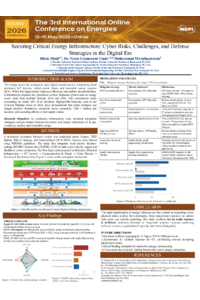
sciForum Poster HM GG.pdf
Deep Learning-Driven Real-Time Optimization for Improved Exergy Efficiency in Hybrid Renewable Energy Conversion Systems
Machine Learning-Based Predictive Maintenance Framework for Performance Degradation Detection in Energy Conversion Systems