Event submissions
Published
This submission belongs to the session S5. Urban Resilience and Adaptation of the event The 1st International Online Conference on Urban Sciences
Published date
15 May, 2026
Academic Editor
'%3e%3cpath%20d='M12.6657%2010.9104C12.4185%2010.325%2012.0599%209.79327%2011.6097%209.34482C11.1609%208.89508%2010.6293%208.5365%2010.0442%208.28888C10.0389%208.28626%2010.0337%208.28495%2010.0285%208.28233C10.8446%207.69279%2011.3752%206.73249%2011.3752%205.64904C11.3752%203.8542%209.92103%202.39999%208.1262%202.39999C6.33136%202.39999%204.87715%203.8542%204.87715%205.64904C4.87715%206.73249%205.40774%207.69279%206.22393%208.28364C6.21869%208.28626%206.21345%208.28757%206.20821%208.29019C5.62129%208.5378%205.09463%208.89284%204.64265%209.34613C4.1929%209.79493%203.83432%2010.3266%203.58671%2010.9117C3.34345%2011.4845%203.21226%2012.0987%203.20023%2012.7209C3.19988%2012.7349%203.20233%2012.7488%203.20744%2012.7619C3.21255%2012.7749%203.22022%2012.7867%203.22998%2012.7968C3.23975%2012.8068%203.25142%2012.8147%203.26431%2012.8202C3.2772%2012.8256%203.29105%2012.8284%203.30504%2012.8284H4.09109C4.14874%2012.8284%204.19459%2012.7825%204.1959%2012.7262C4.2221%2011.7148%204.62823%2010.7676%205.34617%2010.0497C6.08899%209.30683%207.0755%208.89808%208.1262%208.89808C9.17689%208.89808%2010.1634%209.30683%2010.9062%2010.0497C11.6242%2010.7676%2012.0303%2011.7148%2012.0565%2012.7262C12.0578%2012.7838%2012.1037%2012.8284%2012.1613%2012.8284H12.9474C12.9613%2012.8284%2012.9752%2012.8256%2012.9881%2012.8202C13.001%2012.8147%2013.0126%2012.8068%2013.0224%2012.7968C13.0322%2012.7867%2013.0398%2012.7749%2013.0449%2012.7619C13.0501%2012.7488%2013.0525%2012.7349%2013.0522%2012.7209C13.0391%2012.0947%2012.9094%2011.4855%2012.6657%2010.9104ZM8.1262%207.9024C7.52486%207.9024%206.9589%207.6679%206.53312%207.24211C6.10733%206.81633%205.87283%206.25037%205.87283%205.64904C5.87283%205.0477%206.10733%204.48174%206.53312%204.05596C6.9589%203.63018%207.52486%203.39567%208.1262%203.39567C8.72753%203.39567%209.29349%203.63018%209.71927%204.05596C10.1451%204.48174%2010.3796%205.0477%2010.3796%205.64904C10.3796%206.25037%2010.1451%206.81633%209.71927%207.24211C9.29349%207.6679%208.72753%207.9024%208.1262%207.9024Z'%20fill='%235D1EE1'/%3e%3c/g%3e%3c/svg%3e) Teodoro Georgiadis
Teodoro GeorgiadisCitation
Lucia Mondanelli, Paolo Cherubini, Fabio Salbitano, Saurer Matthias, Marcal Guillong, Oliver Bachmann, Claudia Cocozza, Urban tree responses to climate and pollution: implications for environmental monitoring and management, in Proceedings of The 1st International Online Conference on Urban Sciences, 20 May–22 May 2026, MDPI: Basel, Switzerland
Share
Email
Facebook
Twitter
LinkedIn
Urban tree responses to climate and pollution: implications for environmental monitoring and management
'%3e%3cpath%20d='M12.6647%2010.9104C12.4176%2010.325%2012.0589%209.7933%2011.6088%209.34485C11.16%208.89511%2010.6283%208.53653%2010.0432%208.28891C10.038%208.28629%2010.0327%208.28498%2010.0275%208.28236C10.8437%207.69282%2011.3743%206.73252%2011.3743%205.64907C11.3743%203.85423%209.92005%202.40002%208.12522%202.40002C6.33038%202.40002%204.87618%203.85423%204.87618%205.64907C4.87618%206.73252%205.40677%207.69282%206.22296%208.28367C6.21772%208.28629%206.21248%208.2876%206.20724%208.29022C5.62031%208.53783%205.09365%208.89287%204.64167%209.34616C4.19192%209.79496%203.83334%2010.3266%203.58573%2010.9117C3.34247%2011.4846%203.21128%2012.0987%203.19925%2012.721C3.1989%2012.735%203.20135%2012.7489%203.20646%2012.7619C3.21157%2012.7749%203.21924%2012.7868%203.22901%2012.7968C3.23877%2012.8068%203.25045%2012.8148%203.26334%2012.8202C3.27623%2012.8256%203.29007%2012.8284%203.30406%2012.8284H4.09012C4.14776%2012.8284%204.19362%2012.7825%204.19493%2012.7262C4.22113%2011.7148%204.62726%2010.7676%205.34519%2010.0497C6.08802%209.30686%207.07452%208.89811%208.12522%208.89811C9.17592%208.89811%2010.1624%209.30686%2010.9052%2010.0497C11.6232%2010.7676%2012.0293%2011.7148%2012.0555%2012.7262C12.0568%2012.7839%2012.1027%2012.8284%2012.1603%2012.8284H12.9464C12.9604%2012.8284%2012.9742%2012.8256%2012.9871%2012.8202C13%2012.8148%2013.0117%2012.8068%2013.0214%2012.7968C13.0312%2012.7868%2013.0389%2012.7749%2013.044%2012.7619C13.0491%2012.7489%2013.0515%2012.735%2013.0512%2012.721C13.0381%2012.0947%2012.9084%2011.4856%2012.6647%2010.9104ZM8.12522%207.90243C7.52388%207.90243%206.95792%207.66793%206.53214%207.24215C6.10636%206.81636%205.87185%206.2504%205.87185%205.64907C5.87185%205.04773%206.10636%204.48177%206.53214%204.05599C6.95792%203.63021%207.52388%203.3957%208.12522%203.3957C8.72655%203.3957%209.29252%203.63021%209.7183%204.05599C10.1441%204.48177%2010.3786%205.04773%2010.3786%205.64907C10.3786%206.2504%2010.1441%206.81636%209.7183%207.24215C9.29252%207.66793%208.72655%207.90243%208.12522%207.90243Z'%20fill='%235D1EE1'/%3e%3c/g%3e%3c/svg%3e)
Lucia Mondanelli 1
Paolo Cherubini 2
Fabio Salbitano 3
Saurer Matthias 2
Marcal Guillong 4
Oliver Bachmann 4

Claudia Cocozza 1
1. Department of Agriculture, Food, Environment and Forestry (DAGRI), University of Firenze, Via San Bonaventura 13, 50145 Firenze, Italy
2. Swiss Federal Research Institute WSL, Zürcherstrasse 111, 8903 Birmensdorf, Switzerland.
3. Department of Agricultural Science, University of Sassari, Viale Italia 39/a, 07100 Sassari, Italy.
4. Institute of Geochemistry and Petrology, ETH, Clausiusstrasse 25, 8092 Zurich, Switzerland
Abstract
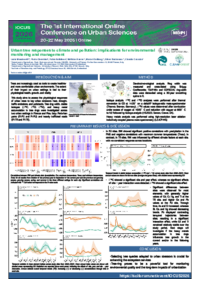
Trees mitigate climate change and enhance urban livability, though their effectiveness depends on health and growth. While exposed to altered climates and pollution, urban tree responses remain insufficiently quantified. This dendroecological study assesses how climate and pollution shape tree performance across contrasting contexts in central Italy, investigating peri-urban, traffic-dominated, and airport-influenced sites in Florence and Pisa. Tree-ring width (TRW) was measured to quantify growth variability, while stable carbon (δ¹³C) and oxygen (δ¹⁸O) isotopes were analyzed to infer changes in intrinsic water-use efficiency, photosynthetic activity, and stomatal regulation. Nitrogen stable isotopes (δ¹⁵N) traced pollution inputs from vehicular emissions. Additionally, macronutrients, trace elements, and heavy metals were determined using Laser Ablation Inductively Coupled Plasma Mass Spectrometry (LA-ICP-MS) to characterize spatial patterns of elemental accumulation linked to local pollution. A previous study showed that in urban parks, high temperatures and low rainfall affected tree physiology more than pollution, even though overall growth was not directly impaired. Carbon and oxygen isotopes highlighted this sensitivity to heat and drought, while the pollution indicator remained similar across urban and periurban parks. By integrating growth, stable isotopes, and elemental analyses, the present study demonstrates the potential of urban trees as effective long-term bioindicators of climatic stress and pollution. We expect reduced growth rates and higher intrinsic water-use efficiency in urban trees, reflecting heat and drought stress, alongside enriched δ¹⁵N and elevated heavy metal concentrations. Ultimately, this study aims to emphasize the need to select climate-adapted species to maximize urban ecosystem services. Because cities currently experience the hotter, drier conditions expected globally in the future, they act as living laboratories for studying plant responses to climate change.
Keywords
Dendroecology
Urban trees
Stable isotopes
Climate change
Anthropogenic pollution
Heavy metals
Poster
POSTER IOCUS.pdf
Operationalizing Creative Diversity as a Multi-scale Diagnostic Framework for Urban Resilience
LAND USE TRANSFORMATION IN COASTAL SEAWEED FARMING VILLAGES: SPATIAL AND SOCIAL PERSPECTIVES