Event submissions
Published
This submission belongs to the session S2. Aging, Childhood and Youth Studies of the event The 1st International Online Conference on Social Sciences
Published date
25 May, 2026
Academic Editor
'%3e%3cpath%20d='M12.6657%2010.9104C12.4185%2010.325%2012.0599%209.79327%2011.6097%209.34482C11.1609%208.89508%2010.6293%208.5365%2010.0442%208.28888C10.0389%208.28626%2010.0337%208.28495%2010.0285%208.28233C10.8446%207.69279%2011.3752%206.73249%2011.3752%205.64904C11.3752%203.8542%209.92103%202.39999%208.1262%202.39999C6.33136%202.39999%204.87715%203.8542%204.87715%205.64904C4.87715%206.73249%205.40774%207.69279%206.22393%208.28364C6.21869%208.28626%206.21345%208.28757%206.20821%208.29019C5.62129%208.5378%205.09463%208.89284%204.64265%209.34613C4.1929%209.79493%203.83432%2010.3266%203.58671%2010.9117C3.34345%2011.4845%203.21226%2012.0987%203.20023%2012.7209C3.19988%2012.7349%203.20233%2012.7488%203.20744%2012.7619C3.21255%2012.7749%203.22022%2012.7867%203.22998%2012.7968C3.23975%2012.8068%203.25142%2012.8147%203.26431%2012.8202C3.2772%2012.8256%203.29105%2012.8284%203.30504%2012.8284H4.09109C4.14874%2012.8284%204.19459%2012.7825%204.1959%2012.7262C4.2221%2011.7148%204.62823%2010.7676%205.34617%2010.0497C6.08899%209.30683%207.0755%208.89808%208.1262%208.89808C9.17689%208.89808%2010.1634%209.30683%2010.9062%2010.0497C11.6242%2010.7676%2012.0303%2011.7148%2012.0565%2012.7262C12.0578%2012.7838%2012.1037%2012.8284%2012.1613%2012.8284H12.9474C12.9613%2012.8284%2012.9752%2012.8256%2012.9881%2012.8202C13.001%2012.8147%2013.0126%2012.8068%2013.0224%2012.7968C13.0322%2012.7867%2013.0398%2012.7749%2013.0449%2012.7619C13.0501%2012.7488%2013.0525%2012.7349%2013.0522%2012.7209C13.0391%2012.0947%2012.9094%2011.4855%2012.6657%2010.9104ZM8.1262%207.9024C7.52486%207.9024%206.9589%207.6679%206.53312%207.24211C6.10733%206.81633%205.87283%206.25037%205.87283%205.64904C5.87283%205.0477%206.10733%204.48174%206.53312%204.05596C6.9589%203.63018%207.52486%203.39567%208.1262%203.39567C8.72753%203.39567%209.29349%203.63018%209.71927%204.05596C10.1451%204.48174%2010.3796%205.0477%2010.3796%205.64904C10.3796%206.25037%2010.1451%206.81633%209.71927%207.24211C9.29349%207.6679%208.72753%207.9024%208.1262%207.9024Z'%20fill='%235D1EE1'/%3e%3c/g%3e%3c/svg%3e) Louis Moustakas
Louis MoustakasCitation
Haeun Kim, Helix Lo, Promoting Global Citizenship among Youth in Asia: An Investigation of the Social Studies Curriculum in South Korea and Taiwan, in Proceedings of The 1st International Online Conference on Social Sciences, 28 May–29 May 2026, MDPI: Basel, Switzerland
Share
Email
Facebook
Twitter
LinkedIn
Promoting Global Citizenship among Youth in Asia: An Investigation of the Social Studies Curriculum in South Korea and Taiwan
'%3e%3cpath%20d='M12.6647%2010.9104C12.4176%2010.325%2012.0589%209.7933%2011.6088%209.34485C11.16%208.89511%2010.6283%208.53653%2010.0432%208.28891C10.038%208.28629%2010.0327%208.28498%2010.0275%208.28236C10.8437%207.69282%2011.3743%206.73252%2011.3743%205.64907C11.3743%203.85423%209.92005%202.40002%208.12522%202.40002C6.33038%202.40002%204.87618%203.85423%204.87618%205.64907C4.87618%206.73252%205.40677%207.69282%206.22296%208.28367C6.21772%208.28629%206.21248%208.2876%206.20724%208.29022C5.62031%208.53783%205.09365%208.89287%204.64167%209.34616C4.19192%209.79496%203.83334%2010.3266%203.58573%2010.9117C3.34247%2011.4846%203.21128%2012.0987%203.19925%2012.721C3.1989%2012.735%203.20135%2012.7489%203.20646%2012.7619C3.21157%2012.7749%203.21924%2012.7868%203.22901%2012.7968C3.23877%2012.8068%203.25045%2012.8148%203.26334%2012.8202C3.27623%2012.8256%203.29007%2012.8284%203.30406%2012.8284H4.09012C4.14776%2012.8284%204.19362%2012.7825%204.19493%2012.7262C4.22113%2011.7148%204.62726%2010.7676%205.34519%2010.0497C6.08802%209.30686%207.07452%208.89811%208.12522%208.89811C9.17592%208.89811%2010.1624%209.30686%2010.9052%2010.0497C11.6232%2010.7676%2012.0293%2011.7148%2012.0555%2012.7262C12.0568%2012.7839%2012.1027%2012.8284%2012.1603%2012.8284H12.9464C12.9604%2012.8284%2012.9742%2012.8256%2012.9871%2012.8202C13%2012.8148%2013.0117%2012.8068%2013.0214%2012.7968C13.0312%2012.7868%2013.0389%2012.7749%2013.044%2012.7619C13.0491%2012.7489%2013.0515%2012.735%2013.0512%2012.721C13.0381%2012.0947%2012.9084%2011.4856%2012.6647%2010.9104ZM8.12522%207.90243C7.52388%207.90243%206.95792%207.66793%206.53214%207.24215C6.10636%206.81636%205.87185%206.2504%205.87185%205.64907C5.87185%205.04773%206.10636%204.48177%206.53214%204.05599C6.95792%203.63021%207.52388%203.3957%208.12522%203.3957C8.72655%203.3957%209.29252%203.63021%209.7183%204.05599C10.1441%204.48177%2010.3786%205.04773%2010.3786%205.64907C10.3786%206.2504%2010.1441%206.81636%209.7183%207.24215C9.29252%207.66793%208.72655%207.90243%208.12522%207.90243Z'%20fill='%235D1EE1'/%3e%3c/g%3e%3c/svg%3e)
Haeun Kim 1
Helix Lo 2
1. Department of Language and Information Sciences, Graduate Program on Human Security, Graduate School of Arts and Sciences, Komaba Campus, The University of Tokyo, Tokyo, 3-8-1 Komaba, Meguro-ku, Tokyo 153-8902, Japan.
2. Graduate School of Arts and Sciences, The University of Tokyo, Tokyo, 3-8-1 Komaba, Meguro-ku, Tokyo 153-8902, Japan.
Abstract
The cultivation of young people who actively participate in global affairs is one of the most important goals within contemporary liberal democratic societies. In the Eastern context, existing discourse suggests that the presence of Asian values represents a unique challenge to the promotion of global citizenship. The values and qualities it promotes may stand in contrast to those required for global citizenship, such as obedience and harmony (in contrast to critical thinking and social change) and the primacy of the nation-state (in contrast to global orientation). This study examines what values and citizenship attributes are promoted in Social Studies in South Korea and Taiwan, two Asian-Confucian democracies that were formerly Japanese colonies and democratized in the late 1980s and 1990s. It seeks to understand (1) the extent to which globality, human rights, peace, and sustainability are promoted; (2) whether obligations are prioritized over rights; and (3) how these contents are framed or shaped by geopolitical contexts. This study employs discourse analysis of the latest national Social Studies curricula in Taiwan (2019) and South Korea (2022), comprising over 320,000 words, and integrates both quantitative and qualitative analytical methods. Social Studies was chosen based on its central role in fostering future citizens in both countries. The findings indicate that both curricula emphasize global citizenship values and do not privilege Asian Values. However, clear differences remain between the countries: the Taiwanese curriculum foregrounds “rights” more frequently, whereas the Korean curriculum places greater emphasis on “peace” and “democracy". Notably, while both curricula frequently mention “global”/“international”, the Taiwanese curriculum places greater emphasis on the “country” compared to Korea. This study contributes to the understanding of Asian values in contemporary contexts and in relation to global citizenship, and calls for further research on how geopolitics shape formal citizenship education in fostering young citizens.
Keywords
Youth Citizenship
Global Citizenship Education
Human Rights
Asian Democracies
Discourse Analysis
Poster
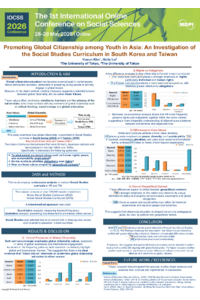
Haeun Kim&Helix Lo, Poster Presentation.pdf
Technology-Facilitated Intimate Partner Sexual Violence: An Empirical Study on Socio-Techno Patterns, Prevalence, and Impacts Among Survivors of Intimate Partner Violence (IPV)
A Reinforcement learning Approach for Climate Change Adaptation and Policy: Using Deep Q-Network for Multi-Sectorial Resilience in Kitui County, Kenya