Event submissions
Published
This submission belongs to the session S2. Aging, Childhood and Youth Studies of the event The 1st International Online Conference on Social Sciences
Published date
25 May, 2026
Academic Editor
'%3e%3cpath%20d='M12.6657%2010.9104C12.4185%2010.325%2012.0599%209.79327%2011.6097%209.34482C11.1609%208.89508%2010.6293%208.5365%2010.0442%208.28888C10.0389%208.28626%2010.0337%208.28495%2010.0285%208.28233C10.8446%207.69279%2011.3752%206.73249%2011.3752%205.64904C11.3752%203.8542%209.92103%202.39999%208.1262%202.39999C6.33136%202.39999%204.87715%203.8542%204.87715%205.64904C4.87715%206.73249%205.40774%207.69279%206.22393%208.28364C6.21869%208.28626%206.21345%208.28757%206.20821%208.29019C5.62129%208.5378%205.09463%208.89284%204.64265%209.34613C4.1929%209.79493%203.83432%2010.3266%203.58671%2010.9117C3.34345%2011.4845%203.21226%2012.0987%203.20023%2012.7209C3.19988%2012.7349%203.20233%2012.7488%203.20744%2012.7619C3.21255%2012.7749%203.22022%2012.7867%203.22998%2012.7968C3.23975%2012.8068%203.25142%2012.8147%203.26431%2012.8202C3.2772%2012.8256%203.29105%2012.8284%203.30504%2012.8284H4.09109C4.14874%2012.8284%204.19459%2012.7825%204.1959%2012.7262C4.2221%2011.7148%204.62823%2010.7676%205.34617%2010.0497C6.08899%209.30683%207.0755%208.89808%208.1262%208.89808C9.17689%208.89808%2010.1634%209.30683%2010.9062%2010.0497C11.6242%2010.7676%2012.0303%2011.7148%2012.0565%2012.7262C12.0578%2012.7838%2012.1037%2012.8284%2012.1613%2012.8284H12.9474C12.9613%2012.8284%2012.9752%2012.8256%2012.9881%2012.8202C13.001%2012.8147%2013.0126%2012.8068%2013.0224%2012.7968C13.0322%2012.7867%2013.0398%2012.7749%2013.0449%2012.7619C13.0501%2012.7488%2013.0525%2012.7349%2013.0522%2012.7209C13.0391%2012.0947%2012.9094%2011.4855%2012.6657%2010.9104ZM8.1262%207.9024C7.52486%207.9024%206.9589%207.6679%206.53312%207.24211C6.10733%206.81633%205.87283%206.25037%205.87283%205.64904C5.87283%205.0477%206.10733%204.48174%206.53312%204.05596C6.9589%203.63018%207.52486%203.39567%208.1262%203.39567C8.72753%203.39567%209.29349%203.63018%209.71927%204.05596C10.1451%204.48174%2010.3796%205.0477%2010.3796%205.64904C10.3796%206.25037%2010.1451%206.81633%209.71927%207.24211C9.29349%207.6679%208.72753%207.9024%208.1262%207.9024Z'%20fill='%235D1EE1'/%3e%3c/g%3e%3c/svg%3e) Daniel McCarthy
Daniel McCarthyCitation
Najoua Khayati, Abdelali Lahrech, Navigating the digital divide: Technological Change and the Future of Youth Agricultural Entrepreneurship in Morocco, in Proceedings of The 1st International Online Conference on Social Sciences, 28 May–29 May 2026, MDPI: Basel, Switzerland
Share
Email
Facebook
Twitter
LinkedIn
Navigating the digital divide: Technological Change and the Future of Youth Agricultural Entrepreneurship in Morocco
'%3e%3cpath%20d='M12.6647%2010.9104C12.4176%2010.325%2012.0589%209.7933%2011.6088%209.34485C11.16%208.89511%2010.6283%208.53653%2010.0432%208.28891C10.038%208.28629%2010.0327%208.28498%2010.0275%208.28236C10.8437%207.69282%2011.3743%206.73252%2011.3743%205.64907C11.3743%203.85423%209.92005%202.40002%208.12522%202.40002C6.33038%202.40002%204.87618%203.85423%204.87618%205.64907C4.87618%206.73252%205.40677%207.69282%206.22296%208.28367C6.21772%208.28629%206.21248%208.2876%206.20724%208.29022C5.62031%208.53783%205.09365%208.89287%204.64167%209.34616C4.19192%209.79496%203.83334%2010.3266%203.58573%2010.9117C3.34247%2011.4846%203.21128%2012.0987%203.19925%2012.721C3.1989%2012.735%203.20135%2012.7489%203.20646%2012.7619C3.21157%2012.7749%203.21924%2012.7868%203.22901%2012.7968C3.23877%2012.8068%203.25045%2012.8148%203.26334%2012.8202C3.27623%2012.8256%203.29007%2012.8284%203.30406%2012.8284H4.09012C4.14776%2012.8284%204.19362%2012.7825%204.19493%2012.7262C4.22113%2011.7148%204.62726%2010.7676%205.34519%2010.0497C6.08802%209.30686%207.07452%208.89811%208.12522%208.89811C9.17592%208.89811%2010.1624%209.30686%2010.9052%2010.0497C11.6232%2010.7676%2012.0293%2011.7148%2012.0555%2012.7262C12.0568%2012.7839%2012.1027%2012.8284%2012.1603%2012.8284H12.9464C12.9604%2012.8284%2012.9742%2012.8256%2012.9871%2012.8202C13%2012.8148%2013.0117%2012.8068%2013.0214%2012.7968C13.0312%2012.7868%2013.0389%2012.7749%2013.044%2012.7619C13.0491%2012.7489%2013.0515%2012.735%2013.0512%2012.721C13.0381%2012.0947%2012.9084%2011.4856%2012.6647%2010.9104ZM8.12522%207.90243C7.52388%207.90243%206.95792%207.66793%206.53214%207.24215C6.10636%206.81636%205.87185%206.2504%205.87185%205.64907C5.87185%205.04773%206.10636%204.48177%206.53214%204.05599C6.95792%203.63021%207.52388%203.3957%208.12522%203.3957C8.72655%203.3957%209.29252%203.63021%209.7183%204.05599C10.1441%204.48177%2010.3786%205.04773%2010.3786%205.64907C10.3786%206.2504%2010.1441%206.81636%209.7183%207.24215C9.29252%207.66793%208.72655%207.90243%208.12522%207.90243Z'%20fill='%235D1EE1'/%3e%3c/g%3e%3c/svg%3e)
Najoua Khayati 1
Abdelali Lahrech 1
1. Faculty of Law, Economics and Social sciences of Meknès, Moulay Ismail University, Meknès, 3102 Toulal, Morocco.
Abstract
Rapid technological integration is fundamentally reshaping global economies. In the Moroccan context, an ambitious digital strategy is aiming to modernize productive economic sectors. This research investigates the implications of digital transformation on youth agricultural entrepreneurship, addressing both transformative opportunities and structural risks. Accordingly, this study aims to examine the impact of technology on the multidimensional construct of agricultural productivity by analyzing both material yield optimization via precision tools and strategic market positioning via data analytics and logistics.
Adopting a qualitative multiple-case study design, this research focuses on the impact of technology adoption on youth-led agricultural startups across three Moroccan regions: Béni Mellal-Khénifra, Fès-Meknès, and Souss-Massa. The authors initially conducted a systematic review of national policy documents. Subsequently, they administered 25 semi-structured interviews purposively sampled to ensure multi-stakeholder representation: 12 young agricultural entrepreneurs, 6 government officials from the Ministry of Agriculture, 4 private agritech firm executives, and 3 NGO representatives.
The findings indicate a positive correlation between the adoption of remote sensing and market analytics and enhanced business viability. However, the definition of productivity remains dichotomous; while young entrepreneurs prioritize market-entry strategies and value-added processing, institutional support remains focused on material production. Furthermore, significant barriers to equitable adoption persist, including a lack of digital infrastructure, a misalignment between education and agritech requirements, and a paucity of funding mechanisms tailored to the high-risk nature of agricultural startups.
This research explores the role of technological adoption in supporting youth agricultural entrepreneurship based on the Resource-Based View framework and Value Chain Theory. Recommendations include pivoting toward an integrated digital ecosystem, investing in rural infrastructure, developing context-specific vocational training, and establishing regulatory frameworks for ethical data governance. Ultimately, revitalizing Moroccan agriculture requires a strategic reorientation from viewing technology as a mere production tool to treating it as a strategic catalyst for entrepreneurial growth and sustainability.
Keywords
Youth Entrepreneurship
Digital Divide
Agriculture
Technology adoption
Poster
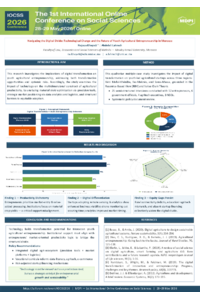
IOCSS2026_Poster sciforum-164812_Navigating the Digital Divide Technological Change and the Future of Youth Agricultural Entrepreneurship in Morocco.pdf
Embodiment, artificial intelligence, and digital emotions: a sociological perspective
Please Vote! Exploring Celebrities' Effect on Mobilising Young Voters in Japan