Event submissions
Published
This submission belongs to the session S6. Mathematics, Computer Science and Artificial Intelligence of the event The 2nd International Online Conference on Mathematics and Applications
Published date
04 Jun, 2026
Academic Editor
'%3e%3cpath%20d='M12.6657%2010.9104C12.4185%2010.325%2012.0599%209.79327%2011.6097%209.34482C11.1609%208.89508%2010.6293%208.5365%2010.0442%208.28888C10.0389%208.28626%2010.0337%208.28495%2010.0285%208.28233C10.8446%207.69279%2011.3752%206.73249%2011.3752%205.64904C11.3752%203.8542%209.92103%202.39999%208.1262%202.39999C6.33136%202.39999%204.87715%203.8542%204.87715%205.64904C4.87715%206.73249%205.40774%207.69279%206.22393%208.28364C6.21869%208.28626%206.21345%208.28757%206.20821%208.29019C5.62129%208.5378%205.09463%208.89284%204.64265%209.34613C4.1929%209.79493%203.83432%2010.3266%203.58671%2010.9117C3.34345%2011.4845%203.21226%2012.0987%203.20023%2012.7209C3.19988%2012.7349%203.20233%2012.7488%203.20744%2012.7619C3.21255%2012.7749%203.22022%2012.7867%203.22998%2012.7968C3.23975%2012.8068%203.25142%2012.8147%203.26431%2012.8202C3.2772%2012.8256%203.29105%2012.8284%203.30504%2012.8284H4.09109C4.14874%2012.8284%204.19459%2012.7825%204.1959%2012.7262C4.2221%2011.7148%204.62823%2010.7676%205.34617%2010.0497C6.08899%209.30683%207.0755%208.89808%208.1262%208.89808C9.17689%208.89808%2010.1634%209.30683%2010.9062%2010.0497C11.6242%2010.7676%2012.0303%2011.7148%2012.0565%2012.7262C12.0578%2012.7838%2012.1037%2012.8284%2012.1613%2012.8284H12.9474C12.9613%2012.8284%2012.9752%2012.8256%2012.9881%2012.8202C13.001%2012.8147%2013.0126%2012.8068%2013.0224%2012.7968C13.0322%2012.7867%2013.0398%2012.7749%2013.0449%2012.7619C13.0501%2012.7488%2013.0525%2012.7349%2013.0522%2012.7209C13.0391%2012.0947%2012.9094%2011.4855%2012.6657%2010.9104ZM8.1262%207.9024C7.52486%207.9024%206.9589%207.6679%206.53312%207.24211C6.10733%206.81633%205.87283%206.25037%205.87283%205.64904C5.87283%205.0477%206.10733%204.48174%206.53312%204.05596C6.9589%203.63018%207.52486%203.39567%208.1262%203.39567C8.72753%203.39567%209.29349%203.63018%209.71927%204.05596C10.1451%204.48174%2010.3796%205.0477%2010.3796%205.64904C10.3796%206.25037%2010.1451%206.81633%209.71927%207.24211C9.29349%207.6679%208.72753%207.9024%208.1262%207.9024Z'%20fill='%235D1EE1'/%3e%3c/g%3e%3c/svg%3e) Marjan Mernik
Marjan MernikCitation
Fatima OUAAR, Safia OUAAR, Temporal Graph Neural Architectures for Predicting State-Administered Energy Prices: A Deep Learning Framework for Geopolitically Volatile Markets, in Proceedings of The 2nd International Online Conference on Mathematics and Applications, 10 June–12 June 2026, MDPI: Basel, Switzerland
Share
Email
Facebook
Twitter
LinkedIn
Temporal Graph Neural Architectures for Predicting State-Administered Energy Prices: A Deep Learning Framework for Geopolitically Volatile Markets
'%3e%3cpath%20d='M12.6647%2010.9104C12.4176%2010.325%2012.0589%209.7933%2011.6088%209.34485C11.16%208.89511%2010.6283%208.53653%2010.0432%208.28891C10.038%208.28629%2010.0327%208.28498%2010.0275%208.28236C10.8437%207.69282%2011.3743%206.73252%2011.3743%205.64907C11.3743%203.85423%209.92005%202.40002%208.12522%202.40002C6.33038%202.40002%204.87618%203.85423%204.87618%205.64907C4.87618%206.73252%205.40677%207.69282%206.22296%208.28367C6.21772%208.28629%206.21248%208.2876%206.20724%208.29022C5.62031%208.53783%205.09365%208.89287%204.64167%209.34616C4.19192%209.79496%203.83334%2010.3266%203.58573%2010.9117C3.34247%2011.4846%203.21128%2012.0987%203.19925%2012.721C3.1989%2012.735%203.20135%2012.7489%203.20646%2012.7619C3.21157%2012.7749%203.21924%2012.7868%203.22901%2012.7968C3.23877%2012.8068%203.25045%2012.8148%203.26334%2012.8202C3.27623%2012.8256%203.29007%2012.8284%203.30406%2012.8284H4.09012C4.14776%2012.8284%204.19362%2012.7825%204.19493%2012.7262C4.22113%2011.7148%204.62726%2010.7676%205.34519%2010.0497C6.08802%209.30686%207.07452%208.89811%208.12522%208.89811C9.17592%208.89811%2010.1624%209.30686%2010.9052%2010.0497C11.6232%2010.7676%2012.0293%2011.7148%2012.0555%2012.7262C12.0568%2012.7839%2012.1027%2012.8284%2012.1603%2012.8284H12.9464C12.9604%2012.8284%2012.9742%2012.8256%2012.9871%2012.8202C13%2012.8148%2013.0117%2012.8068%2013.0214%2012.7968C13.0312%2012.7868%2013.0389%2012.7749%2013.044%2012.7619C13.0491%2012.7489%2013.0515%2012.735%2013.0512%2012.721C13.0381%2012.0947%2012.9084%2011.4856%2012.6647%2010.9104ZM8.12522%207.90243C7.52388%207.90243%206.95792%207.66793%206.53214%207.24215C6.10636%206.81636%205.87185%206.2504%205.87185%205.64907C5.87185%205.04773%206.10636%204.48177%206.53214%204.05599C6.95792%203.63021%207.52388%203.3957%208.12522%203.3957C8.72655%203.3957%209.29252%203.63021%209.7183%204.05599C10.1441%204.48177%2010.3786%205.04773%2010.3786%205.64907C10.3786%206.2504%2010.1441%206.81636%209.7183%207.24215C9.29252%207.66793%208.72655%207.90243%208.12522%207.90243Z'%20fill='%235D1EE1'/%3e%3c/g%3e%3c/svg%3e)
Fatima OUAAR 1
Safia OUAAR 2
1. Laboratory of Mathematical Analysis, Probability and Optimization, Department of Mathematics, Faculty of Exact Sciences, University of Biskra, Biskra, BP 145 RP, 07000, Algeria
2. Department of Economics, Faculty of Economics, University of Biskra, Biskra, Algeria
Abstract
Background: Forecasting petroleum prices in state-administered markets presents unique challenges distinct from liberalized commodity exchanges. Algeria's hydrocarbon sector, accounting for 95% of export earnings, operates under administered pricing by the national oil company, creating irregular temporal dynamics, regime-dependent policy inertia, and geopolitical risk endogeneity that violate classical forecasting assumptions. Existing neural architectures fail to capture the institutional constraints and network effects of OPEC+ coordination.
Methods: We developed a novel three-tiered deep learning framework integrating: (1) a Phased Bidirectional Gated Recurrent Unit (GRU) encoder handling irregular policy sampling intervals through learnable temporal gates; (2) a conflict-gated graph convolution layer modeling Algeria as a node in a dynamic OPEC+ network with edge weights modulated by geopolitical instability and compliance correlation; and (3) a regime-aware Mixture Density Network (MDN) for uncertainty quantification during high-volatility episodes. The model was trained on proprietary daily Official Selling Prices (2010--2023) augmented with conflict intensity and shipping logistics data, using curriculum learning and multi-objective optimization combining negative log-likelihood with quantile calibration.
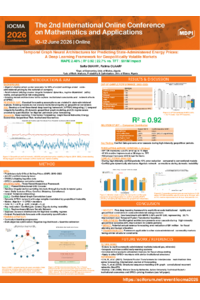
Results: The proposed architecture achieved a Mean Absolute Percentage Error (MAPE) of 2.48% and coefficient of determination (R^2) of 0.92 on out-of-sample testing (2022--2023), representing a 22.7% improvement over Temporal Fusion Transformer baselines. During high-intensity conflict periods, error metrics improved by 43% compared to conventional models. Ablation studies confirmed that each architectural component significantly contributes to robustness, with the conflict gate preventing error cascade during domestic instability episodes.
Conclusions: This work establishes a new benchmark for forecasting in administered energy markets by explicitly encoding institutional rigidity and geopolitical constraints. The framework provides actionable intelligence for fiscal planning, demonstrating potential annual revenue forecasting error reduction of 91 million dollars. The approach is transferable to other state-administered commodity markets facing similar structural challenges.
Keywords
Deep Learning
Time Series Forecasting
Graph Neural Networks
Energy Economics
Geopolitical Risk
Institutional Economics
Poster
OUAAR poster.pdf
An Optimized Accelerator for Option Pricing Using Monte Carlo Simulation on a GPU
Mathematical models for the mechanics of soft tissues: from linear elasticity to morpho-poroelasticity