Event submissions
Published
This submission belongs to the session S7. Novel Methods and Technologies for Research and Treatment of the event The 5th International Electronic Conference on Cancers
Published date
05 Jun, 2026
Academic Editor
'%3e%3cpath%20d='M12.6657%2010.9104C12.4185%2010.325%2012.0599%209.79327%2011.6097%209.34482C11.1609%208.89508%2010.6293%208.5365%2010.0442%208.28888C10.0389%208.28626%2010.0337%208.28495%2010.0285%208.28233C10.8446%207.69279%2011.3752%206.73249%2011.3752%205.64904C11.3752%203.8542%209.92103%202.39999%208.1262%202.39999C6.33136%202.39999%204.87715%203.8542%204.87715%205.64904C4.87715%206.73249%205.40774%207.69279%206.22393%208.28364C6.21869%208.28626%206.21345%208.28757%206.20821%208.29019C5.62129%208.5378%205.09463%208.89284%204.64265%209.34613C4.1929%209.79493%203.83432%2010.3266%203.58671%2010.9117C3.34345%2011.4845%203.21226%2012.0987%203.20023%2012.7209C3.19988%2012.7349%203.20233%2012.7488%203.20744%2012.7619C3.21255%2012.7749%203.22022%2012.7867%203.22998%2012.7968C3.23975%2012.8068%203.25142%2012.8147%203.26431%2012.8202C3.2772%2012.8256%203.29105%2012.8284%203.30504%2012.8284H4.09109C4.14874%2012.8284%204.19459%2012.7825%204.1959%2012.7262C4.2221%2011.7148%204.62823%2010.7676%205.34617%2010.0497C6.08899%209.30683%207.0755%208.89808%208.1262%208.89808C9.17689%208.89808%2010.1634%209.30683%2010.9062%2010.0497C11.6242%2010.7676%2012.0303%2011.7148%2012.0565%2012.7262C12.0578%2012.7838%2012.1037%2012.8284%2012.1613%2012.8284H12.9474C12.9613%2012.8284%2012.9752%2012.8256%2012.9881%2012.8202C13.001%2012.8147%2013.0126%2012.8068%2013.0224%2012.7968C13.0322%2012.7867%2013.0398%2012.7749%2013.0449%2012.7619C13.0501%2012.7488%2013.0525%2012.7349%2013.0522%2012.7209C13.0391%2012.0947%2012.9094%2011.4855%2012.6657%2010.9104ZM8.1262%207.9024C7.52486%207.9024%206.9589%207.6679%206.53312%207.24211C6.10733%206.81633%205.87283%206.25037%205.87283%205.64904C5.87283%205.0477%206.10733%204.48174%206.53312%204.05596C6.9589%203.63018%207.52486%203.39567%208.1262%203.39567C8.72753%203.39567%209.29349%203.63018%209.71927%204.05596C10.1451%204.48174%2010.3796%205.0477%2010.3796%205.64904C10.3796%206.25037%2010.1451%206.81633%209.71927%207.24211C9.29349%207.6679%208.72753%207.9024%208.1262%207.9024Z'%20fill='%235D1EE1'/%3e%3c/g%3e%3c/svg%3e) Guo-Min Li
Guo-Min LiCitation
Sara Munir, yasir Riaz, Emerging Strategies in Cancer Detection and Treatment: A Systematic Review of Immunotherapy, Gene Editing, and Artificial Intelligence, in Proceedings of The 5th International Electronic Conference on Cancers, 10 June–12 June 2026, MDPI: Basel, Switzerland
Share
Email
Facebook
Twitter
LinkedIn
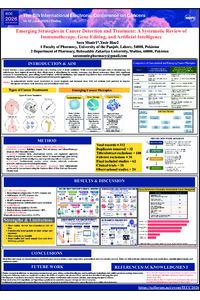
Emerging Strategies in Cancer Detection and Treatment: A Systematic Review of Immunotherapy, Gene Editing, and Artificial Intelligence
'%3e%3cpath%20d='M12.6647%2010.9104C12.4176%2010.325%2012.0589%209.7933%2011.6088%209.34485C11.16%208.89511%2010.6283%208.53653%2010.0432%208.28891C10.038%208.28629%2010.0327%208.28498%2010.0275%208.28236C10.8437%207.69282%2011.3743%206.73252%2011.3743%205.64907C11.3743%203.85423%209.92005%202.40002%208.12522%202.40002C6.33038%202.40002%204.87618%203.85423%204.87618%205.64907C4.87618%206.73252%205.40677%207.69282%206.22296%208.28367C6.21772%208.28629%206.21248%208.2876%206.20724%208.29022C5.62031%208.53783%205.09365%208.89287%204.64167%209.34616C4.19192%209.79496%203.83334%2010.3266%203.58573%2010.9117C3.34247%2011.4846%203.21128%2012.0987%203.19925%2012.721C3.1989%2012.735%203.20135%2012.7489%203.20646%2012.7619C3.21157%2012.7749%203.21924%2012.7868%203.22901%2012.7968C3.23877%2012.8068%203.25045%2012.8148%203.26334%2012.8202C3.27623%2012.8256%203.29007%2012.8284%203.30406%2012.8284H4.09012C4.14776%2012.8284%204.19362%2012.7825%204.19493%2012.7262C4.22113%2011.7148%204.62726%2010.7676%205.34519%2010.0497C6.08802%209.30686%207.07452%208.89811%208.12522%208.89811C9.17592%208.89811%2010.1624%209.30686%2010.9052%2010.0497C11.6232%2010.7676%2012.0293%2011.7148%2012.0555%2012.7262C12.0568%2012.7839%2012.1027%2012.8284%2012.1603%2012.8284H12.9464C12.9604%2012.8284%2012.9742%2012.8256%2012.9871%2012.8202C13%2012.8148%2013.0117%2012.8068%2013.0214%2012.7968C13.0312%2012.7868%2013.0389%2012.7749%2013.044%2012.7619C13.0491%2012.7489%2013.0515%2012.735%2013.0512%2012.721C13.0381%2012.0947%2012.9084%2011.4856%2012.6647%2010.9104ZM8.12522%207.90243C7.52388%207.90243%206.95792%207.66793%206.53214%207.24215C6.10636%206.81636%205.87185%206.2504%205.87185%205.64907C5.87185%205.04773%206.10636%204.48177%206.53214%204.05599C6.95792%203.63021%207.52388%203.3957%208.12522%203.3957C8.72655%203.3957%209.29252%203.63021%209.7183%204.05599C10.1441%204.48177%2010.3786%205.04773%2010.3786%205.64907C10.3786%206.2504%2010.1441%206.81636%209.7183%207.24215C9.29252%207.66793%208.72655%207.90243%208.12522%207.90243Z'%20fill='%235D1EE1'/%3e%3c/g%3e%3c/svg%3e)
Sara Munir 1
yasir Riaz 2
1. Faculty of Pharmacy, University of the Punjab, Lahore, 54000, Pakistan
2. Department of Pharmacy, Bahauddin Zakariya University, Multan, 60000, Pakistan
Abstract
Introduction: Cancer remains a leading cause of global mortality, with conventional therapies such as chemotherapy and radiotherapy limited by toxicity, resistance, and suboptimal efficacy. Since 2020, advances in immunotherapy, gene editing, liquid biopsy technologies, artificial intelligence, and targeted drug delivery systems have reshaped cancer management. This systematic review evaluates recent clinical and translational innovations
Methods: This review follows PRISMA 2020 guidelines. A systematic search of PubMed, Scopus, Web of Science, and ClinicalTrials.gov was conducted for studies published between January 2020 and December 2025. Search terms included: “cancer,” “immunotherapy,” “CRISPR,” “CAR-T,” “personalized mRNA vaccines,” “liquid biopsy,” “circulating tumor DNA,” and “artificial intelligence,” combined using Boolean operators (AND/OR). Inclusion criteria comprised clinical trials, observational studies, and regulatory approvals reporting measurable clinical outcomes. Exclusion criteria included preclinical-only studies, reviews, editorials, and non-peer-reviewed articles. Two reviewers independently conducted screening, data extraction, and risk-of-bias assessment using the Cochrane Risk of Bias tool and Newcastle–Ottawa Scale.
Results: From 312 initially identified records, 62 studies met the inclusion criteria and were included in the final analysis, comprising 38 clinical trials and 24 observational studies. CAR-T therapies showed response rates of 52–83% in hematological malignancies and 15–35% in solid tumors. Personalized mRNA vaccines demonstrated immune response rates of 60–80% in early-phase trials. Liquid biopsy assays showed sensitivity of 70–90% for early detection and >85% accuracy in monitoring residual disease. Artificial intelligence improved diagnostic accuracy by 10–25%. Most studies had a low-to-moderate risk of bias. The included studies varied in design, population, and outcome measures, which limited direct comparison and prevented meta-analysis. Some studies also had limitations such as small sample sizes, moderate risk of bias, and short follow-up periods, which reduced the overall strength of the evidence.
Conclusion: All of these inventions are transforming the world of cancer treatment into a more progressive, personalised, and even curative process. There are still problems related to large-scale production, equitable global supply, and continuous safety.
Keywords
Cancer Immunotherapy
CRISPR Gene Editing
Liquid Biopsy
mRNA Cancer Vaccines
Artificial Intelligence in Oncology
CAR-T therapy
targeted cancer therapy
Poster
Sara MUnir poster.pdf
Digital Pathology Approach to Mapping Collagen VI Tumor Spatial Arrangement in COVID-19 Tissue Slides Using ImageJ