Event submissions
Published
This submission belongs to the session S5. Causes, Diagnosis and Treatment of Cancer of the event The 5th International Electronic Conference on Cancers
Published date
05 Jun, 2026
Academic Editor
'%3e%3cpath%20d='M12.6657%2010.9104C12.4185%2010.325%2012.0599%209.79327%2011.6097%209.34482C11.1609%208.89508%2010.6293%208.5365%2010.0442%208.28888C10.0389%208.28626%2010.0337%208.28495%2010.0285%208.28233C10.8446%207.69279%2011.3752%206.73249%2011.3752%205.64904C11.3752%203.8542%209.92103%202.39999%208.1262%202.39999C6.33136%202.39999%204.87715%203.8542%204.87715%205.64904C4.87715%206.73249%205.40774%207.69279%206.22393%208.28364C6.21869%208.28626%206.21345%208.28757%206.20821%208.29019C5.62129%208.5378%205.09463%208.89284%204.64265%209.34613C4.1929%209.79493%203.83432%2010.3266%203.58671%2010.9117C3.34345%2011.4845%203.21226%2012.0987%203.20023%2012.7209C3.19988%2012.7349%203.20233%2012.7488%203.20744%2012.7619C3.21255%2012.7749%203.22022%2012.7867%203.22998%2012.7968C3.23975%2012.8068%203.25142%2012.8147%203.26431%2012.8202C3.2772%2012.8256%203.29105%2012.8284%203.30504%2012.8284H4.09109C4.14874%2012.8284%204.19459%2012.7825%204.1959%2012.7262C4.2221%2011.7148%204.62823%2010.7676%205.34617%2010.0497C6.08899%209.30683%207.0755%208.89808%208.1262%208.89808C9.17689%208.89808%2010.1634%209.30683%2010.9062%2010.0497C11.6242%2010.7676%2012.0303%2011.7148%2012.0565%2012.7262C12.0578%2012.7838%2012.1037%2012.8284%2012.1613%2012.8284H12.9474C12.9613%2012.8284%2012.9752%2012.8256%2012.9881%2012.8202C13.001%2012.8147%2013.0126%2012.8068%2013.0224%2012.7968C13.0322%2012.7867%2013.0398%2012.7749%2013.0449%2012.7619C13.0501%2012.7488%2013.0525%2012.7349%2013.0522%2012.7209C13.0391%2012.0947%2012.9094%2011.4855%2012.6657%2010.9104ZM8.1262%207.9024C7.52486%207.9024%206.9589%207.6679%206.53312%207.24211C6.10733%206.81633%205.87283%206.25037%205.87283%205.64904C5.87283%205.0477%206.10733%204.48174%206.53312%204.05596C6.9589%203.63018%207.52486%203.39567%208.1262%203.39567C8.72753%203.39567%209.29349%203.63018%209.71927%204.05596C10.1451%204.48174%2010.3796%205.0477%2010.3796%205.64904C10.3796%206.25037%2010.1451%206.81633%209.71927%207.24211C9.29349%207.6679%208.72753%207.9024%208.1262%207.9024Z'%20fill='%235D1EE1'/%3e%3c/g%3e%3c/svg%3e) Ajay Singh
Ajay SinghCitation
Qingmei Yang, Yiwei Xu, Xinjia Wang, Analysis of Screening Results for Upper Gastrointestinal Cancer and Precancerous Lesions among High-Risk Individuals Aged 40-69 in the Chaoshan Region, Guangdong Province, China, in Proceedings of The 5th International Electronic Conference on Cancers, 10 June–12 June 2026, MDPI: Basel, Switzerland
Share
Email
Facebook
Twitter
LinkedIn
Analysis of Screening Results for Upper Gastrointestinal Cancer and Precancerous Lesions among High-Risk Individuals Aged 40-69 in the Chaoshan Region, Guangdong Province, China
'%3e%3cpath%20d='M12.6647%2010.9104C12.4176%2010.325%2012.0589%209.7933%2011.6088%209.34485C11.16%208.89511%2010.6283%208.53653%2010.0432%208.28891C10.038%208.28629%2010.0327%208.28498%2010.0275%208.28236C10.8437%207.69282%2011.3743%206.73252%2011.3743%205.64907C11.3743%203.85423%209.92005%202.40002%208.12522%202.40002C6.33038%202.40002%204.87618%203.85423%204.87618%205.64907C4.87618%206.73252%205.40677%207.69282%206.22296%208.28367C6.21772%208.28629%206.21248%208.2876%206.20724%208.29022C5.62031%208.53783%205.09365%208.89287%204.64167%209.34616C4.19192%209.79496%203.83334%2010.3266%203.58573%2010.9117C3.34247%2011.4846%203.21128%2012.0987%203.19925%2012.721C3.1989%2012.735%203.20135%2012.7489%203.20646%2012.7619C3.21157%2012.7749%203.21924%2012.7868%203.22901%2012.7968C3.23877%2012.8068%203.25045%2012.8148%203.26334%2012.8202C3.27623%2012.8256%203.29007%2012.8284%203.30406%2012.8284H4.09012C4.14776%2012.8284%204.19362%2012.7825%204.19493%2012.7262C4.22113%2011.7148%204.62726%2010.7676%205.34519%2010.0497C6.08802%209.30686%207.07452%208.89811%208.12522%208.89811C9.17592%208.89811%2010.1624%209.30686%2010.9052%2010.0497C11.6232%2010.7676%2012.0293%2011.7148%2012.0555%2012.7262C12.0568%2012.7839%2012.1027%2012.8284%2012.1603%2012.8284H12.9464C12.9604%2012.8284%2012.9742%2012.8256%2012.9871%2012.8202C13%2012.8148%2013.0117%2012.8068%2013.0214%2012.7968C13.0312%2012.7868%2013.0389%2012.7749%2013.044%2012.7619C13.0491%2012.7489%2013.0515%2012.735%2013.0512%2012.721C13.0381%2012.0947%2012.9084%2011.4856%2012.6647%2010.9104ZM8.12522%207.90243C7.52388%207.90243%206.95792%207.66793%206.53214%207.24215C6.10636%206.81636%205.87185%206.2504%205.87185%205.64907C5.87185%205.04773%206.10636%204.48177%206.53214%204.05599C6.95792%203.63021%207.52388%203.3957%208.12522%203.3957C8.72655%203.3957%209.29252%203.63021%209.7183%204.05599C10.1441%204.48177%2010.3786%205.04773%2010.3786%205.64907C10.3786%206.2504%2010.1441%206.81636%209.7183%207.24215C9.29252%207.66793%208.72655%207.90243%208.12522%207.90243Z'%20fill='%235D1EE1'/%3e%3c/g%3e%3c/svg%3e)
Qingmei Yang 1
Yiwei Xu 2
Xinjia Wang 3
1. School of Public Health, Shantou University, Shantou 515063, China
2. Department of Clinical Laboratory Medicine, the Cancer Hospital of Shantou University Medical College, Shantou 515041, China
3. Department of Orthopedics, the Cancer Hospital of Shantou University Medical College, Shantou 515041, China
Abstract
Background: China bears nearly half of the global burden of upper gastrointestinal cancers, but screening coverage in South China is low and data are limited. As the only national prospective cohort site for esophageal cancer in South China, the epidemiological characteristics of the disease in the Chaoshan region remain unclear.
Objective: The objective was to investigate the detection and distribution characteristics of cancer and precancerous lesions in a high-risk population of patients with upper gastrointestinal cancer in the Chaoshan area.
Methods: A cross-sectional survey design was used to include a total of 3,233 high-risk groups of upper gastrointestinal cancer patients aged 40–69 years in Chaoshan from 2019 to 2025. Participants underwent gastroscopy, and suspected lesions were biopsied for pathological examination.
Results: The detection rate of upper gastrointestinal cancers and precancerous lesions was 12.62% (408/3,233), including 44 cases of Barrett's esophagus (1.36%), 287 cases of low-grade intraepithelial neoplasia (8.88%), 33 cases of high-grade intraepithelial neoplasia (1.02%), 6 cases of early cancer (0.19%), and 38 cases of advanced cancer (1.18%). The positive detection rate was 2.38% (77/3,233), the cancer detection rate was 1.36% (44/3,233), and the early diagnosis rate was 50.65% (39/77). Gender distribution showed that the detection rate of cancers and precancerous lesions was significantly higher in males than in females (15.90% vs. 9.98%, P<0.001). Age distribution showed that the detection rate of low-grade intraepithelial neoplasia followed an inverted 'U'-shaped curve, peaking in the 50–54 age group.
Conclusion: The detection rate of upper gastrointestinal tract cancer and precancerous lesions in high-risk groups in the Chaoshan area is high, and men should be the primary focus of prevention and control efforts. Low-grade intraepithelial neoplasia showed specific age distribution characteristics, which provided a reference for optimizing the key age of screening and formulating precise public health prevention and control strategies.
Keywords
upper gastrointestinal cancer
precancerous lesions
detection rate
Chaoshan region
Poster
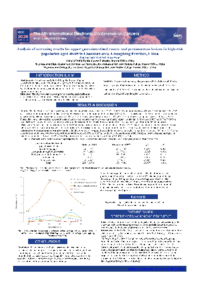
Analysis of Screening Results for Upper Gastrointestinal Cancer and Precancerous Lesions among High-Risk Individuals Aged 40-69 in the Chaoshan Region, Guangdong Province, China_01(1).pdf
Heparan Sulfate-Mediated Mechanotransduction Promotes EMT and Aggressiveness in Ovarian Cancer
Urinary Dual OncomiR Signature of miR-21 and miR-155: A Non-Invasive Approach for Bladder Cancer Detection in a Moroccan Cohort