Event submissions
Published
This submission belongs to the session S7. Novel Methods and Technologies for Research and Treatment of the event The 5th International Electronic Conference on Cancers
Published date
05 Jun, 2026
Academic Editor
'%3e%3cpath%20d='M12.6657%2010.9104C12.4185%2010.325%2012.0599%209.79327%2011.6097%209.34482C11.1609%208.89508%2010.6293%208.5365%2010.0442%208.28888C10.0389%208.28626%2010.0337%208.28495%2010.0285%208.28233C10.8446%207.69279%2011.3752%206.73249%2011.3752%205.64904C11.3752%203.8542%209.92103%202.39999%208.1262%202.39999C6.33136%202.39999%204.87715%203.8542%204.87715%205.64904C4.87715%206.73249%205.40774%207.69279%206.22393%208.28364C6.21869%208.28626%206.21345%208.28757%206.20821%208.29019C5.62129%208.5378%205.09463%208.89284%204.64265%209.34613C4.1929%209.79493%203.83432%2010.3266%203.58671%2010.9117C3.34345%2011.4845%203.21226%2012.0987%203.20023%2012.7209C3.19988%2012.7349%203.20233%2012.7488%203.20744%2012.7619C3.21255%2012.7749%203.22022%2012.7867%203.22998%2012.7968C3.23975%2012.8068%203.25142%2012.8147%203.26431%2012.8202C3.2772%2012.8256%203.29105%2012.8284%203.30504%2012.8284H4.09109C4.14874%2012.8284%204.19459%2012.7825%204.1959%2012.7262C4.2221%2011.7148%204.62823%2010.7676%205.34617%2010.0497C6.08899%209.30683%207.0755%208.89808%208.1262%208.89808C9.17689%208.89808%2010.1634%209.30683%2010.9062%2010.0497C11.6242%2010.7676%2012.0303%2011.7148%2012.0565%2012.7262C12.0578%2012.7838%2012.1037%2012.8284%2012.1613%2012.8284H12.9474C12.9613%2012.8284%2012.9752%2012.8256%2012.9881%2012.8202C13.001%2012.8147%2013.0126%2012.8068%2013.0224%2012.7968C13.0322%2012.7867%2013.0398%2012.7749%2013.0449%2012.7619C13.0501%2012.7488%2013.0525%2012.7349%2013.0522%2012.7209C13.0391%2012.0947%2012.9094%2011.4855%2012.6657%2010.9104ZM8.1262%207.9024C7.52486%207.9024%206.9589%207.6679%206.53312%207.24211C6.10733%206.81633%205.87283%206.25037%205.87283%205.64904C5.87283%205.0477%206.10733%204.48174%206.53312%204.05596C6.9589%203.63018%207.52486%203.39567%208.1262%203.39567C8.72753%203.39567%209.29349%203.63018%209.71927%204.05596C10.1451%204.48174%2010.3796%205.0477%2010.3796%205.64904C10.3796%206.25037%2010.1451%206.81633%209.71927%207.24211C9.29349%207.6679%208.72753%207.9024%208.1262%207.9024Z'%20fill='%235D1EE1'/%3e%3c/g%3e%3c/svg%3e) Andrew A. Gumbs
Andrew A. GumbsCitation
Yashi Mahendra, Anuj Kumar, Genetic Factors Affecting Tobacco Cessation, in Proceedings of The 5th International Electronic Conference on Cancers, 10 June–12 June 2026, MDPI: Basel, Switzerland
Share
Email
Facebook
Twitter
LinkedIn
Genetic Factors Affecting Tobacco Cessation
'%3e%3cpath%20d='M12.6647%2010.9104C12.4176%2010.325%2012.0589%209.7933%2011.6088%209.34485C11.16%208.89511%2010.6283%208.53653%2010.0432%208.28891C10.038%208.28629%2010.0327%208.28498%2010.0275%208.28236C10.8437%207.69282%2011.3743%206.73252%2011.3743%205.64907C11.3743%203.85423%209.92005%202.40002%208.12522%202.40002C6.33038%202.40002%204.87618%203.85423%204.87618%205.64907C4.87618%206.73252%205.40677%207.69282%206.22296%208.28367C6.21772%208.28629%206.21248%208.2876%206.20724%208.29022C5.62031%208.53783%205.09365%208.89287%204.64167%209.34616C4.19192%209.79496%203.83334%2010.3266%203.58573%2010.9117C3.34247%2011.4846%203.21128%2012.0987%203.19925%2012.721C3.1989%2012.735%203.20135%2012.7489%203.20646%2012.7619C3.21157%2012.7749%203.21924%2012.7868%203.22901%2012.7968C3.23877%2012.8068%203.25045%2012.8148%203.26334%2012.8202C3.27623%2012.8256%203.29007%2012.8284%203.30406%2012.8284H4.09012C4.14776%2012.8284%204.19362%2012.7825%204.19493%2012.7262C4.22113%2011.7148%204.62726%2010.7676%205.34519%2010.0497C6.08802%209.30686%207.07452%208.89811%208.12522%208.89811C9.17592%208.89811%2010.1624%209.30686%2010.9052%2010.0497C11.6232%2010.7676%2012.0293%2011.7148%2012.0555%2012.7262C12.0568%2012.7839%2012.1027%2012.8284%2012.1603%2012.8284H12.9464C12.9604%2012.8284%2012.9742%2012.8256%2012.9871%2012.8202C13%2012.8148%2013.0117%2012.8068%2013.0214%2012.7968C13.0312%2012.7868%2013.0389%2012.7749%2013.044%2012.7619C13.0491%2012.7489%2013.0515%2012.735%2013.0512%2012.721C13.0381%2012.0947%2012.9084%2011.4856%2012.6647%2010.9104ZM8.12522%207.90243C7.52388%207.90243%206.95792%207.66793%206.53214%207.24215C6.10636%206.81636%205.87185%206.2504%205.87185%205.64907C5.87185%205.04773%206.10636%204.48177%206.53214%204.05599C6.95792%203.63021%207.52388%203.3957%208.12522%203.3957C8.72655%203.3957%209.29252%203.63021%209.7183%204.05599C10.1441%204.48177%2010.3786%205.04773%2010.3786%205.64907C10.3786%206.2504%2010.1441%206.81636%209.7183%207.24215C9.29252%207.66793%208.72655%207.90243%208.12522%207.90243Z'%20fill='%235D1EE1'/%3e%3c/g%3e%3c/svg%3e)
Yashi Mahendra 1

Anuj Kumar 2
1. Department of Biotechnology, University Institute of Engineering and Technology, Maharshi Dayanand University, Rohtak, Haryana, 124001, India
2. Molecular Biology Group/ division of molecular genetics and biochemistry, ICMR, NICPR, Noida, Gautam Budhh Nagar, Uttar Pradesh, 201303, India
Abstract
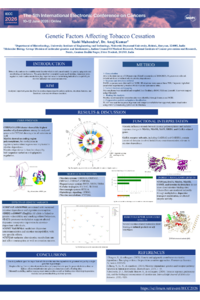
Research into multi-causative disorders, such as substance dependence, makes it important to understand their neurobiological, genetic, and environmental foundations. The primary objective is to study the dynamic relationship of these factors to combat global health concerns like cancer, emphysema, and asthma.
Our research focuses on developing and applying precision preclinical models to investigate these disorders. It employs the use of bioinformatics and computational biology tools, including machine learning and AI-based methodologies such as UMAP (Uniform Manifold Approximation and Projection) using PYTHON and its libraries. Specifically, a structure-based functional analysis of sixteen genes associated with nicotine dependence has been performed using PDB, ChimeraX, BLAST, and Clustal Omega for Structural Bioinformatics, visualization, and sequence alignment, respectively. We found that CHRNA5 exhibited a maximum number of polymorphisms while MAOA's methylation is implicated. Nicotine dependence involves genetic variants in the CHRNA5-CHRNA3-CHRNA4 gene cluster affecting dopaminergic systems, alongside DRD2, DAT1, COMT, and CYP2A6. GABA contains a highly conserved region and base sequence changes in genes such as MAOA, MAOB, DAT1, DRD1, and GABA; COMT enzyme activity, influenced by the Val158Met polymorphism, modulates dopamine neurotransmission and effects nicotine susceptibility, with sex-specific differences noticed.
The application of dimensionality reduction techniques like UMAPs enables the visualization and analysis of genetic and epigenetic datasets, helping us to study patterns and relationships related to diseases of focus. In addition to this, AI-based methodologies facilitate the identification of novel biomarkers and potential therapeutic targets in a better way. This integrated approach demonstrates the immense potential for precision medicine approaches in areas like tobacco cessation.
Keywords
Genetics
Machine Learning
Precision Medicine
Tobacco Addiction
Oncology
Poster
sciforum_141251_S7_slides_IECC_MDPI_GFATC_YM_AK.pdf
Azadirachta indica PLGA nanoparticles potentiate antitumor activity, induce apoptosis, and suppress metastasis in murine breast cancer models
Development of Novel Drug Delivery Pathways Enabled by Perillyl Alcohol (NEO100), a Monoterpene with Multifaceted Biomedical Applications