Event submissions
Published

This submission belongs to the session S7. Sensing Technologies for Water Resource Management of the event 2nd International Electronic Conference on Sensors and Applications
Published date
06 Nov, 2015
Citation
Dimitris Kofinas, Nikolaos Mellios, Chrysi Laspidou, Spatial and temporal disaggregation of water demand and leakage of the water distribution network in Skiathos, Greece, in Proceedings of 2nd International Electronic Conference on Sensors and Applications, 15 November–30 November 2015, MDPI: Basel, Switzerland, doi: 10.3390/ecsa-2-S7001
Share
Email
Facebook
Twitter
LinkedIn
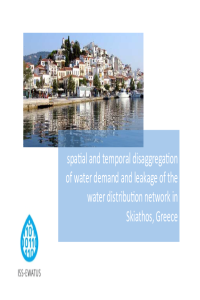
Spatial and temporal disaggregation of water demand and leakage of the water distribution network in Skiathos, Greece
'%3e%3cpath%20d='M12.6647%2010.9104C12.4176%2010.325%2012.0589%209.7933%2011.6088%209.34485C11.16%208.89511%2010.6283%208.53653%2010.0432%208.28891C10.038%208.28629%2010.0327%208.28498%2010.0275%208.28236C10.8437%207.69282%2011.3743%206.73252%2011.3743%205.64907C11.3743%203.85423%209.92005%202.40002%208.12522%202.40002C6.33038%202.40002%204.87618%203.85423%204.87618%205.64907C4.87618%206.73252%205.40677%207.69282%206.22296%208.28367C6.21772%208.28629%206.21248%208.2876%206.20724%208.29022C5.62031%208.53783%205.09365%208.89287%204.64167%209.34616C4.19192%209.79496%203.83334%2010.3266%203.58573%2010.9117C3.34247%2011.4846%203.21128%2012.0987%203.19925%2012.721C3.1989%2012.735%203.20135%2012.7489%203.20646%2012.7619C3.21157%2012.7749%203.21924%2012.7868%203.22901%2012.7968C3.23877%2012.8068%203.25045%2012.8148%203.26334%2012.8202C3.27623%2012.8256%203.29007%2012.8284%203.30406%2012.8284H4.09012C4.14776%2012.8284%204.19362%2012.7825%204.19493%2012.7262C4.22113%2011.7148%204.62726%2010.7676%205.34519%2010.0497C6.08802%209.30686%207.07452%208.89811%208.12522%208.89811C9.17592%208.89811%2010.1624%209.30686%2010.9052%2010.0497C11.6232%2010.7676%2012.0293%2011.7148%2012.0555%2012.7262C12.0568%2012.7839%2012.1027%2012.8284%2012.1603%2012.8284H12.9464C12.9604%2012.8284%2012.9742%2012.8256%2012.9871%2012.8202C13%2012.8148%2013.0117%2012.8068%2013.0214%2012.7968C13.0312%2012.7868%2013.0389%2012.7749%2013.044%2012.7619C13.0491%2012.7489%2013.0515%2012.735%2013.0512%2012.721C13.0381%2012.0947%2012.9084%2011.4856%2012.6647%2010.9104ZM8.12522%207.90243C7.52388%207.90243%206.95792%207.66793%206.53214%207.24215C6.10636%206.81636%205.87185%206.2504%205.87185%205.64907C5.87185%205.04773%206.10636%204.48177%206.53214%204.05599C6.95792%203.63021%207.52388%203.3957%208.12522%203.3957C8.72655%203.3957%209.29252%203.63021%209.7183%204.05599C10.1441%204.48177%2010.3786%205.04773%2010.3786%205.64907C10.3786%206.2504%2010.1441%206.81636%209.7183%207.24215C9.29252%207.66793%208.72655%207.90243%208.12522%207.90243Z'%20fill='%235D1EE1'/%3e%3c/g%3e%3c/svg%3e)
Dimitris Kofinas 1
Nikolaos Mellios 1
Chrysi Laspidou 1
1. Information Technologies Institute, CERTH, 6th km Charilaou-Thermi Rd., Thermi 57001, Greece
Abstract
Pressure control management of a water distribution network is considered as an effective approach for the reduction of leakage in the network and for optimized savings in pumping energy. A successful pressure management scheme usually requires single- or multi-feed regulation through Pressure Reduction Valves, the network division in District Metered Areas and dense monitoring of pressure and flow throughout the network. A structural component of this approach would be a hydraulic model which would relate pressure and flow in the network, in accordance to the monitored values. In the ISS-EWATUS project (issewatus.eu) and specifically for the Skiathos, Greece case study, we solve the water distribution network hydraulically with the EPANET software, so as to estimate the pressure-map of the island and later link pressure to leakage. The need to zoom-in spatially and temporarily makes the spatial and temporal disaggregation of aggregated water demand, as provided by the water utility, a necessity. We use the daily aggregated water supply time series and consumer quarterly billing data for each water meter in the DMA, in order to produce approximate, daily water consumption datasets of each household and daily leakage per household. In this article, we present our disaggregation methodology for the production of these data sets.
Keywords
water demand disaggregation
EPANET software
pressure management
water distribution network
Manuscript
6114.pdf
Poster
Sciforum-006114 presentation Laspidou submission.pdf
Low-cost magnetic resonance sensors for process monitoring in the food industry
Material-integrated Intelligent Systems: A Review on State of the Art, Challenges and Trends