Event submissions
Published
This submission belongs to the session S1. Environmental Toxicity, Bioaccumulation and Remediation Strategies of the event The 1st International Online Conference on Xenobiotics
Published date
17 Jun, 2026
Academic Editor
'%3e%3cpath%20d='M12.6657%2010.9104C12.4185%2010.325%2012.0599%209.79327%2011.6097%209.34482C11.1609%208.89508%2010.6293%208.5365%2010.0442%208.28888C10.0389%208.28626%2010.0337%208.28495%2010.0285%208.28233C10.8446%207.69279%2011.3752%206.73249%2011.3752%205.64904C11.3752%203.8542%209.92103%202.39999%208.1262%202.39999C6.33136%202.39999%204.87715%203.8542%204.87715%205.64904C4.87715%206.73249%205.40774%207.69279%206.22393%208.28364C6.21869%208.28626%206.21345%208.28757%206.20821%208.29019C5.62129%208.5378%205.09463%208.89284%204.64265%209.34613C4.1929%209.79493%203.83432%2010.3266%203.58671%2010.9117C3.34345%2011.4845%203.21226%2012.0987%203.20023%2012.7209C3.19988%2012.7349%203.20233%2012.7488%203.20744%2012.7619C3.21255%2012.7749%203.22022%2012.7867%203.22998%2012.7968C3.23975%2012.8068%203.25142%2012.8147%203.26431%2012.8202C3.2772%2012.8256%203.29105%2012.8284%203.30504%2012.8284H4.09109C4.14874%2012.8284%204.19459%2012.7825%204.1959%2012.7262C4.2221%2011.7148%204.62823%2010.7676%205.34617%2010.0497C6.08899%209.30683%207.0755%208.89808%208.1262%208.89808C9.17689%208.89808%2010.1634%209.30683%2010.9062%2010.0497C11.6242%2010.7676%2012.0303%2011.7148%2012.0565%2012.7262C12.0578%2012.7838%2012.1037%2012.8284%2012.1613%2012.8284H12.9474C12.9613%2012.8284%2012.9752%2012.8256%2012.9881%2012.8202C13.001%2012.8147%2013.0126%2012.8068%2013.0224%2012.7968C13.0322%2012.7867%2013.0398%2012.7749%2013.0449%2012.7619C13.0501%2012.7488%2013.0525%2012.7349%2013.0522%2012.7209C13.0391%2012.0947%2012.9094%2011.4855%2012.6657%2010.9104ZM8.1262%207.9024C7.52486%207.9024%206.9589%207.6679%206.53312%207.24211C6.10733%206.81633%205.87283%206.25037%205.87283%205.64904C5.87283%205.0477%206.10733%204.48174%206.53312%204.05596C6.9589%203.63018%207.52486%203.39567%208.1262%203.39567C8.72753%203.39567%209.29349%203.63018%209.71927%204.05596C10.1451%204.48174%2010.3796%205.0477%2010.3796%205.64904C10.3796%206.25037%2010.1451%206.81633%209.71927%207.24211C9.29349%207.6679%208.72753%207.9024%208.1262%207.9024Z'%20fill='%235D1EE1'/%3e%3c/g%3e%3c/svg%3e) Stefano Magni
Stefano MagniCitation
Kalina Zhivkova, Stoycho Dimitrov Stoev, Krasimira Zhelyazkova Gospodinova, Dimitrinka Stoycheva Zapryanova, PATHOLOGICAL, BIOCHEMICAL AND IMMUNOLOGICAL STUDIES ON EXPERIMENTAL OCHRATOXIN A TOXICOSIS IN RABBITS, in Proceedings of The 1st International Online Conference on Xenobiotics, 22 June–23 June 2026, MDPI: Basel, Switzerland
Share
Email
Facebook
Twitter
LinkedIn
PATHOLOGICAL, BIOCHEMICAL AND IMMUNOLOGICAL STUDIES ON EXPERIMENTAL OCHRATOXIN A TOXICOSIS IN RABBITS
'%3e%3cpath%20d='M12.6647%2010.9104C12.4176%2010.325%2012.0589%209.7933%2011.6088%209.34485C11.16%208.89511%2010.6283%208.53653%2010.0432%208.28891C10.038%208.28629%2010.0327%208.28498%2010.0275%208.28236C10.8437%207.69282%2011.3743%206.73252%2011.3743%205.64907C11.3743%203.85423%209.92005%202.40002%208.12522%202.40002C6.33038%202.40002%204.87618%203.85423%204.87618%205.64907C4.87618%206.73252%205.40677%207.69282%206.22296%208.28367C6.21772%208.28629%206.21248%208.2876%206.20724%208.29022C5.62031%208.53783%205.09365%208.89287%204.64167%209.34616C4.19192%209.79496%203.83334%2010.3266%203.58573%2010.9117C3.34247%2011.4846%203.21128%2012.0987%203.19925%2012.721C3.1989%2012.735%203.20135%2012.7489%203.20646%2012.7619C3.21157%2012.7749%203.21924%2012.7868%203.22901%2012.7968C3.23877%2012.8068%203.25045%2012.8148%203.26334%2012.8202C3.27623%2012.8256%203.29007%2012.8284%203.30406%2012.8284H4.09012C4.14776%2012.8284%204.19362%2012.7825%204.19493%2012.7262C4.22113%2011.7148%204.62726%2010.7676%205.34519%2010.0497C6.08802%209.30686%207.07452%208.89811%208.12522%208.89811C9.17592%208.89811%2010.1624%209.30686%2010.9052%2010.0497C11.6232%2010.7676%2012.0293%2011.7148%2012.0555%2012.7262C12.0568%2012.7839%2012.1027%2012.8284%2012.1603%2012.8284H12.9464C12.9604%2012.8284%2012.9742%2012.8256%2012.9871%2012.8202C13%2012.8148%2013.0117%2012.8068%2013.0214%2012.7968C13.0312%2012.7868%2013.0389%2012.7749%2013.044%2012.7619C13.0491%2012.7489%2013.0515%2012.735%2013.0512%2012.721C13.0381%2012.0947%2012.9084%2011.4856%2012.6647%2010.9104ZM8.12522%207.90243C7.52388%207.90243%206.95792%207.66793%206.53214%207.24215C6.10636%206.81636%205.87185%206.2504%205.87185%205.64907C5.87185%205.04773%206.10636%204.48177%206.53214%204.05599C6.95792%203.63021%207.52388%203.3957%208.12522%203.3957C8.72655%203.3957%209.29252%203.63021%209.7183%204.05599C10.1441%204.48177%2010.3786%205.04773%2010.3786%205.64907C10.3786%206.2504%2010.1441%206.81636%209.7183%207.24215C9.29252%207.66793%208.72655%207.90243%208.12522%207.90243Z'%20fill='%235D1EE1'/%3e%3c/g%3e%3c/svg%3e)
Kalina Zhivkova 1

Stoycho Dimitrov Stoev 1
Krasimira Zhelyazkova Gospodinova 1
Dimitrinka Stoycheva Zapryanova 2
1. Department of General and Clinical Pathology, Trakia University, Stara Zagora 6000, Bulgaria
2. Department of Pharmacology, Physiology of Animals, Biochemistry and Chemistry, Trakia University, Stara Zagora 6000, Bulgaria
Abstract
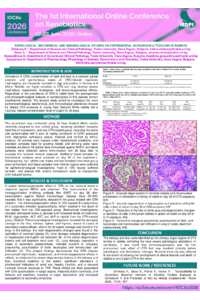
Ochratoxin A (OTA) is a fungal mycotoxin that affects animal and human health. Rabbits are very sensitive to OTA, but there is limited data about its deleterious effects on these animals. This study aimed to evaluate pathological changes and potential immunosuppression in young New Zealand White rabbits exposed to 2 ppm OTA via dietary administration for 30 days. All rabbits were immunized against RHDV, and blood samples were collected for serological examination before immunization and on day 28 afterward. The blood for clinical biochemistry and samples from internal organs for pathomorphological investigations were taken at the end of the experiment. A potent immunosuppressive effect of OTA on the humoral immune response against RHDV was observed, evidenced by a decrease in antibody titers (p<0.005). The immunosuppressive effect of OTA caused the occurrence of a secondary infection (pasteurellosis), which resulted in the death of two rabbits from the OTA-exposed group. Biochemical investigations revealed decreased levels of glucose and increased levels of creatinine, BUN, triglycerides, ALT, AST, and ALP. Pathomorphological investigations revealed the that strongest damage occurred in the liver, kidneys, spleen, and thymus, except in cases of secondary pasteurellosis, where the strongest damage was found in the lung. In the kidneys, the main degenerative changes were found in the epithelium of proximal tubules. Liver damage included degeneration in hepatocytes and Kupffer cell activation. In the spleen and thymus, degenerative lesions and/or cell depletion were seen. Lung damage, especially in cases of secondary Pasteurellosis, included purulent or croupous pneumonia, fibrinous pleurisy, and thrombosis of vessels. In conclusion, it was found that immunosuppression was the first pronounced toxic effect of OTA and that it may manifest clinically before pathological and biochemical changes. Humoral immunity was affected to the extent of allowing the development of clinical disease and death of rabbits at only 2 ppm OTA in the ration.
Keywords
ochratoxin A
rabbits
pathomorphological changes
nephrotoxicity
hepatotoxicity
immunosuppression
Pasteurellosis
ochratoxicosis
Poster
Poster-Kalina Zhivkova.pdf
PRELIMINARY EVALUATION OF NOVEL SURFACTANT-BASED DECONTAMINANTS FOR SKIN EXPOSURE TO PHORATE: A SIMULANT OF THE VX NERVE AGENT.
Enhanced biodegradation of phenylurea herbicides in polluted soils using a combined bioagmentation and biostimulation technology