Event submissions
EventsThe 3rd International Online Conference on Corrosion and Materials Degradation
Published
This submission belongs to the session S3. Surface Treatments and Coatings for Corrosion Protection of the event The 3rd International Online Conference on Corrosion and Materials Degradation
Published date
25 Jun, 2026
Academic Editor
'%3e%3cpath%20d='M12.6657%2010.9104C12.4185%2010.325%2012.0599%209.79327%2011.6097%209.34482C11.1609%208.89508%2010.6293%208.5365%2010.0442%208.28888C10.0389%208.28626%2010.0337%208.28495%2010.0285%208.28233C10.8446%207.69279%2011.3752%206.73249%2011.3752%205.64904C11.3752%203.8542%209.92103%202.39999%208.1262%202.39999C6.33136%202.39999%204.87715%203.8542%204.87715%205.64904C4.87715%206.73249%205.40774%207.69279%206.22393%208.28364C6.21869%208.28626%206.21345%208.28757%206.20821%208.29019C5.62129%208.5378%205.09463%208.89284%204.64265%209.34613C4.1929%209.79493%203.83432%2010.3266%203.58671%2010.9117C3.34345%2011.4845%203.21226%2012.0987%203.20023%2012.7209C3.19988%2012.7349%203.20233%2012.7488%203.20744%2012.7619C3.21255%2012.7749%203.22022%2012.7867%203.22998%2012.7968C3.23975%2012.8068%203.25142%2012.8147%203.26431%2012.8202C3.2772%2012.8256%203.29105%2012.8284%203.30504%2012.8284H4.09109C4.14874%2012.8284%204.19459%2012.7825%204.1959%2012.7262C4.2221%2011.7148%204.62823%2010.7676%205.34617%2010.0497C6.08899%209.30683%207.0755%208.89808%208.1262%208.89808C9.17689%208.89808%2010.1634%209.30683%2010.9062%2010.0497C11.6242%2010.7676%2012.0303%2011.7148%2012.0565%2012.7262C12.0578%2012.7838%2012.1037%2012.8284%2012.1613%2012.8284H12.9474C12.9613%2012.8284%2012.9752%2012.8256%2012.9881%2012.8202C13.001%2012.8147%2013.0126%2012.8068%2013.0224%2012.7968C13.0322%2012.7867%2013.0398%2012.7749%2013.0449%2012.7619C13.0501%2012.7488%2013.0525%2012.7349%2013.0522%2012.7209C13.0391%2012.0947%2012.9094%2011.4855%2012.6657%2010.9104ZM8.1262%207.9024C7.52486%207.9024%206.9589%207.6679%206.53312%207.24211C6.10733%206.81633%205.87283%206.25037%205.87283%205.64904C5.87283%205.0477%206.10733%204.48174%206.53312%204.05596C6.9589%203.63018%207.52486%203.39567%208.1262%203.39567C8.72753%203.39567%209.29349%203.63018%209.71927%204.05596C10.1451%204.48174%2010.3796%205.0477%2010.3796%205.64904C10.3796%206.25037%2010.1451%206.81633%209.71927%207.24211C9.29349%207.6679%208.72753%207.9024%208.1262%207.9024Z'%20fill='%235D1EE1'/%3e%3c/g%3e%3c/svg%3e) Viswanathan Saji
Viswanathan SajiCitation
Shirish Bali, Reshma Patale, Srikanth T S, Influence of Surface Treatment on Hydrogen Embrittlement of Commercial Vehicle Seat Slider Bracket, in Proceedings of The 3rd International Online Conference on Corrosion and Materials Degradation, 30 June–2 July 2026, MDPI: Basel, Switzerland
Share
Email
Facebook
Twitter
LinkedIn
Influence of Surface Treatment on Hydrogen Embrittlement of Commercial Vehicle Seat Slider Bracket
'%3e%3cpath%20d='M12.6647%2010.9104C12.4176%2010.325%2012.0589%209.7933%2011.6088%209.34485C11.16%208.89511%2010.6283%208.53653%2010.0432%208.28891C10.038%208.28629%2010.0327%208.28498%2010.0275%208.28236C10.8437%207.69282%2011.3743%206.73252%2011.3743%205.64907C11.3743%203.85423%209.92005%202.40002%208.12522%202.40002C6.33038%202.40002%204.87618%203.85423%204.87618%205.64907C4.87618%206.73252%205.40677%207.69282%206.22296%208.28367C6.21772%208.28629%206.21248%208.2876%206.20724%208.29022C5.62031%208.53783%205.09365%208.89287%204.64167%209.34616C4.19192%209.79496%203.83334%2010.3266%203.58573%2010.9117C3.34247%2011.4846%203.21128%2012.0987%203.19925%2012.721C3.1989%2012.735%203.20135%2012.7489%203.20646%2012.7619C3.21157%2012.7749%203.21924%2012.7868%203.22901%2012.7968C3.23877%2012.8068%203.25045%2012.8148%203.26334%2012.8202C3.27623%2012.8256%203.29007%2012.8284%203.30406%2012.8284H4.09012C4.14776%2012.8284%204.19362%2012.7825%204.19493%2012.7262C4.22113%2011.7148%204.62726%2010.7676%205.34519%2010.0497C6.08802%209.30686%207.07452%208.89811%208.12522%208.89811C9.17592%208.89811%2010.1624%209.30686%2010.9052%2010.0497C11.6232%2010.7676%2012.0293%2011.7148%2012.0555%2012.7262C12.0568%2012.7839%2012.1027%2012.8284%2012.1603%2012.8284H12.9464C12.9604%2012.8284%2012.9742%2012.8256%2012.9871%2012.8202C13%2012.8148%2013.0117%2012.8068%2013.0214%2012.7968C13.0312%2012.7868%2013.0389%2012.7749%2013.044%2012.7619C13.0491%2012.7489%2013.0515%2012.735%2013.0512%2012.721C13.0381%2012.0947%2012.9084%2011.4856%2012.6647%2010.9104ZM8.12522%207.90243C7.52388%207.90243%206.95792%207.66793%206.53214%207.24215C6.10636%206.81636%205.87185%206.2504%205.87185%205.64907C5.87185%205.04773%206.10636%204.48177%206.53214%204.05599C6.95792%203.63021%207.52388%203.3957%208.12522%203.3957C8.72655%203.3957%209.29252%203.63021%209.7183%204.05599C10.1441%204.48177%2010.3786%205.04773%2010.3786%205.64907C10.3786%206.2504%2010.1441%206.81636%209.7183%207.24215C9.29252%207.66793%208.72655%207.90243%208.12522%207.90243Z'%20fill='%235D1EE1'/%3e%3c/g%3e%3c/svg%3e)
Shirish Bali 1
Reshma Patale 1
Srikanth T S 2
1. Advanced Technology Group, Centre for Research Engineering and Advanced Technologies (CREAT),
UNO Minda Ltd., Pune, Maharashtra 411018, India
2. Advanced Technology Group, Uno Minda Limited, 7th Floor, Jupiter Building, Prestige Technology Park, Kadubeeshanahalli
Bengaluru – KA 560103, India
Abstract
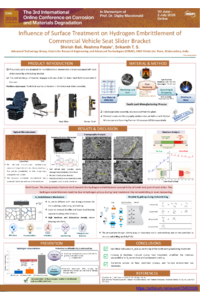
In the automotive industry, the selection of structural materials plays a critical role in ensuring component durability and performance. Among these, seats hold significant importance across all vehicle types—whether three-wheelers or four-wheelers. Based on the working mechanism, these seats can be hydraulic-based, spring-loaded or air suspension types, among others. Usually, high-strength steels are used to manufacture these seats. One such example is pneumatic seats, which are designed for multidirectional movement and are equipped with a seat slider assembly. Recently, we received a failed seat slider assembly from the plant. It was observed that the tooth of the locking bracket had completely broken off from the parent part.
The locking bracket features a toothed design which engages with the seat slider cavities to secure the seat position in multiple X-Y directions, ensuring movement of the seat. This part is manufactured using high-strength hot-rolled steel (SPFH 590 grade). Due to continuous engagement and repetitive cycles, the teeth are prone to wear; hence, carbonitriding surface treatment is applied to the toothed region to enhance surface hardness, achieving a hardness range of 625–725 HV.
During fractography analysis, intergranular fracture, along with multiple cracks, was observed. A study of the manufacturing and heat treatment process revealed that the part undergoes case hardening during carbonitriding, along with ammonium–hydrogen gas mixture exposure, which results in hydrogen pickup. This hydrogen diffuses inside the material and accumulates on the grain boundaries, eventually weakening them, which can further lead to intergranular fracture. To further mitigate the issue, the amount of diffusible hydrogen needs to be decreased, which can be achieved by increasing the tempering temperature to 250 °C–300 °C.
Keywords
Automotive
Hydrogen Embrittlement
Carbonitriding
High Strength Steel
Intergranular Fracture
Poster
CMD 2026_ Poster presentation_Final.pdf
Non-contact Evaluation of Coating System Re-deterioration in Steel Sheet Pile Canal
Nanosecond Laser Texturing of Triple-Scale Surface Structuring for Robust Pitting Corrosion Resistance in AA6061