Event submissions
Events2026 International Online Conference on Tropical Medicine and Infectious Disease
Published
This submission belongs to the session S2. One Health – Zoonotic Diseases of the event 2026 International Online Conference on Tropical Medicine and Infectious Disease
Published date
26 Jun, 2026
Academic Editor
'%3e%3cpath%20d='M12.6657%2010.9104C12.4185%2010.325%2012.0599%209.79327%2011.6097%209.34482C11.1609%208.89508%2010.6293%208.5365%2010.0442%208.28888C10.0389%208.28626%2010.0337%208.28495%2010.0285%208.28233C10.8446%207.69279%2011.3752%206.73249%2011.3752%205.64904C11.3752%203.8542%209.92103%202.39999%208.1262%202.39999C6.33136%202.39999%204.87715%203.8542%204.87715%205.64904C4.87715%206.73249%205.40774%207.69279%206.22393%208.28364C6.21869%208.28626%206.21345%208.28757%206.20821%208.29019C5.62129%208.5378%205.09463%208.89284%204.64265%209.34613C4.1929%209.79493%203.83432%2010.3266%203.58671%2010.9117C3.34345%2011.4845%203.21226%2012.0987%203.20023%2012.7209C3.19988%2012.7349%203.20233%2012.7488%203.20744%2012.7619C3.21255%2012.7749%203.22022%2012.7867%203.22998%2012.7968C3.23975%2012.8068%203.25142%2012.8147%203.26431%2012.8202C3.2772%2012.8256%203.29105%2012.8284%203.30504%2012.8284H4.09109C4.14874%2012.8284%204.19459%2012.7825%204.1959%2012.7262C4.2221%2011.7148%204.62823%2010.7676%205.34617%2010.0497C6.08899%209.30683%207.0755%208.89808%208.1262%208.89808C9.17689%208.89808%2010.1634%209.30683%2010.9062%2010.0497C11.6242%2010.7676%2012.0303%2011.7148%2012.0565%2012.7262C12.0578%2012.7838%2012.1037%2012.8284%2012.1613%2012.8284H12.9474C12.9613%2012.8284%2012.9752%2012.8256%2012.9881%2012.8202C13.001%2012.8147%2013.0126%2012.8068%2013.0224%2012.7968C13.0322%2012.7867%2013.0398%2012.7749%2013.0449%2012.7619C13.0501%2012.7488%2013.0525%2012.7349%2013.0522%2012.7209C13.0391%2012.0947%2012.9094%2011.4855%2012.6657%2010.9104ZM8.1262%207.9024C7.52486%207.9024%206.9589%207.6679%206.53312%207.24211C6.10733%206.81633%205.87283%206.25037%205.87283%205.64904C5.87283%205.0477%206.10733%204.48174%206.53312%204.05596C6.9589%203.63018%207.52486%203.39567%208.1262%203.39567C8.72753%203.39567%209.29349%203.63018%209.71927%204.05596C10.1451%204.48174%2010.3796%205.0477%2010.3796%205.64904C10.3796%206.25037%2010.1451%206.81633%209.71927%207.24211C9.29349%207.6679%208.72753%207.9024%208.1262%207.9024Z'%20fill='%235D1EE1'/%3e%3c/g%3e%3c/svg%3e) John Frean
John FreanCitation
Jennifer Rossouw, Hermanus De Wet Geyer, Veerle Msimang, Epidemiology of human Brucellosis in rural South Africa: Household survey of seroprevalence and risk factors, 2022–2023., in Proceedings of 2026 International Online Conference on Tropical Medicine and Infectious Disease, 1 July–2 July 2026, MDPI: Basel, Switzerland
Share
Email
Facebook
Twitter
LinkedIn
Epidemiology of human Brucellosis in rural South Africa: Household survey of seroprevalence and risk factors, 2022–2023.
'%3e%3cpath%20d='M12.6647%2010.9104C12.4176%2010.325%2012.0589%209.7933%2011.6088%209.34485C11.16%208.89511%2010.6283%208.53653%2010.0432%208.28891C10.038%208.28629%2010.0327%208.28498%2010.0275%208.28236C10.8437%207.69282%2011.3743%206.73252%2011.3743%205.64907C11.3743%203.85423%209.92005%202.40002%208.12522%202.40002C6.33038%202.40002%204.87618%203.85423%204.87618%205.64907C4.87618%206.73252%205.40677%207.69282%206.22296%208.28367C6.21772%208.28629%206.21248%208.2876%206.20724%208.29022C5.62031%208.53783%205.09365%208.89287%204.64167%209.34616C4.19192%209.79496%203.83334%2010.3266%203.58573%2010.9117C3.34247%2011.4846%203.21128%2012.0987%203.19925%2012.721C3.1989%2012.735%203.20135%2012.7489%203.20646%2012.7619C3.21157%2012.7749%203.21924%2012.7868%203.22901%2012.7968C3.23877%2012.8068%203.25045%2012.8148%203.26334%2012.8202C3.27623%2012.8256%203.29007%2012.8284%203.30406%2012.8284H4.09012C4.14776%2012.8284%204.19362%2012.7825%204.19493%2012.7262C4.22113%2011.7148%204.62726%2010.7676%205.34519%2010.0497C6.08802%209.30686%207.07452%208.89811%208.12522%208.89811C9.17592%208.89811%2010.1624%209.30686%2010.9052%2010.0497C11.6232%2010.7676%2012.0293%2011.7148%2012.0555%2012.7262C12.0568%2012.7839%2012.1027%2012.8284%2012.1603%2012.8284H12.9464C12.9604%2012.8284%2012.9742%2012.8256%2012.9871%2012.8202C13%2012.8148%2013.0117%2012.8068%2013.0214%2012.7968C13.0312%2012.7868%2013.0389%2012.7749%2013.044%2012.7619C13.0491%2012.7489%2013.0515%2012.735%2013.0512%2012.721C13.0381%2012.0947%2012.9084%2011.4856%2012.6647%2010.9104ZM8.12522%207.90243C7.52388%207.90243%206.95792%207.66793%206.53214%207.24215C6.10636%206.81636%205.87185%206.2504%205.87185%205.64907C5.87185%205.04773%206.10636%204.48177%206.53214%204.05599C6.95792%203.63021%207.52388%203.3957%208.12522%203.3957C8.72655%203.3957%209.29252%203.63021%209.7183%204.05599C10.1441%204.48177%2010.3786%205.04773%2010.3786%205.64907C10.3786%206.2504%2010.1441%206.81636%209.7183%207.24215C9.29252%207.66793%208.72655%207.90243%208.12522%207.90243Z'%20fill='%235D1EE1'/%3e%3c/g%3e%3c/svg%3e)
Jennifer Rossouw 1
Hermanus De Wet Geyer 2

Veerle Msimang 1
1. Centre for Emerging Zoonotic and Parasitic Diseases, National Institute for Communicable Diseases, National Health Laboratory Service, Johannesburg 2192, South Africa
2. SA National Control Laboratory for Biological Products, Faculty of Health Sciences, University of the Free State, Bloemfontein 9300, South Africa
Abstract
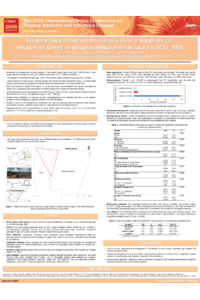
Introduction: Brucellosis, caused by Brucella spp., is a globally prevalent zoonotic disease and a significant cause of febrile illness, yet it often remains underdiagnosed. This study assessed brucellosis seroprevalence in a rural South African community and examined associated exposure factors among livestock-owning and non-livestock households.
Methods: A cross-sectional random cluster household survey was conducted in 2022–2023 in uMkhanyakude District, KwaZulu-Natal Province, South Africa. Household interviews were conducted, and serum samples from 688 participants were tested for anti‑Brucella IgG antibodies using a commercial ELISA. Risk factors for seropositivity were assessed using Fisher’s Exact test, with p<0.2 considered significant.
Results: Overall, human Brucella seroprevalence was 4.4% (30/688; 95% CI: 3.0–6.3%) after adjusting for household clustering. Participants had a median age of 36 years (IQR: 25–53; range: 12–95); 98% identified as Black African and 59% were female. Poultry ownership was common (74% kept chickens), while 12% kept cattle, 16% goats, and 39% both bovids. Univariable analysis showed higher seropositivity among males (7.9% vs. 2.0%; p<0.001), participants older than 36 years (6.3% vs. 2.4%; p=0.09), and those with primary-level or no schooling (6.9% vs. 3.0%; p=0.106). A strong association was observed with household cattle or goat ownership (6.4% vs. 0.4%; p<0.001), whereas associations with livestock slaughter (p=0.151) and abortions (p=0.19) were weaker. Behavioural factors associated with increased seropositivity included consumption of unboiled/raw milk (p=0.097) or fermented milk (p=0.077), eating animals found dead (p=0.059), and frequent hunting of antelopes, small mammals, or birds (p=0.085). No associations were found with the consumption of undercooked meat, employment status or sector, chicken ownership, or keeping cats/dogs as pets (stratified by bovid ownership). Multivariable analysis will be presented.
Conclusions: Brucellosis seroprevalence was associated with multiple demographic and behavioural factors, particularly sex, age and contact with cattle or goats. Strengthening livestock control measures, together with targeted awareness campaigns for high-risk groups, may reduce human Brucella exposure.
Keywords
Brucellosis
household survey
seroprevalence
South Africa
Poster
CTMID_sciforum 174692_Rossouw et al.pdf
Diversity and Insecticide Susceptibility of Anopheles Mosquitoes in Bushbuckridge, a Residual Malaria Transmission Setting in South Africa
Prevalence of Taeniosis among humans in Mpumalanga Province, South Africa