Event submissions
Published
This submission belongs to the session S4. Biomaterials for Tissue Engineering and Regenerative Medicine of the event The 2nd International Online Conference on Functional Biomaterials
Published date
03 Jul, 2026
Academic Editor
'%3e%3cpath%20d='M12.6657%2010.9104C12.4185%2010.325%2012.0599%209.79327%2011.6097%209.34482C11.1609%208.89508%2010.6293%208.5365%2010.0442%208.28888C10.0389%208.28626%2010.0337%208.28495%2010.0285%208.28233C10.8446%207.69279%2011.3752%206.73249%2011.3752%205.64904C11.3752%203.8542%209.92103%202.39999%208.1262%202.39999C6.33136%202.39999%204.87715%203.8542%204.87715%205.64904C4.87715%206.73249%205.40774%207.69279%206.22393%208.28364C6.21869%208.28626%206.21345%208.28757%206.20821%208.29019C5.62129%208.5378%205.09463%208.89284%204.64265%209.34613C4.1929%209.79493%203.83432%2010.3266%203.58671%2010.9117C3.34345%2011.4845%203.21226%2012.0987%203.20023%2012.7209C3.19988%2012.7349%203.20233%2012.7488%203.20744%2012.7619C3.21255%2012.7749%203.22022%2012.7867%203.22998%2012.7968C3.23975%2012.8068%203.25142%2012.8147%203.26431%2012.8202C3.2772%2012.8256%203.29105%2012.8284%203.30504%2012.8284H4.09109C4.14874%2012.8284%204.19459%2012.7825%204.1959%2012.7262C4.2221%2011.7148%204.62823%2010.7676%205.34617%2010.0497C6.08899%209.30683%207.0755%208.89808%208.1262%208.89808C9.17689%208.89808%2010.1634%209.30683%2010.9062%2010.0497C11.6242%2010.7676%2012.0303%2011.7148%2012.0565%2012.7262C12.0578%2012.7838%2012.1037%2012.8284%2012.1613%2012.8284H12.9474C12.9613%2012.8284%2012.9752%2012.8256%2012.9881%2012.8202C13.001%2012.8147%2013.0126%2012.8068%2013.0224%2012.7968C13.0322%2012.7867%2013.0398%2012.7749%2013.0449%2012.7619C13.0501%2012.7488%2013.0525%2012.7349%2013.0522%2012.7209C13.0391%2012.0947%2012.9094%2011.4855%2012.6657%2010.9104ZM8.1262%207.9024C7.52486%207.9024%206.9589%207.6679%206.53312%207.24211C6.10733%206.81633%205.87283%206.25037%205.87283%205.64904C5.87283%205.0477%206.10733%204.48174%206.53312%204.05596C6.9589%203.63018%207.52486%203.39567%208.1262%203.39567C8.72753%203.39567%209.29349%203.63018%209.71927%204.05596C10.1451%204.48174%2010.3796%205.0477%2010.3796%205.64904C10.3796%206.25037%2010.1451%206.81633%209.71927%207.24211C9.29349%207.6679%208.72753%207.9024%208.1262%207.9024Z'%20fill='%235D1EE1'/%3e%3c/g%3e%3c/svg%3e) Piergiorgio Gentile
Piergiorgio GentileCitation
Malik Alkabazi, Dawood Alatefi, Ahmed Alanzi, Heba Hussein, Ebtesam Aldieb, Theravex Technology: A Systematic Review and Meta-Analysis of Its Effectiveness in Oral Surgical Procedures., in Proceedings of The 2nd International Online Conference on Functional Biomaterials, 8 July–10 July 2026, MDPI: Basel, Switzerland
Share
Email
Facebook
Twitter
LinkedIn
Theravex Technology: A Systematic Review and Meta-Analysis of Its Effectiveness in Oral Surgical Procedures.
'%3e%3cpath%20d='M12.6647%2010.9104C12.4176%2010.325%2012.0589%209.7933%2011.6088%209.34485C11.16%208.89511%2010.6283%208.53653%2010.0432%208.28891C10.038%208.28629%2010.0327%208.28498%2010.0275%208.28236C10.8437%207.69282%2011.3743%206.73252%2011.3743%205.64907C11.3743%203.85423%209.92005%202.40002%208.12522%202.40002C6.33038%202.40002%204.87618%203.85423%204.87618%205.64907C4.87618%206.73252%205.40677%207.69282%206.22296%208.28367C6.21772%208.28629%206.21248%208.2876%206.20724%208.29022C5.62031%208.53783%205.09365%208.89287%204.64167%209.34616C4.19192%209.79496%203.83334%2010.3266%203.58573%2010.9117C3.34247%2011.4846%203.21128%2012.0987%203.19925%2012.721C3.1989%2012.735%203.20135%2012.7489%203.20646%2012.7619C3.21157%2012.7749%203.21924%2012.7868%203.22901%2012.7968C3.23877%2012.8068%203.25045%2012.8148%203.26334%2012.8202C3.27623%2012.8256%203.29007%2012.8284%203.30406%2012.8284H4.09012C4.14776%2012.8284%204.19362%2012.7825%204.19493%2012.7262C4.22113%2011.7148%204.62726%2010.7676%205.34519%2010.0497C6.08802%209.30686%207.07452%208.89811%208.12522%208.89811C9.17592%208.89811%2010.1624%209.30686%2010.9052%2010.0497C11.6232%2010.7676%2012.0293%2011.7148%2012.0555%2012.7262C12.0568%2012.7839%2012.1027%2012.8284%2012.1603%2012.8284H12.9464C12.9604%2012.8284%2012.9742%2012.8256%2012.9871%2012.8202C13%2012.8148%2013.0117%2012.8068%2013.0214%2012.7968C13.0312%2012.7868%2013.0389%2012.7749%2013.044%2012.7619C13.0491%2012.7489%2013.0515%2012.735%2013.0512%2012.721C13.0381%2012.0947%2012.9084%2011.4856%2012.6647%2010.9104ZM8.12522%207.90243C7.52388%207.90243%206.95792%207.66793%206.53214%207.24215C6.10636%206.81636%205.87185%206.2504%205.87185%205.64907C5.87185%205.04773%206.10636%204.48177%206.53214%204.05599C6.95792%203.63021%207.52388%203.3957%208.12522%203.3957C8.72655%203.3957%209.29252%203.63021%209.7183%204.05599C10.1441%204.48177%2010.3786%205.04773%2010.3786%205.64907C10.3786%206.2504%2010.1441%206.81636%209.7183%207.24215C9.29252%207.66793%208.72655%207.90243%208.12522%207.90243Z'%20fill='%235D1EE1'/%3e%3c/g%3e%3c/svg%3e)
Malik Alkabazi 1
Dawood Alatefi 2
Ahmed Alanzi 3
Heba Hussein 4,5
Ebtesam Aldieb 6
1. Faculty of Dentistry Khalij-Libya, Tripoli, Libya
2. The University of Jordan, Queen Rania Al-Abdullah Street, Amman 11942, Jordan.
3. Anaesthesia and Pain Management Department, King Hamad University Hospital, Muharraq, Kingdom of Bahrain.
4. Workman School of Dental Medicine, High Point University, North Carolina, USA.
5. Department of Oral Medicine and Periodontology, Faculty of Dentistry, Cairo University, Cairo, Egypt.
6. Department of Oral Medicine, Oral Pathology, and Oral & Maxillofacial Surgery, University of Tripoli, Tripoli, Libya.
Abstract
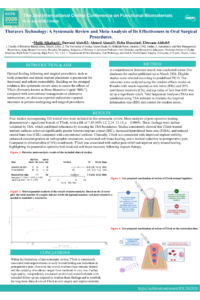
Objective: This systematic review aims to synthesize the current evidence from preclinical and clinical studies on the application of Theravex Technology (TTech) (formerly known as bone bioactive liquid “BBL”) in improving postoperative outcomes in dentistry.
Methods: A comprehensive literature search was conducted across PubMed, Scopus, ScienceDirect, Cochrane Library, and Google Scholar for studies published up to March 2026. Eligible studies were selected according to predefined PICOS criteria. The outcomes were analyzed using the random-effects model on Rstudio with results reported as risk ratios (RRs) and 95% confidence intervals (CIs), and a p-value of less than 0.05 was set as a significant result. Trial Sequential Analysis (TSA) was conducted using TSA software to evaluate the required information size (RIS) and control for random errors.
Results: Four studies encompassing 526 treated sites were included in this review. Meta-analysis results of postoperative healing demonstrated a significant benefit of TTech, with a RR of 7.19 (95% CI: 2.24; 23.13; p = 0.0009). These findings were further validated by TSA, which confirmed robustness by crossing the TSA boundaries, but the cumulative number of subjects did not reach the RIS. Narrative synthesis results from a preclinical study consistently showed that BBL-treated implant surfaces achieved significantly greater bone-to-implant contact, increased inter-thread bone area, and reduced crestal bone loss compared with conventional surfaces. Clinically, TTech was associated with improved implant stability, enhanced osseointegration on CBCT, and accelerated soft tissue healing. Compared to chlorhexidine mouthwash, TTech promoted earlier pain relief and superior early wound healing, highlighting its potential to optimize both hard and soft tissue recovery following implant therapy.
Conclusion: Current evidence positions TTech as a promising bioactive agent in dentistry, with beneficial effects on osseointegration, soft tissue healing, and postoperative pain reduction. Further long-term clinical studies are crucial to confirm its sustained effectiveness and establish standardized treatment protocols.
Keywords
Bone Bioactive Materials
Bone Bioactive Liquid
Soft Tissue Healing
Bone Remodeling
Meta-Analysis
Trial Sequential Analysis.
Poster
Poster_2026_MDPI - M.A..pdf
Microenvironment-Responsive Polyethylene Glycol-Based Hydrogel Scaffolds for Vascularized Tissue Engineering.
ASSESSMENT OF IN VITRO DEGRADATION OF 3D BIOREABSORBABLE SCAFFOLDS FOR BONE REGENERATION