Event submissions
Published
This submission belongs to the session S4. Climatology of the event The 8th International Electronic Conference on Atmospheric Sciences
Published date
09 Oct, 2026
Academic Editor
'%3e%3cpath%20d='M12.6657%2010.9104C12.4185%2010.325%2012.0599%209.79327%2011.6097%209.34482C11.1609%208.89508%2010.6293%208.5365%2010.0442%208.28888C10.0389%208.28626%2010.0337%208.28495%2010.0285%208.28233C10.8446%207.69279%2011.3752%206.73249%2011.3752%205.64904C11.3752%203.8542%209.92103%202.39999%208.1262%202.39999C6.33136%202.39999%204.87715%203.8542%204.87715%205.64904C4.87715%206.73249%205.40774%207.69279%206.22393%208.28364C6.21869%208.28626%206.21345%208.28757%206.20821%208.29019C5.62129%208.5378%205.09463%208.89284%204.64265%209.34613C4.1929%209.79493%203.83432%2010.3266%203.58671%2010.9117C3.34345%2011.4845%203.21226%2012.0987%203.20023%2012.7209C3.19988%2012.7349%203.20233%2012.7488%203.20744%2012.7619C3.21255%2012.7749%203.22022%2012.7867%203.22998%2012.7968C3.23975%2012.8068%203.25142%2012.8147%203.26431%2012.8202C3.2772%2012.8256%203.29105%2012.8284%203.30504%2012.8284H4.09109C4.14874%2012.8284%204.19459%2012.7825%204.1959%2012.7262C4.2221%2011.7148%204.62823%2010.7676%205.34617%2010.0497C6.08899%209.30683%207.0755%208.89808%208.1262%208.89808C9.17689%208.89808%2010.1634%209.30683%2010.9062%2010.0497C11.6242%2010.7676%2012.0303%2011.7148%2012.0565%2012.7262C12.0578%2012.7838%2012.1037%2012.8284%2012.1613%2012.8284H12.9474C12.9613%2012.8284%2012.9752%2012.8256%2012.9881%2012.8202C13.001%2012.8147%2013.0126%2012.8068%2013.0224%2012.7968C13.0322%2012.7867%2013.0398%2012.7749%2013.0449%2012.7619C13.0501%2012.7488%2013.0525%2012.7349%2013.0522%2012.7209C13.0391%2012.0947%2012.9094%2011.4855%2012.6657%2010.9104ZM8.1262%207.9024C7.52486%207.9024%206.9589%207.6679%206.53312%207.24211C6.10733%206.81633%205.87283%206.25037%205.87283%205.64904C5.87283%205.0477%206.10733%204.48174%206.53312%204.05596C6.9589%203.63018%207.52486%203.39567%208.1262%203.39567C8.72753%203.39567%209.29349%203.63018%209.71927%204.05596C10.1451%204.48174%2010.3796%205.0477%2010.3796%205.64904C10.3796%206.25037%2010.1451%206.81633%209.71927%207.24211C9.29349%207.6679%208.72753%207.9024%208.1262%207.9024Z'%20fill='%235D1EE1'/%3e%3c/g%3e%3c/svg%3e) Eugene Rozanov
Eugene RozanovCitation
Suhail Lone, Gh Jeelani, Hydroclimatic changes across the Himalayan region under future climate scenarios, in Proceedings of The 8th International Electronic Conference on Atmospheric Sciences, 14 October–16 October 2026, MDPI: Basel, Switzerland
Share
Email
Facebook
Twitter
LinkedIn
Hydroclimatic changes across the Himalayan region under future climate scenarios
'%3e%3cpath%20d='M12.6647%2010.9104C12.4176%2010.325%2012.0589%209.7933%2011.6088%209.34485C11.16%208.89511%2010.6283%208.53653%2010.0432%208.28891C10.038%208.28629%2010.0327%208.28498%2010.0275%208.28236C10.8437%207.69282%2011.3743%206.73252%2011.3743%205.64907C11.3743%203.85423%209.92005%202.40002%208.12522%202.40002C6.33038%202.40002%204.87618%203.85423%204.87618%205.64907C4.87618%206.73252%205.40677%207.69282%206.22296%208.28367C6.21772%208.28629%206.21248%208.2876%206.20724%208.29022C5.62031%208.53783%205.09365%208.89287%204.64167%209.34616C4.19192%209.79496%203.83334%2010.3266%203.58573%2010.9117C3.34247%2011.4846%203.21128%2012.0987%203.19925%2012.721C3.1989%2012.735%203.20135%2012.7489%203.20646%2012.7619C3.21157%2012.7749%203.21924%2012.7868%203.22901%2012.7968C3.23877%2012.8068%203.25045%2012.8148%203.26334%2012.8202C3.27623%2012.8256%203.29007%2012.8284%203.30406%2012.8284H4.09012C4.14776%2012.8284%204.19362%2012.7825%204.19493%2012.7262C4.22113%2011.7148%204.62726%2010.7676%205.34519%2010.0497C6.08802%209.30686%207.07452%208.89811%208.12522%208.89811C9.17592%208.89811%2010.1624%209.30686%2010.9052%2010.0497C11.6232%2010.7676%2012.0293%2011.7148%2012.0555%2012.7262C12.0568%2012.7839%2012.1027%2012.8284%2012.1603%2012.8284H12.9464C12.9604%2012.8284%2012.9742%2012.8256%2012.9871%2012.8202C13%2012.8148%2013.0117%2012.8068%2013.0214%2012.7968C13.0312%2012.7868%2013.0389%2012.7749%2013.044%2012.7619C13.0491%2012.7489%2013.0515%2012.735%2013.0512%2012.721C13.0381%2012.0947%2012.9084%2011.4856%2012.6647%2010.9104ZM8.12522%207.90243C7.52388%207.90243%206.95792%207.66793%206.53214%207.24215C6.10636%206.81636%205.87185%206.2504%205.87185%205.64907C5.87185%205.04773%206.10636%204.48177%206.53214%204.05599C6.95792%203.63021%207.52388%203.3957%208.12522%203.3957C8.72655%203.3957%209.29252%203.63021%209.7183%204.05599C10.1441%204.48177%2010.3786%205.04773%2010.3786%205.64907C10.3786%206.2504%2010.1441%206.81636%209.7183%207.24215C9.29252%207.66793%208.72655%207.90243%208.12522%207.90243Z'%20fill='%235D1EE1'/%3e%3c/g%3e%3c/svg%3e)
Suhail Lone 1
Gh Jeelani 1
1. Department of Geology, University of Kashmir, Srinagar-190006 Union territory of Jammu and Kashmir, India
Abstract
The Himalaya represents one of the most climate-sensitive mountain systems on Earth and plays an important role in regulating regional water resources, atmospheric circulation and cryospheric processes across South Asia. Recent warming across the Himalayan region has exceeded the global average, accelerating glacier retreat, reducing snow persistence and increasing the frequency of hydroclimatic extremes. These changes are expected to significantly affect regional hydrology, ecosystem stability and water availability for nearly two billion people dependent on Himalayan river systems. Our study investigates future hydroclimatic changes across the Himalaya using multi-model ensemble simulations from CMIP6 under SSP2-4.5 and SSP5-8.5 scenarios. Historical observations and future climate projections were analyzed to evaluate changes in temperature, precipitation, snow cover and hydroclimatic extremes throughout the 21st century. Results indicate a statistically significant warming trend across the region, with projected mean annual temperature increases of approximately 2.0-3.0 °C under all scenarios relative to the 1981-2020 baseline. Enhanced warming is projected at higher elevations, particularly during winter and pre-monsoon seasons. Precipitation projections reveal increasing monsoonal variability and intensification of extreme rainfall events across central and eastern Himalaya, while western Himalayan sectors exhibit stronger interannual variability in winter precipitation. Snow cover duration is projected to decline by nearly 15-40% across mid-elevation zones under high-emission scenarios, resulting in earlier snowmelt onset and altered seasonal runoff generation. Model simulations further indicate increased frequency of heatwaves, extreme precipitation and compound hydroclimatic hazards, including flash floods, landslides and glacial lake outburst floods. Hydroclimatic responses showed spatial variability due to differences in elevation, topography, monsoonal influence and cryospheric conditions. Despite uncertainties associated with limited high-altitude observations and representation of complex mountain processes, the study demonstrates that continued warming will substantially reshape Himalayan climate and hydrological systems, emphasizing the need for climate-resilient adaptation and integrated mountain monitoring strategies.
Keywords
Himalaya
Climatology
Hydroclimate
CMIP6
Cryosphere
Poster
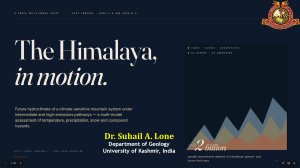
Hydroclimatic changes across the Himalayan region_Sciforum-190976.pdf
The Climatological and Dynamic Character of Simultaneously Occurring Blocking Events
AI-Based Ocean Climate Risk Diagnostics Using Longitudinal Ocean Health Index Data