Event submissions
Published
This submission belongs to the session S1. Climate Change Impact and Marine Pollution of the event The 1st International Online Conference on Fishes
Published date
03 Nov, 2026
Academic Editor
 Pedro Morais
Citation
Gazee Owais Yousuf, Impact of Aflatoxin B1 on Growth, Hematological Indices, Oxidative Stress, and Gill Surface Ultrastructure in Channa punctata, in Proceedings of The 1st International Online Conference on Fishes, 5 November–6 November 2026, MDPI: Basel, Switzerland
Share
Email
Facebook
Twitter
LinkedIn
Impact of Aflatoxin B1 on Growth, Hematological Indices, Oxidative Stress, and Gill Surface Ultrastructure in Channa punctata

Gazee Owais Yousuf 1
1. Department of Zoology, Aligarh Muslim University, Aligarh, 202002, India
Abstract
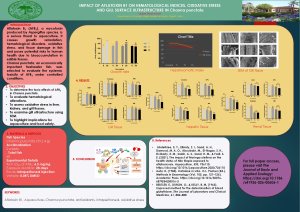
Aflatoxin contamination is a global concern that imperils food security and aquaculture. This study was focused on evaluating the toxicological impact of aflatoxin B1 on fish growth, hematological parameters, and oxidative stress markers in the liver, kidneys, and gill tissues of Channa punctata. Additionally, a superficial examination of the gill tissue was conducted using scanning electron microscopy (SEM). After two weeks of acclimatization, following LD50 estimation (6.5 mg/kg), the sublethal dosages (1/10, 1/20, and 1/40 of LD50) were calculated. The fish specimens (70 ± 4 grams) were then subjected to three sublethal doses of aflatoxin B1 (0.0114 ml, 0.0228 ml, and 0.0455 ml), with one group serving as a control. The toxin was first dissolved in a medium of DMSO (dimethyl sulfoxide) to create a stock solution; each dose had a final volume of 0.5 mL (toxin and DMSO), ready to be administered via the intraperitoneal cavity. After 28 days of exposure, significant alterations were observed in the erythrocyte and leucocyte counts, hematocrit, hemoglobin concentration, and derived erythrocytic indices. Moreover, oxidative stress markers revealed dose-dependent increases in lipid peroxidation alongside significant reductions in antioxidant enzyme (superoxide dismutase, catalase, glutathione peroxidase, etc.) levels in liver, kidney, and gill tissues. SEM revealed gill surface deformities as the toxin concentration was increased. The observed deviations of these parameters from physiological levels were evident, and it was concluded that AFB1 contamination is a serious matter of concern, raising food safety concerns for humans who consume these fish. It emphasizes the critical necessity for strategies to prevent or mitigate aflatoxin effects.
Keywords
Oxidative stress
hepatosomatic index
Aflatoxin B1
Scanning Electron Microscopy
Channa punctata
Poster
AFB1_Conference_Poster_Editable_FirstAuthorOnly.pdf
Integrating autonomous weighing, declaration and traceability workflows in small-scale fisheries: toward a hybrid declarative-observational compliance architecture
Coupling Aquaculture Effluent Bioremediation with Chlorella vulgaris Cultivation for Sustainable Bioenergy-Oriented Biomass Production