Event submissions
EventsThe 1st International Electronic Conference on Forests — Forests for a Better Future: Sustainability, Innovation, Interdisciplinarity
Published

This submission belongs to the session S8. Posters of the event The 1st International Electronic Conference on Forests — Forests for a Better Future: Sustainability, Innovation, Interdisciplinarity
Published date
10 Nov, 2020
Citation
David L. Nicholls, Matthew S. Bumgardner, Sustainable Practices in Furniture Design: Can Green Practices Influence Competitiveness?, in Proceedings of The 1st International Electronic Conference on Forests — Forests for a Better Future: Sustainability, Innovation, Interdisciplinarity, 15 November–30 November 2020, MDPI: Basel, Switzerland, doi: 10.3390/IECF2020-07770
Share
Email
Facebook
Twitter
LinkedIn
Sustainable Practices in Furniture Design: Can Green Practices Influence Competitiveness?

David L. Nicholls 1
'%3e%3cpath%20d='M12.6647%2010.9104C12.4176%2010.325%2012.0589%209.7933%2011.6088%209.34485C11.16%208.89511%2010.6283%208.53653%2010.0432%208.28891C10.038%208.28629%2010.0327%208.28498%2010.0275%208.28236C10.8437%207.69282%2011.3743%206.73252%2011.3743%205.64907C11.3743%203.85423%209.92005%202.40002%208.12522%202.40002C6.33038%202.40002%204.87618%203.85423%204.87618%205.64907C4.87618%206.73252%205.40677%207.69282%206.22296%208.28367C6.21772%208.28629%206.21248%208.2876%206.20724%208.29022C5.62031%208.53783%205.09365%208.89287%204.64167%209.34616C4.19192%209.79496%203.83334%2010.3266%203.58573%2010.9117C3.34247%2011.4846%203.21128%2012.0987%203.19925%2012.721C3.1989%2012.735%203.20135%2012.7489%203.20646%2012.7619C3.21157%2012.7749%203.21924%2012.7868%203.22901%2012.7968C3.23877%2012.8068%203.25045%2012.8148%203.26334%2012.8202C3.27623%2012.8256%203.29007%2012.8284%203.30406%2012.8284H4.09012C4.14776%2012.8284%204.19362%2012.7825%204.19493%2012.7262C4.22113%2011.7148%204.62726%2010.7676%205.34519%2010.0497C6.08802%209.30686%207.07452%208.89811%208.12522%208.89811C9.17592%208.89811%2010.1624%209.30686%2010.9052%2010.0497C11.6232%2010.7676%2012.0293%2011.7148%2012.0555%2012.7262C12.0568%2012.7839%2012.1027%2012.8284%2012.1603%2012.8284H12.9464C12.9604%2012.8284%2012.9742%2012.8256%2012.9871%2012.8202C13%2012.8148%2013.0117%2012.8068%2013.0214%2012.7968C13.0312%2012.7868%2013.0389%2012.7749%2013.044%2012.7619C13.0491%2012.7489%2013.0515%2012.735%2013.0512%2012.721C13.0381%2012.0947%2012.9084%2011.4856%2012.6647%2010.9104ZM8.12522%207.90243C7.52388%207.90243%206.95792%207.66793%206.53214%207.24215C6.10636%206.81636%205.87185%206.2504%205.87185%205.64907C5.87185%205.04773%206.10636%204.48177%206.53214%204.05599C6.95792%203.63021%207.52388%203.3957%208.12522%203.3957C8.72655%203.3957%209.29252%203.63021%209.7183%204.05599C10.1441%204.48177%2010.3786%205.04773%2010.3786%205.64907C10.3786%206.2504%2010.1441%206.81636%209.7183%207.24215C9.29252%207.66793%208.72655%207.90243%208.12522%207.90243Z'%20fill='%235D1EE1'/%3e%3c/g%3e%3c/svg%3e)
Matthew S. Bumgardner 2
1. USDA Forest Service, Pacific Northwest Research Station, Juneau, Alaska, USA
2. USDA Forest Service, Northern Research Station, Delaware, Ohio, USA
Abstract
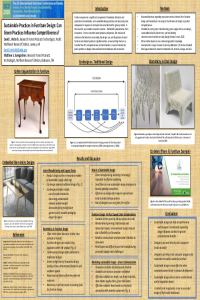
Furniture represents a significant component of hardwood utilization and production internationally, and sustainable design practices are becoming more widespread in response to increased consumer demand for green products. In this research, we consider ecosystem services - the benefits people derive from ecosystems - from a secondary wood products perspective. We review and synthesize the literature surrounding the design, use, and disposition of wood furniture and related products in global markets. We consider emerging and innovative design strategies for wood (for example in biomimicry) as well as topics that have been gaining traction for several years (i.e. green supply chain management, eco/environmental labels, and willingness to pay for green products). An overarching theme is to consider how firm competitiveness can be influenced, or even enhanced, by green practices in design and associated communications with consumers. With a trend toward increasing customization in the secondary wood product marketplace, the role of design might be changing. However, design remains a critical product development function in modern markets, and designers are well-positioned to influence sustainable material utilization as well as improve product use and lifespan. The role of product design is expected to remain significant as consumers value green practices and have more product choices in an increasingly customized economy.
Keywords
green design
sustainability
ecosystem services
biomimicry
eco-labelling
supply chain management
Manuscript
Bumgardner_Nicholls_furn ecodesign__30Oct2020_to Forests conf.pdf
Poster
Bumgardner_Nicholls_furn ecodesign__30Oct2020_to Forests conf.pdf
Histology of Austrocedrus chilensis roots during infection by Phytophthora austrocedri
Initiation of embryogenic suspensor masses in Austrocedrus chilensis, a vulnerable conifer