Event submissions
Published

This submission belongs to the session A. Plant Protection, Response to stress and Climate Change of the event The 1st International Electronic Conference on Plant Science
Published date
01 Dec, 2020
Citation
Loredana Ciarmiello, Petronia Carillo, Pasqualina Woodrow, Plant Molecular Responses to Salt Stress, in Proceedings of The 1st International Electronic Conference on Plant Science, 1 December–15 December 2020, MDPI: Basel, Switzerland, doi: 10.3390/IECPS2020-08642
Share
Email
Facebook
Twitter
LinkedIn
Plant Molecular Responses to Salt Stress

Loredana Ciarmiello 1

Petronia Carillo 2

Pasqualina Woodrow 2
1. Università degli Studi della Campania "Luigi Vanvitelli"
2. Università degli Studi della Campania "Luigi Vanvitelli". Dipartimento di Scienze e Tecnologie Ambientali, Biologiche e Farmaceutiche, via A. Vivaldi, 43-8100 Caserta.
Abstract
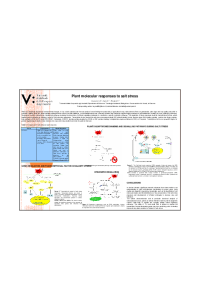
Plants are frequenly exposed to environmental changes. In fact, abiotic stresses are the most serious
factors limiting the productivity of agricultural crops, with adverse effects on germination, plant
vigor and crop quality and yield. In particular, salinity stress is a global problem widespread that affects over 800 million ha. In the Mediterranean area, seawater intrusion into freshwater aquifers highly contribute to soil salinisation, resulting in crops productivity decrease. Responses to abiotic stresses are complicated pathways involving the interaction of different signalling molecules to coordinate a specific metabolic pathways. The regulation of these responses involves transcriptional factors, which regulate gene expression by binding to specific DNA promoter sequences. Transcription factors involved in salt stress responses include DRE-related binding factors, leucine zipper DNA binding proteins, putative zinc finger proteins, myb proteins, bZIP / HD-ZIPs, and AP2 / EREBP. Particularly, AP2 / ERF domain proteins include the DREB or CBF proteins binding to dehydration response elements (DRE) or C-repeats. Transcription factors are powerful targets for genetic engineering in abiotic stress resistance in crops and many studies have been focused on this topic.
Keywords
Transcriptional factors
genes activation
salt stress
Manuscript
sciforum_039692-done.pdf
Poster
poster_Ciarmiello et al.pdf
Remodeling of carbon and nitrogen metabolites in durum wheat: a simple response to complex stimuli
Comparative and functional screening of three species traditionally used as antidepressants: Valeriana officinalis L., Valeriana jatamansi Jones ex Roxb. and Nardostachys jatamansi (D.Don) DC.