Event submissions
Published

This submission belongs to the session S7. Poster of the event 1st International Electronic Conference on Toxins
Published date
13 Jan, 2021
Citation
Adolfo Rafael de Roodt, Marcela Alejandra Desio, Laura Cecilia Lanari, Néstor Rubén Lago, Fernando Morón Goñi, Daniel Dozoretz, Leandro Calderón, Pablo Regner, Vanessa Costa de Oliveira, Carlos Fabián Damin, Paraspecific neutralization of the venom form adults and young Crotalus atrox by paraspecific South American Antivenoms., in Proceedings of 1st International Electronic Conference on Toxins, 16 January–31 January 2021, MDPI: Basel, Switzerland, doi: 10.3390/IECT2021-09120
Share
Email
Facebook
Twitter
LinkedIn
Paraspecific neutralization of the venom form adults and young Crotalus atrox by paraspecific South American Antivenoms.

Adolfo Rafael de Roodt 1,2
'%3e%3cpath%20d='M12.6647%2010.9104C12.4176%2010.325%2012.0589%209.7933%2011.6088%209.34485C11.16%208.89511%2010.6283%208.53653%2010.0432%208.28891C10.038%208.28629%2010.0327%208.28498%2010.0275%208.28236C10.8437%207.69282%2011.3743%206.73252%2011.3743%205.64907C11.3743%203.85423%209.92005%202.40002%208.12522%202.40002C6.33038%202.40002%204.87618%203.85423%204.87618%205.64907C4.87618%206.73252%205.40677%207.69282%206.22296%208.28367C6.21772%208.28629%206.21248%208.2876%206.20724%208.29022C5.62031%208.53783%205.09365%208.89287%204.64167%209.34616C4.19192%209.79496%203.83334%2010.3266%203.58573%2010.9117C3.34247%2011.4846%203.21128%2012.0987%203.19925%2012.721C3.1989%2012.735%203.20135%2012.7489%203.20646%2012.7619C3.21157%2012.7749%203.21924%2012.7868%203.22901%2012.7968C3.23877%2012.8068%203.25045%2012.8148%203.26334%2012.8202C3.27623%2012.8256%203.29007%2012.8284%203.30406%2012.8284H4.09012C4.14776%2012.8284%204.19362%2012.7825%204.19493%2012.7262C4.22113%2011.7148%204.62726%2010.7676%205.34519%2010.0497C6.08802%209.30686%207.07452%208.89811%208.12522%208.89811C9.17592%208.89811%2010.1624%209.30686%2010.9052%2010.0497C11.6232%2010.7676%2012.0293%2011.7148%2012.0555%2012.7262C12.0568%2012.7839%2012.1027%2012.8284%2012.1603%2012.8284H12.9464C12.9604%2012.8284%2012.9742%2012.8256%2012.9871%2012.8202C13%2012.8148%2013.0117%2012.8068%2013.0214%2012.7968C13.0312%2012.7868%2013.0389%2012.7749%2013.044%2012.7619C13.0491%2012.7489%2013.0515%2012.735%2013.0512%2012.721C13.0381%2012.0947%2012.9084%2011.4856%2012.6647%2010.9104ZM8.12522%207.90243C7.52388%207.90243%206.95792%207.66793%206.53214%207.24215C6.10636%206.81636%205.87185%206.2504%205.87185%205.64907C5.87185%205.04773%206.10636%204.48177%206.53214%204.05599C6.95792%203.63021%207.52388%203.3957%208.12522%203.3957C8.72655%203.3957%209.29252%203.63021%209.7183%204.05599C10.1441%204.48177%2010.3786%205.04773%2010.3786%205.64907C10.3786%206.2504%2010.1441%206.81636%209.7183%207.24215C9.29252%207.66793%208.72655%207.90243%208.12522%207.90243Z'%20fill='%235D1EE1'/%3e%3c/g%3e%3c/svg%3e)
Marcela Alejandra Desio 1
Laura Cecilia Lanari 1
Néstor Rubén Lago 3
Fernando Morón Goñi 2
Daniel Dozoretz 2
Leandro Calderón 4
Pablo Regner 2
Vanessa Costa de Oliveira 2
Carlos Fabián Damin 2
1. Área Investigación y Desarrollo – Venenos, Instituto Nacional de Producción de Biológicos, ANLIS “Dr. Carlos G. Malbrán”, Ministerio de Salud y Desarrollo Social, Argentina.
2. Primera Cátedra de Toxicología, Facultad de Medicina, Universidad de Buenos Aires, Argentina.
3. Centro de Patología Experimental y Aplicada, Facultad de Medicina, Universidad de Buenos Aires, Argentina.
4. ANLIS “Dr. Carlos G. Malbrán”, Ministerio de Salud y Desarrollo Social, Argentina.
Abstract
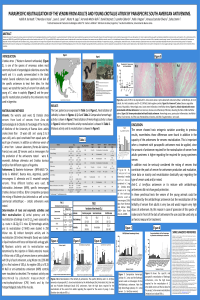
Crotalus atrox is one of the species of venomous snakes most commonly found in herpetological collections around the world and it is usually commercialized in the black market. Several collections have specimens but lack of the specific antivenom. We tested the toxicity of venom of adults and young snakes (2 to 3 years old) specimens of C. atrox in captivity and the para-specific neutralization provided by the antivenoms most used in Argentina. The i.p. lethal potency of the venoms were 100(95-105) μg and 43(42-45) μg20g mouse and the indirect hemolytic activity was 7.9 (6.7-9.2) μg and 9.0(8.3-9.9) for adults and juvenile venoms. Despite the adult´s venoms lower lethal potency, these venoms were more difficult to neutralize, around 1.5 ml of antibothropic Antivenom (AB) were necessaries to neutralize 1 mg of venom in contrast to 0.54 ml required to neutralize young´s venoms. The neutralization by the Anticrotalic (AC) antivenom was despicable. The dose of AB required for the neutralization 5.0 LD50 of young snakes was in the range of those required for the neutralization of the specific venoms, nevertheless the dose required to neutralize venom from adults was 6 fold higher. The experiments using 2LD50 as challenge dose, showed similar results. The indirect hemolysis caused by both venoms was similarly neutralized by AB (p<0.05) while the AC did not show neutralizing activity. The myotoxicity determined by the increase of creatinquinase or by histopathology, was neutralized by both antivenoms, possibly due to the presence of myotoxins like K49 phospholipases present in this venom. Although the paraspecificity of AB has a potential use as treatment, especially in young snakes bites, the doses required in adult attacks are high. Despite AB seems to be useful for emergencies, these results suggest advantages in using specific antivenom for the treatment of these snakebites.
Keywords
Crotalus atrox
venom
antivenom
antibothropic
anticrotalic
toxicity
treatment
Manuscript
Poster Crotalus atrox MDPI 01-2021 final1.pdf
Poster
041146.pdf
Use of neostigmine - atropine plus antivenom in the experimental envenomation by Micrurus venom. Preliminary results.
Analogous venom peptides acting on different pathways: a study of Bicarinalin and U9-MYRTX-Tb1a from T. bicarinatum venom