Event submissions
Published

This submission belongs to the session S7. Poster of the event 1st International Electronic Conference on Toxins
Published date
14 Jan, 2021
Citation
Andrea Boente-Juncal, Sandra Raposo-García, Celia Costas, M Carmen Louzao, Paz Otero, Carmen Vale, Luis Botana, Effects of synthetic ciguatoxin CTX3C and 44-methylgambierone (MTX3) on voltage-gated sodium channels and their in vivo toxicity, in Proceedings of 1st International Electronic Conference on Toxins, 16 January–31 January 2021, MDPI: Basel, Switzerland, doi: 10.3390/IECT2021-09155
Share
Email
Facebook
Twitter
LinkedIn
Effects of synthetic ciguatoxin CTX3C and 44-methylgambierone (MTX3) on voltage-gated sodium channels and their in vivo toxicity
'%3e%3cpath%20d='M12.6647%2010.9104C12.4176%2010.325%2012.0589%209.7933%2011.6088%209.34485C11.16%208.89511%2010.6283%208.53653%2010.0432%208.28891C10.038%208.28629%2010.0327%208.28498%2010.0275%208.28236C10.8437%207.69282%2011.3743%206.73252%2011.3743%205.64907C11.3743%203.85423%209.92005%202.40002%208.12522%202.40002C6.33038%202.40002%204.87618%203.85423%204.87618%205.64907C4.87618%206.73252%205.40677%207.69282%206.22296%208.28367C6.21772%208.28629%206.21248%208.2876%206.20724%208.29022C5.62031%208.53783%205.09365%208.89287%204.64167%209.34616C4.19192%209.79496%203.83334%2010.3266%203.58573%2010.9117C3.34247%2011.4846%203.21128%2012.0987%203.19925%2012.721C3.1989%2012.735%203.20135%2012.7489%203.20646%2012.7619C3.21157%2012.7749%203.21924%2012.7868%203.22901%2012.7968C3.23877%2012.8068%203.25045%2012.8148%203.26334%2012.8202C3.27623%2012.8256%203.29007%2012.8284%203.30406%2012.8284H4.09012C4.14776%2012.8284%204.19362%2012.7825%204.19493%2012.7262C4.22113%2011.7148%204.62726%2010.7676%205.34519%2010.0497C6.08802%209.30686%207.07452%208.89811%208.12522%208.89811C9.17592%208.89811%2010.1624%209.30686%2010.9052%2010.0497C11.6232%2010.7676%2012.0293%2011.7148%2012.0555%2012.7262C12.0568%2012.7839%2012.1027%2012.8284%2012.1603%2012.8284H12.9464C12.9604%2012.8284%2012.9742%2012.8256%2012.9871%2012.8202C13%2012.8148%2013.0117%2012.8068%2013.0214%2012.7968C13.0312%2012.7868%2013.0389%2012.7749%2013.044%2012.7619C13.0491%2012.7489%2013.0515%2012.735%2013.0512%2012.721C13.0381%2012.0947%2012.9084%2011.4856%2012.6647%2010.9104ZM8.12522%207.90243C7.52388%207.90243%206.95792%207.66793%206.53214%207.24215C6.10636%206.81636%205.87185%206.2504%205.87185%205.64907C5.87185%205.04773%206.10636%204.48177%206.53214%204.05599C6.95792%203.63021%207.52388%203.3957%208.12522%203.3957C8.72655%203.3957%209.29252%203.63021%209.7183%204.05599C10.1441%204.48177%2010.3786%205.04773%2010.3786%205.64907C10.3786%206.2504%2010.1441%206.81636%209.7183%207.24215C9.29252%207.66793%208.72655%207.90243%208.12522%207.90243Z'%20fill='%235D1EE1'/%3e%3c/g%3e%3c/svg%3e)
Andrea Boente-Juncal 1
Sandra Raposo-García 1
Celia Costas 1
M Carmen Louzao 1

Paz Otero 1
Carmen Vale 2

Luis Botana 1
1. Departamento de Farmacología, Farmacia y Tecnología Farmacéutica, Facultad de Veterinaria, Universidad de Santiago de Compostela, Lugo, Spain.
2. Departamento de Farmacología, Farmacia y Tecnología Farmacéutica, Facultad de Veterinaria, Universidad de Santiago de Compostela, Lugo, Spain
Abstract
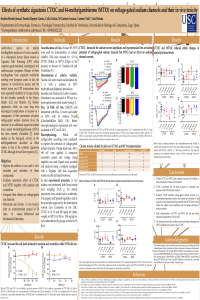
Gambierdiscus species are marine dinoflagellates producers of toxins causative of a widespread human illness known as Ciguatera Fish Poisoning (CFP) which comprises gastrointestinal, neurological, and cardiovascular symptoms. Blooms of these dinoflagellates have expanded worldwide reaching even European coasts. In fact, the presence of Gambierdiscus species and the related toxins and CFP intoxications have been repetitively identified in Europe during the last decades, especially in the Canary Islands [1,2] and Madeira [3]. Besides ciguatoxins, which can cause long term neurological sequela in humans as a consequence of their permanent activation voltage-gated sodium channels [4-6], the structure of an additional ciguatoxin-related toxin named 44-methylgambierone (MTX3) has been recently elucidated [7]. Initial studies on the biological activity of 44-methylgambierone described an effect similar to that of the synthetic ciguatoxin CTX3C although of much lower potency [7]. With the aim of further explore the relative toxicities and activities of these compounds additional experiments were performed. First, the neurotoxic effect of CTX3C and MTX3 was evaluated using a human neuronal cell model based on the incubation of SH-SY5Y with ouabain and veratridine together with ciguatoxin or ciguatoxin-like compounds to evaluate their in vitro toxic potency [8]. Our data illustrate that CTX3C aggravated the ouabain and veratridine neurotoxicity but 44-methylgambierone did not resembled this effect. Additionally, while CTX3C at nanomolar concentrations hyperpolarized the activation of voltage-gated sodium channels and decreased current amplitude, 44-methylgambierone did not affect sodium currents. Moreover, oral chronic toxicity studies using daily CTX3 concentrations of 10, 32 and 100 ng/kg or MTX3 at 550 or 1760 ng/kg and an observation period of 28 days did not shown behavioral or biochemical alterations during treatment. Based on in vitro and in vivo results, the ciguatoxin-related compound 44-methylgambierone, recently identified in Gambierdiscus extracts, is less potent than CTX3C and thus indicates that the effect on human CFP symptoms may also be minor.
References
- Estevez, P.; Sibat, M.; Leão-Martins, J.M.; Tudó, A.; Rambla-Alegre, M.; Aligizaki, K.; Diogène, J.; Gago-Martinez, A.; Hess, P. Use of Mass Spectrometry to Determine the Diversity of Toxins Produced by Gambierdiscus and Fukuyoa Species from Balearic Islands and Crete (Mediterranean Sea) and the Canary Islands (Northeast Atlantic). Toxins 2020, 12.
- Perez-Arellano, J.L.; Luzardo, O.P.; Perez Brito, A.; Hernandez Cabrera, M.; Zumbado, M.; Carranza, C.; Angel-Moreno, A.; Dickey, R.W.; Boada, L.D. Ciguatera fish poisoning, Canary Islands. Emerg Infect Dis 2005, 11, 1981-1982.
- Otero, P.; Pérez, S.; Alfonso, A.; Vale, C.; Rodríguez, P.; Gouveia, N.N.; Gouveia, N.; Delgado, J.; Vale, P.; Hirama, M., et al. First toxin profile of ciguateric fish in Madeira Arquipelago (Europe). Analytical chemistry 2010, 82, 6032-6039.
- Martín, V.; Vale, C.; Hirama, M.; Yamashita, S.; Rubiolo, J.A.; Vieytes, M.R.; Botana, L.M. Synthetic ciguatoxin CTX 3C induces a rapid imbalance in neuronal excitability. Chemical research in toxicology 2015, 28, 1095-1108.
- Martín, V.; Vale, C.; Rubiolo, J.A.; Roel, M.; Hirama, M.; Yamashita, S.; Vieytes, M.R.; Botana, L.M. Chronic ciguatoxin treatment induces synaptic scaling through voltage gated sodium channels in cortical neurons. Chemical research in toxicology 2015, 28, 1109-1119.
- Vale, C.; Antero, A.; Martín, V. Pharmacology of ciguatoxins. Phycotoxins, Chemistry and Biochemistry; Alfonso, LBAA, Ed.; Wiley Blackwell: Hoboken, NJ, USA 2015, 23-48.
- Boente-Juncal, A.; Álvarez, M.; Antelo, Á.; Rodríguez, I.; Calabro, K.; Vale, C.; Thomas, O.P.; Botana, L.M. Structure Elucidation and Biological Evaluation of Maitotoxin-3, a Homologue of Gambierone, from Gambierdiscus belizeanus. Toxins 2019, 11.
- Coccini, T.; Caloni, F.; De Simone, U. Human neuronal cell based assay: A new in vitro model for toxicity evaluation of ciguatoxin. Environmental toxicology and pharmacology 2017, 52, 200-213.
Keywords
ciguatoxin
44-methylgambierone (MTX3)
ciguatera fish poisoning
neurotoxicity
voltage-gated sodium channel
chronic toxicity.
Manuscript
Effects of synthetic ciguatoxin CTX3C and 44-methylgambierone (MTX3) on voltage-gated sodium channels and their in.pdf
Poster
Effects of synthetic ciguatoxin CTX3C and 44-methylgambierone (MTX3) on voltage-gated sodium channels and their in.pdf
Acute and chronic in vivo toxicity of the marine toxin palytoxin
Oral chronic toxicity of the marine toxin tetrodotoxin