Event submissions
Published

This submission belongs to the session S7. Poster of the event 1st International Electronic Conference on Toxins
Published date
14 Jan, 2021
Citation
Begoña Ben-Gigirey, María V. Mena, Christelle Mazuet, Pilar Riobó, Francisco Rodríguez, Paretic syndrome in gulls from southern Portugal: searching for the causative agent, in Proceedings of 1st International Electronic Conference on Toxins, 16 January–31 January 2021, MDPI: Basel, Switzerland, doi: 10.3390/IECT2021-09167
Share
Email
Facebook
Twitter
LinkedIn
Paretic syndrome in gulls from southern Portugal: searching for the causative agent
'%3e%3cpath%20d='M12.6647%2010.9104C12.4176%2010.325%2012.0589%209.7933%2011.6088%209.34485C11.16%208.89511%2010.6283%208.53653%2010.0432%208.28891C10.038%208.28629%2010.0327%208.28498%2010.0275%208.28236C10.8437%207.69282%2011.3743%206.73252%2011.3743%205.64907C11.3743%203.85423%209.92005%202.40002%208.12522%202.40002C6.33038%202.40002%204.87618%203.85423%204.87618%205.64907C4.87618%206.73252%205.40677%207.69282%206.22296%208.28367C6.21772%208.28629%206.21248%208.2876%206.20724%208.29022C5.62031%208.53783%205.09365%208.89287%204.64167%209.34616C4.19192%209.79496%203.83334%2010.3266%203.58573%2010.9117C3.34247%2011.4846%203.21128%2012.0987%203.19925%2012.721C3.1989%2012.735%203.20135%2012.7489%203.20646%2012.7619C3.21157%2012.7749%203.21924%2012.7868%203.22901%2012.7968C3.23877%2012.8068%203.25045%2012.8148%203.26334%2012.8202C3.27623%2012.8256%203.29007%2012.8284%203.30406%2012.8284H4.09012C4.14776%2012.8284%204.19362%2012.7825%204.19493%2012.7262C4.22113%2011.7148%204.62726%2010.7676%205.34519%2010.0497C6.08802%209.30686%207.07452%208.89811%208.12522%208.89811C9.17592%208.89811%2010.1624%209.30686%2010.9052%2010.0497C11.6232%2010.7676%2012.0293%2011.7148%2012.0555%2012.7262C12.0568%2012.7839%2012.1027%2012.8284%2012.1603%2012.8284H12.9464C12.9604%2012.8284%2012.9742%2012.8256%2012.9871%2012.8202C13%2012.8148%2013.0117%2012.8068%2013.0214%2012.7968C13.0312%2012.7868%2013.0389%2012.7749%2013.044%2012.7619C13.0491%2012.7489%2013.0515%2012.735%2013.0512%2012.721C13.0381%2012.0947%2012.9084%2011.4856%2012.6647%2010.9104ZM8.12522%207.90243C7.52388%207.90243%206.95792%207.66793%206.53214%207.24215C6.10636%206.81636%205.87185%206.2504%205.87185%205.64907C5.87185%205.04773%206.10636%204.48177%206.53214%204.05599C6.95792%203.63021%207.52388%203.3957%208.12522%203.3957C8.72655%203.3957%209.29252%203.63021%209.7183%204.05599C10.1441%204.48177%2010.3786%205.04773%2010.3786%205.64907C10.3786%206.2504%2010.1441%206.81636%209.7183%207.24215C9.29252%207.66793%208.72655%207.90243%208.12522%207.90243Z'%20fill='%235D1EE1'/%3e%3c/g%3e%3c/svg%3e)
Begoña Ben-Gigirey 1
María V. Mena 2
Christelle Mazuet 3
Pilar Riobó 4
Francisco Rodríguez 5
1. Instituto Español de Oceanografía (IEO), Centro Oceanográfico de Vigo.
2. RIAS Wildlife Rehabilitation and Research Centre, Parque Natural da Ria Formosa, 8700 – 194 Olhão, Portugal
3. Pasteur Institute, CNR Bactéries anaérobies et Botulisme, 25 rue du Dr Roux 75015 Paris, France
4. Instituto de Investigaciones Marinas, Consejo Superior de Investigaciones Científicas (IIM-CSIC), 36208, Vigo, Spain
5. Instituto Español de Oceanografía (IEO), Centro Oceanográfico de Vigo, 36390, Vigo, Spain
Abstract
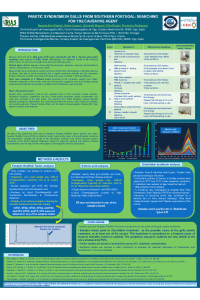
Between 2010 and 2019, 2.432 gulls (Larus michahellis and Larus fuscus) with paretic syndrome were received at RIAS Wildlife Rehabilitation and Research Centre. The clinical signs included weakness, anorexia, paralysis, diarrhoea (flaccid cloacae), dyspnoea and, in some cases, death. Several biotic contaminants are among the potential cause of this syndrome: marine biotoxins, Clostridium botulinum, cyanotoxins and virus. This presentation compiles the results of the Clostridium botulinum and marine biotoxins analysis conducted at the French National Reference Centre for anaerobic bacteria and botulism, Pasteur Institute (Paris) and the Vigo Centre of the Spanish Oceanographic Institute, respectively.
C. botulinum analyses were conducted in livers and intestines from 5 gulls with paretic syndrome symptoms admitted at RIAS Wildlife Rehabilitation and Research Centre. Samples were pooled in two groups according to the tissue and analysed by targeted Real Time Polymerase Chain Reaction (PCR) on neurotoxin genes after sample enrichment culture under anaerobic conditions. The presence of botulinum toxin was confirmed by a lethality test on mice (mouse bioassay). Mice were intraperitoneally injected with filtered supernatant of the culture.
Paralytic shellfish toxins (PSTs) were analysed by Liquid Chromatography with Fluorescence Detection and Post-column Oxidation in samples from ten gull kidneys and in the cloacae contents from another gull. Domoic acid (DA) analysis was conducted following a procedure that involved a methanolic extraction and analysis by Liquid Chromatography coupled to High Resolution Mass Spectrometry. DA was analysed in twenty three gull samples: ten livers, ten intestines and three cloacae contents. PSTs and DA were not detected in any of the samples tested.
Results obtained so far point to C. botulimum type C/D as the causative agent of the paretic syndrome in gulls.
Keywords
Paralytic Shellfish Toxins
Domoic acid
Clostridium botulinum
Seagulls
Paretic syndrome
Manuscript
Ben-Gigirey et al_2021_MC_FR_PR_BB.pdf
Poster
Ben-Gigirey et al_2021_MC_FR_PR_BB.pdf
Hemolytic activity of venoms of the water shrew Neomys fodiens and the common shrew Sorex araneus
Recombinase Polymerase Amplification for Gambierdiscus and Fukuyoa detection: a step further in the ciguatera risk management