Event submissions
Published
 10.3390/ECA2021-09636 (registering DOI)
 This submission belongs to the session B. Antimicrobial Discovery, Development, Stewardship and Susceptibility Testing of the event The 1st International Electronic Conference on Antibiotics
Published date
26 Apr, 2021
Citation
Yong Cheng, Xuejuan Tan, Jeffrey S. Schorey, Extracellular Vesicles Promote Mycobacterial Killing in Macrophages in Combination with Antibiotics, in Proceedings of The 1st International Electronic Conference on Antibiotics, 8 May–17 May 2021, MDPI: Basel, Switzerland, doi: 10.3390/ECA2021-09636
Share
Email
Facebook
Twitter
LinkedIn
Extracellular Vesicles Promote Mycobacterial Killing in Macrophages in Combination with Antibiotics
'%3e%3cpath%20d='M12.6647%2010.9104C12.4176%2010.325%2012.0589%209.7933%2011.6088%209.34485C11.16%208.89511%2010.6283%208.53653%2010.0432%208.28891C10.038%208.28629%2010.0327%208.28498%2010.0275%208.28236C10.8437%207.69282%2011.3743%206.73252%2011.3743%205.64907C11.3743%203.85423%209.92005%202.40002%208.12522%202.40002C6.33038%202.40002%204.87618%203.85423%204.87618%205.64907C4.87618%206.73252%205.40677%207.69282%206.22296%208.28367C6.21772%208.28629%206.21248%208.2876%206.20724%208.29022C5.62031%208.53783%205.09365%208.89287%204.64167%209.34616C4.19192%209.79496%203.83334%2010.3266%203.58573%2010.9117C3.34247%2011.4846%203.21128%2012.0987%203.19925%2012.721C3.1989%2012.735%203.20135%2012.7489%203.20646%2012.7619C3.21157%2012.7749%203.21924%2012.7868%203.22901%2012.7968C3.23877%2012.8068%203.25045%2012.8148%203.26334%2012.8202C3.27623%2012.8256%203.29007%2012.8284%203.30406%2012.8284H4.09012C4.14776%2012.8284%204.19362%2012.7825%204.19493%2012.7262C4.22113%2011.7148%204.62726%2010.7676%205.34519%2010.0497C6.08802%209.30686%207.07452%208.89811%208.12522%208.89811C9.17592%208.89811%2010.1624%209.30686%2010.9052%2010.0497C11.6232%2010.7676%2012.0293%2011.7148%2012.0555%2012.7262C12.0568%2012.7839%2012.1027%2012.8284%2012.1603%2012.8284H12.9464C12.9604%2012.8284%2012.9742%2012.8256%2012.9871%2012.8202C13%2012.8148%2013.0117%2012.8068%2013.0214%2012.7968C13.0312%2012.7868%2013.0389%2012.7749%2013.044%2012.7619C13.0491%2012.7489%2013.0515%2012.735%2013.0512%2012.721C13.0381%2012.0947%2012.9084%2011.4856%2012.6647%2010.9104ZM8.12522%207.90243C7.52388%207.90243%206.95792%207.66793%206.53214%207.24215C6.10636%206.81636%205.87185%206.2504%205.87185%205.64907C5.87185%205.04773%206.10636%204.48177%206.53214%204.05599C6.95792%203.63021%207.52388%203.3957%208.12522%203.3957C8.72655%203.3957%209.29252%203.63021%209.7183%204.05599C10.1441%204.48177%2010.3786%205.04773%2010.3786%205.64907C10.3786%206.2504%2010.1441%206.81636%209.7183%207.24215C9.29252%207.66793%208.72655%207.90243%208.12522%207.90243Z'%20fill='%235D1EE1'/%3e%3c/g%3e%3c/svg%3e)
Yong Cheng 1,2
Xuejuan Tan 1,2

Jeffrey S. Schorey 3
1. Department of Biochemistry and Molecular Biology, Oklahoma State University, Stillwater, Oklahoma.
2. Oklahoma Center for Respiratory and Infectious Diseases, Oklahoma State University, Stillwater, Oklahoma.
3. Department of Biological Sciences, University of Notre Dame, Notre Dame, Indiana.
Abstract
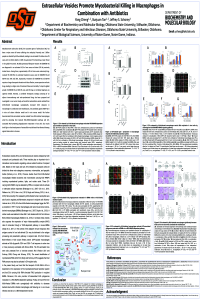
Mycobacterium tuberculosis (M.tb), the causative agent of tuberculosis (TB), has been a major source of human suffering since antiquity. Presently, over 2 billion people are infected by M.tb worldwide, leading to an estimated 10 million active TB cases and 1.4 million deaths in 2020. Drug-resistant TB is becoming a major threat in the global TB control. Multidrug-resistant/rifampicin-resistant TB (MDR/RR TB) was diagnosed in an estimated 4.1% of new cases and about 19% of previously treated cases. Among these, approximately 6.2% of cases were extensively drug-resistant TB (XDR-TB). An estimated treatment success rate for MDR/RR-TB and XDR-TB was 54% and 30%, respectively. Treatment for MDR/RR-TB and XDR-TB requires a longer therapeutic duration with less effective, more expensive and toxic drugs, leading to a higher rate of treatment failure and mortality. To stop the global spread of MDR/RR-TB and XDR-TB, new anti-TB drugs or combined regimens are urgently needed. Recently, a combined therapeutic strategy consisting of an adjunct immunotherapy and anti-mycobacterial drugs has been proposed and investigated. In our current study, we found that extracellular vesicles isolated from M.tb-infected macrophages synergistically increased M.tb clearance in macrophages in combination with moxifloxacin, a key antibiotic against MDR-TB, in in vitro cell culture infection model and in vivo mouse model. We further demonstrated that extracellular vesicles isolated from M.tb-infected macrophages acted by activating host cytosolic RIG-I/MAVS-dependent pathway and LC3-associated M.tb-containing phagolysosome maturation in host cells. Our results shed light on the development of extracellular vesicle-based host-directed therapy against tuberculosis in humans.
Keywords
Extracellular vesicles
Drug-resistant TB
Mycobacterium tuberculosis
Host-directed therapy
Antibiotics
Manuscript
Poster_2022_05_08-1.pdf
Poster
Poster_2022_05_08-1.pdf
Arachidonic acid is a potential inhibitor of Abc1 transporter of Candida krusei
Auranofin derivatives as potent bactericidal antimicrobials against cystic fibrosis pathogen Burkholderia cenocepacia